Musk and Altman Renew Public Feud Amid Apple Lawsuit and Competing AI Launches
The longstanding dispute between the OpenAI co-founders reignites over Apple's trade secret lawsuit and competing model releases.

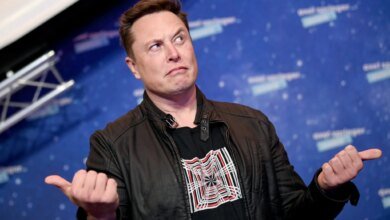
The long-running rivalry between billionaire tech figures Elon Musk and Sam Altman has intensified following a series of public exchanges on social media, triggered by a recent lawsuit involving Apple and the release of competing artificial intelligence models.
The Apple Lawsuit and Social Media Clashes
The latest dispute erupted over the weekend after Apple filed a lawsuit on Friday against OpenAI and two former Apple employees. The suit alleges the former employees took company secrets to assist in building OpenAI’s hardware division. OpenAI has denied these allegations, stating it “has no interest in other companies’ trade secrets.”
Musk, the CEO of SpaceX and Tesla, used the lawsuit to publicly criticize Altman on the social media platform X. “Scam Altman strikes again,” Musk wrote, employing the nickname “Scam Altman” to describe the OpenAI chief executive. Musk continued his criticism in subsequent posts, writing that Altman “takes scamming to a whole new level” and “might literally love scamming more than any human alive!”
Altman responded on Saturday, posting on X that Musk is “the one sellling public market investors on short-term space datacenters.”
Musk countered by referencing orbital data centers: “We start flying them next year. Maybe you can come see them if your parole officer approves. After stealing an open source AI charity, you then stole all of Apple’s phone technology! Wow…”
From Co-Founders to Competitors: The Roots of the Feud
The two executives originally co-founded OpenAI in 2015 as a nonprofit AI research lab. At the time, Altman served as the president of Y Combinator, a prominent Silicon Valley startup accelerator, while Musk managed Tesla and SpaceX. The organization was established to develop digital intelligence to benefit humanity without the constraints of generating financial returns, partly to counter Google’s growing dominance in the AI sector.
However, relations deteriorated in 2018. Believing OpenAI was falling behind competitors, Musk proposed taking control of the entity and integrating it into Tesla. Having already contributed tens of millions of dollars, Musk had pledged a total of approximately $1 billion over several years. Altman and other co-founders rejected the proposal, prompting Musk to resign from the board and halt his financial backing. Last year, Musk led an investor group that offered to acquire OpenAI for $97.4 billion.
Legal Battles and Commercial Rivalry
The launch of ChatGPT in 2022 elevated OpenAI’s market profile, and the dispute eventually entered the courtroom. In 2024, Musk filed a lawsuit against OpenAI and Altman, claiming they breached the original founding agreement by establishing a complex network of for-profit affiliates. Musk sought $150 billion in damages to be placed in a charitable trust, alongside a reversal of OpenAI’s commercial restructuring.
OpenAI defended its position by arguing Musk’s legal action was a reaction to his failed 2018 takeover attempt. The company released a blog post citing Musk’s past remarks that OpenAI’s probability of success was “zero” and detailing his plans to develop a competing artificial general intelligence system within Tesla.
In May, a jury dismissed Musk’s lawsuit, ruling that he had failed to meet the statute of limitations for the claims. Musk has indicated he intends to appeal the decision.
The commercial rivalry has since expanded. Musk founded xAI in 2023, releasing the Grok large language model. Earlier this year, SpaceX acquired xAI and rebranded the venture as SpaceXAI, positioning the AI business as a core driver of its future valuation. SpaceX launched a record-setting initial public offering (IPO) in June, the same month OpenAI submitted a confidential filing for its own IPO.
The competitive tension escalated last week with overlapping product launches. OpenAI released its new model, GPT-5.6 Sol, just one day after SpaceXAI announced Grok 4.5.
Commenting on the timing, Altman wrote on X: “There are a lot of benchmarks that suggest 5.6 sol is the best model in the world right now, but the most reliable way to tell is that elon is obsessed with me again.”
Context and Key Concepts
To help readers understand the background of this dispute, several key concepts and institutions are defined below:
- Y Combinator: Founded in 2005, Y Combinator is a highly influential Silicon Valley technology startup accelerator. It has provided seed funding, mentorship, and resources to help launch thousands of companies, including global platforms like Airbnb, DoorDash, Dropbox, and Reddit.
- Artificial General Intelligence (AGI): A theoretical state of artificial intelligence development. Unlike narrow AI, which is designed for specific tasks like translation or image recognition, an artificial general intelligence system would possess the ability to understand, learn, and apply knowledge across any intellectual task at a level equal to or exceeding human capabilities.
- Statute of Limitations: A legal framework that sets the maximum period of time after an event within which legal proceedings must be initiated. If a plaintiff files a lawsuit after this statutory window has closed, the court typically dismisses the case regardless of its underlying merits.