Stellantis Hands-Free Driving System Offers Capable Performance in 2026 Jeep Grand Cherokee
Testing Stellantis's Level 2 Hands-Free Active Driving Assist on North American Highways
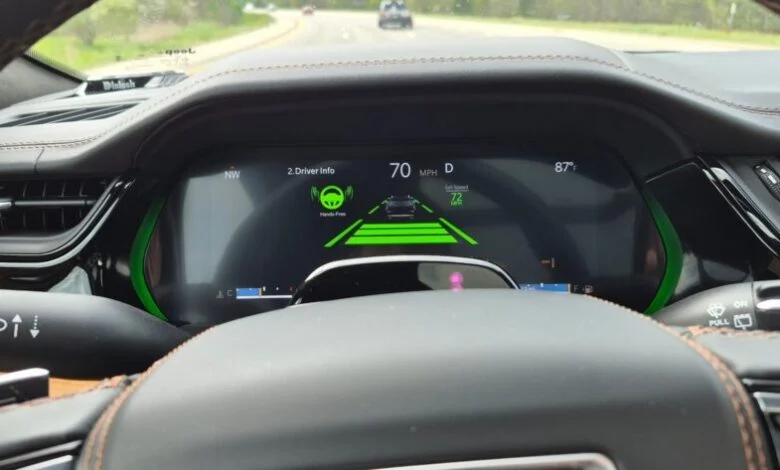
The 2026 Jeep Grand Cherokee offers a Level 2 hands-free driving system designed to assist drivers on more than 200,000 miles of compatible highways across North America. Developed by Stellantis, the Hands–Free Active Driving Assist system represents the automotive conglomerate’s answer to rival platforms like GM’s Super Cruise and Ford’s Blue Cruise. While the technology has remained relatively low-profile compared to its competitors, real-world highway testing demonstrates that the system operates with high competence, albeit with an occasionally over-cautious calibration.
System Integration and Functionality
Currently available on a limited selection of vehicles, including the Grand Cherokee and the Ram 1500, the Hands–Free Active Driving Assist technology relies on a suite of external cameras, radar sensors, and lane-monitoring hardware. Inside the cabin, a driver monitoring camera positioned atop the steering wheel tracks driver attentiveness, ensuring the driver’s eyes remain on the road even when the vehicle is controlling steering, acceleration, and braking.
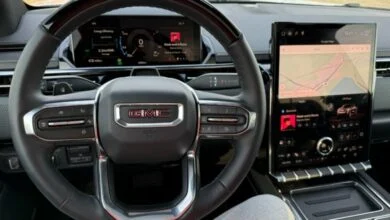
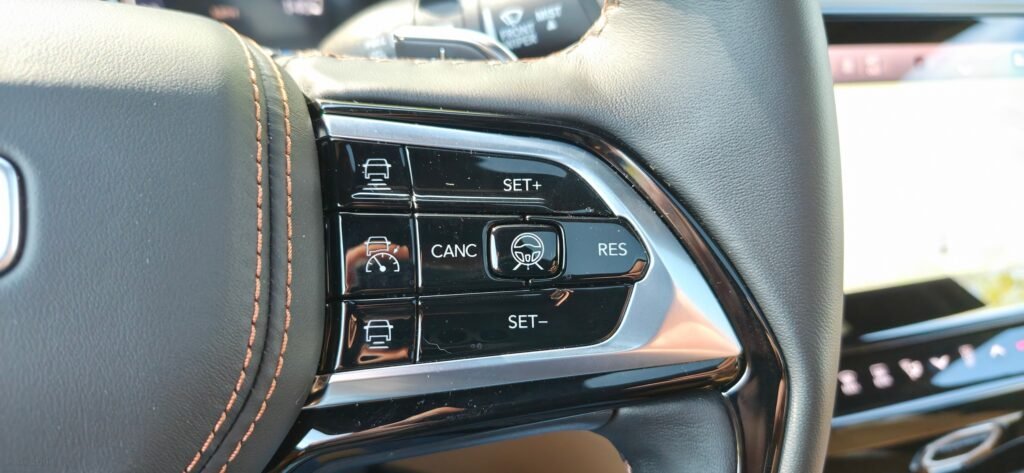
To engage the system, drivers travel on a compatible highway, press a dedicated button on the steering wheel, and set their desired speed. Once active, the instrument cluster surround and a dedicated dashboard icon illuminate in green to signal that hands-free mode is engaged.
In the 2026 Grand Cherokee, drivers can choose from multiple instrument cluster configurations. A dedicated driver assistance display provides real-time information regarding following distance, system status, and lane positioning.
During road testing, the system demonstrated precise lane-centering capabilities and navigated subtle highway curves smoothly. The software is programmed to anticipate upcoming curves, automatically reducing vehicle speed to maintain stability and comfort.
To prevent distracted driving, the driver monitoring system enforces strict attention limits. If the driver’s gaze wanders from the road for approximately ten seconds, the instrument cluster transitions from green to orange, accompanied by a physical vibration in the driver’s seat. If the driver fails to respond, the system escalates the warning: the display turns red, an audible alarm sounds, and the seat vibrations intensify. The monitoring camera successfully tracks driver attention even when the driver is wearing sunglasses.
Lane Changes and Real-World Limitations
When encountering slower traffic, the system automatically slows the vehicle to maintain a safe following distance. To initiate a pass, the driver can tap the turn signal, which prompts the vehicle to perform an Assisted Lane Change. The system scans surrounding lanes for clearance and, when safe, smoothly steers the vehicle into the adjacent lane.
However, testing revealed that the system can be overly cautious. On several occasions, the vehicle refused to execute a lane change despite having ample space, remaining in its lane with the turn signal blinking. In these scenarios, drivers can easily override the system by steering manually; the hands-free functionality automatically re-engages once the lane change is complete.
On sections of road where hands-free driving is temporarily unavailable, the vehicle alerts the driver while keeping standard lane centering and adaptive cruise control active. The driver must briefly take the wheel until the vehicle enters another compatible hands-free zone.
While the system successfully navigated sudden cut-offs by other drivers, manual intervention was occasionally preferred during testing—such as when a much slower vehicle pulled into the path of the fast-approaching Grand Cherokee, prompting the driver to manually apply the brakes.
Pricing and Future Outlook
The Hands–Free Active Driving Assist system is currently positioned as a premium feature. On the Grand Cherokee, the option is priced at $2,995, which includes a three-year subscription. The technology is also restricted to higher-end trim levels.
Stellantis is planning further developments in automated driving. The automaker has announced an all-new Level 2++ system scheduled for release in 2028. This upcoming iteration is designed to provide hands-free door-to-door supervised automated driving across highway and urban environments.
Understanding Level 2 Driving Automation
To help readers understand where this technology fits in the broader automotive landscape, it is useful to look at the industry standards established by SAE International (formerly the Society of Automotive Engineers).
The SAE defines driving automation on a scale from Level 0 (no automation) to Level 5 (full automation). Under these guidelines, a Level 2 hands-free driving system is classified as “partial driving automation.”
- Driver Requirements: Even when hands-free systems are active, the human driver is never considered fully autonomous. The driver must remain actively engaged, continuously monitor the environment, and be prepared to take immediate control of steering, braking, or accelerating at any moment.
- System Capabilities: Level 2 systems can simultaneously control both steering and acceleration/deceleration. They typically utilize high-definition GPS mapping, radar, and cameras to keep the vehicle centered within a lane and maintain a safe distance from other traffic on pre-mapped roadways.
- The “Level 2++” Distinction: While not an official SAE classification, the term “Level 2++” is frequently used by automakers to describe highly advanced Level 2 systems. These systems expand automated capabilities to include complex maneuvers, urban environments, and door-to-door navigation, but they still require constant human supervision.
About Stellantis
Stellantis N.V. is one of the world’s largest automotive manufacturers, formed in 2021 through a 50-50 merger between the Italian-American conglomerate Fiat Chrysler Automobiles (FCA) and the French PSA Group. The company’s portfolio includes historic brands such as Jeep, Ram, Dodge, Chrysler, Alfa Romeo, Maserati, Peugeot, and Citroën. The rollout of advanced driver-assistance systems (ADAS) across its global brands is part of the group’s long-term software and technology strategy.