Trump Announces U.S. Naval Blockade on Iran and 20% Fee for Strait of Hormuz Protection
The U.S. will demand 20% reimbursement on cargo for protection against Iranian threats in the volatile waterway.
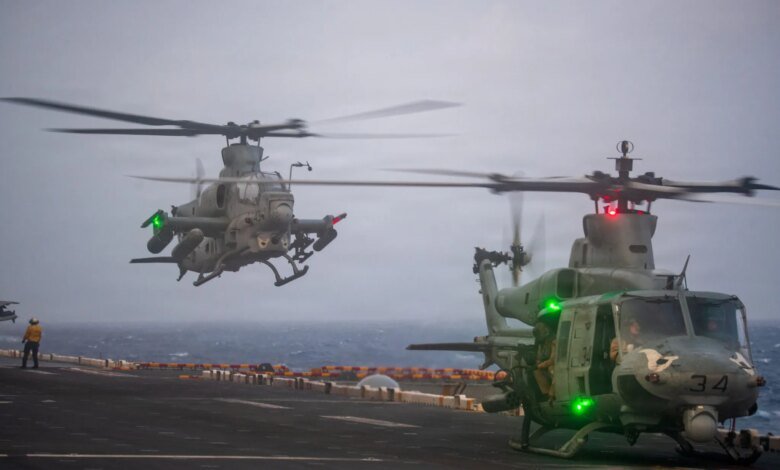
President Donald Trump announced Monday that the United States will reimpose a naval blockade on Iran and demand a 20% reimbursement fee on all cargo transiting the Strait of Hormuz under American protection. The move marks a significant shift in U.S. policy toward the strategic waterway, which has been a site of ongoing military tension following the U.S.-Israel war on Iran.
The announcement triggered an immediate 6% jump in oil prices. The market reaction followed a weekend of violent skirmishes in the Persian Gulf as U.S. and Iranian forces sought to assert control over shipping lanes. Under the new policy, the U.S. intends to leverage its military presence to secure a specific lane through the strait that bypasses Iranian-controlled waters.
“The U.S.A. will be, from this point forward, known as ‘THE GUARDIAN OF THE HORMUZ STRAIT,’ but as such, and as a matter of FAIRNESS, will be reimbursed, at the rate of 20% on all cargo shipped, for any and all costs necessary to do the job of providing safety and security to this very volatile section of the World,” Trump stated on social media. He added that the implementation of this plan would begin immediately.
Since early May, U.S. forces have assisted more than 800 commercial vessels and 400 million barrels of crude oil in transiting the strait, according to data from Central Command. Previously, the U.S. Navy provided these services without charge while defending a corridor near the Omani coast from Iranian attacks. Iran has conversely attempted to enforce its own toll system, requiring ships to use a corridor near its coastline and obtain permission from the Islamic republic.
The security situation has forced commercial fleets to adopt drastic measures. Traffic through the Omani channel has nearly disappeared as Iranian projectiles continue to target ships. Many vessels now utilize “dark” routes, sailing with their transponders turned off and moving under cover of night to evade detection. Shipping companies and insurance providers now face a complex cost-benefit analysis as they weigh the risks of Iranian salvos against the new 20% U.S. levy.
Diplomatic efforts to resolve the standoff remain stalled. Oman has reportedly drafted a proposal to manage the waterway through two distinct routes: a northern corridor through Iranian waters and a southern corridor through Omani territorial waters. However, with both the U.S. and Iran maintaining their respective claims, the prospect of restoring traditional free navigation appears remote.
Strategic Importance of the Waterway
The Strait of Hormuz is widely considered the world’s most important oil transit chokepoint. Located between Oman and Iran, it connects the Persian Gulf with the Gulf of Oman and the Arabian Sea. At its narrowest point, the shipping lanes are only two miles wide in either direction, separated by a two-mile buffer zone.
According to the U.S. Energy Information Administration (EIA), approximately one-fifth of the world’s total oil consumption passes through the strait daily. This includes the majority of crude oil exported from Saudi Arabia, the United Arab Emirates, Kuwait, Iraq, and Iran. Beyond petroleum, the waterway is also the primary route for liquefied natural gas (LNG) exports from Qatar.
Under international maritime law, specifically the United Nations Convention on the Law of the Sea (UNCLOS), the strait is governed by the legal regime of “transit passage.” This principle generally allows vessels the right of unimpeded navigation for the purpose of continuous and expeditious transit between one part of the high seas or an exclusive economic zone and another.