Logistics Resilience: How DHL Navigates Middle East Volatility and the $1,900 Fuel Peak
How the logistics giant is using pandemic-era lessons to survive the current geopolitical energy crunch.
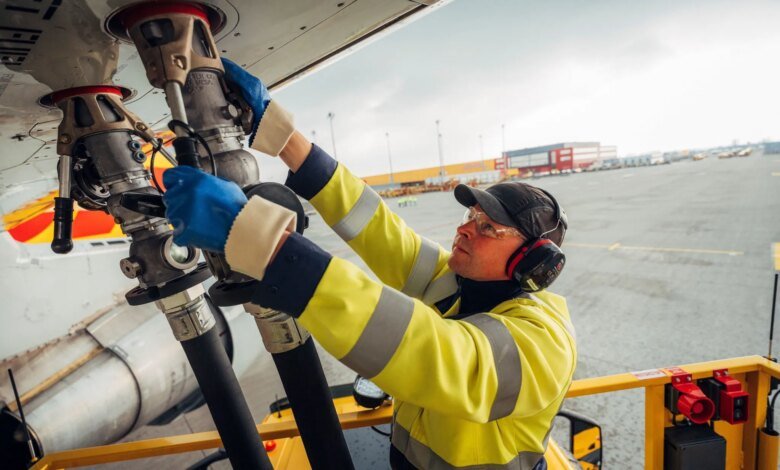
The volatility of the global energy market, triggered by friction in the Middle East and the closure of shipping lanes in the Strait of Hormuz, has forced international logistics giants to pivot from standard operations to a state of constant tactical adjustment. For DHL Express, the international shipment division of the German delivery group, this geopolitical instability manifested most sharply in the price of jet fuel, which surged from a pre-conflict baseline of $800 per tonne to a peak of $1,903 in April.
While kerosene prices have since moderated to $918 per tonne, according to figures from Argus Media, the era of predictable overheads has ended. The U.S. Energy Information Administration notes that global petroleum markets remain highly sensitive to disruptions in maritime chokepoints, a reality that has compelled DHL to treat its fuel procurement as a high-stakes diversification exercise. Mike Parra, CEO of DHL Express Europe, confirms the company has shifted its purchasing power toward markets in South Korea, Nigeria, and the U.S. to mitigate regional supply shocks.
To maintain a fleet of 295 planes serving 220 countries, the company is increasingly relying on “tankering.” This practice involves loading aircraft with surplus fuel at cheaper hubs to bypass expensive refueling at high-cost destinations. Parra describes the company’s network planning team as the “central nervous system of the business,” utilizing an internal shipment tool known as VISTA to calculate the delicate trade-off between the weight of extra fuel and the resulting hit on cargo payload.
This operational complexity is mirrored in the company’s pricing structure. DHL Express has maintained its margins by adjusting its fuel surcharge, which reached a peak of 48.75% before settling at the current 40.75%. Parra characterizes the surcharge not as a profit center but as a “mechanism to protect costs,” now updated weekly rather than monthly to reflect the rapid fluctuations in kerosene markets.
Physical security in conflict zones has introduced further logistical hurdles. In areas like Israel and Lebanon, where aircraft insurance premiums have spiked, DHL has introduced a security risk surcharge. The company is prioritizing rapid turnarounds on the tarmac to avoid leaving assets idle in high-risk zones. In instances where air transit is deemed unsafe, the company has deployed road “linehaul” routes, using trucks and vans to maintain connectivity despite the added complexity and fuel consumption.
Despite the regional instability, the company is doubling down on its long-term footprint in the Gulf. DHL Express recently announced a €500 million investment targeting Saudi Arabia and the UAE. This expansion coincides with a shift toward sustainable aviation fuel, which currently accounts for 10% of the company’s supply. The group has set a firm target for sustainable sources to comprise 30% of its fuel mix by 2030.
The internal toll of this sustained uncertainty has prompted a shift in corporate welfare. Parra reports that the company has increased its number of mental health first-aiders to 202, responding to staff concerns regarding the rising cost of living and the psychological impact of global crises. This focus on human capital is part of a broader five-step wellbeing strategy designed to build organizational resilience during periods of extreme market volatility.