

Apple HomeView Smart Hub Launches With A18 Chip and 7-Inch Display
The new 7-inch display uses an A18 processor and supports six distinct user profiles with isolated Apple Intelligence data.
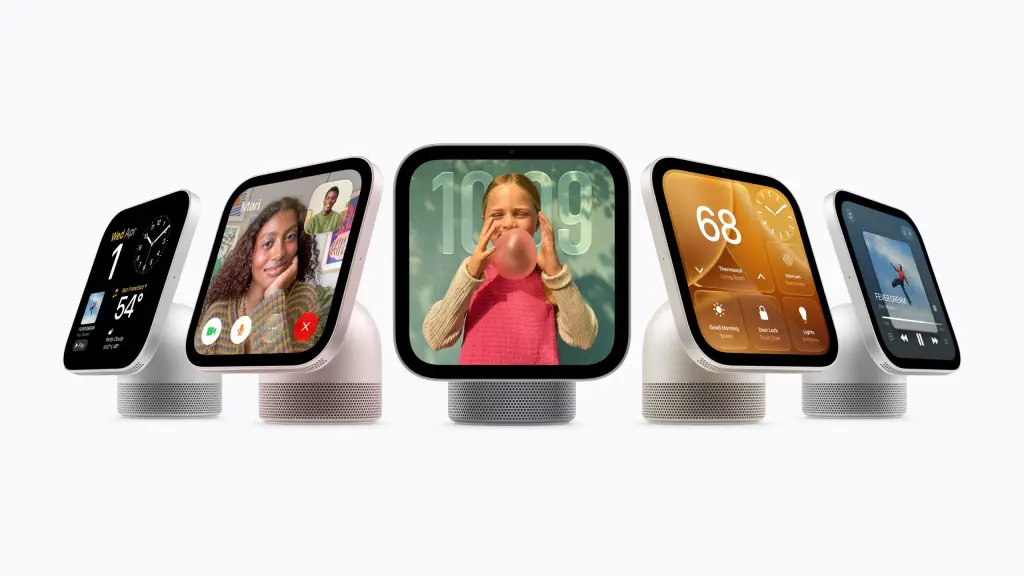
Apple has entered the smart display market with HomeView, a dedicated hub built around a 7-inch touchscreen and powered by the same A18 processor found in its latest flagship iPhones. The device arrives as the company attempts to displace Amazon Echo Show and Google Nest Hub units that have dominated kitchen counters and living rooms for years.
Rather than functioning as a standalone tablet, HomeView operates as a multi-user appliance capable of recognizing up to six individuals. When a registered user approaches, the interface shifts to display personalized widgets, applications, and home screen layouts. Apple Intelligence context remains isolated per user; personal data pulled from a paired iPhone or Mac is never exposed to other household members interacting with the shared screen.
The hardware ships in two configurations. A wall-mountable version targets hallway or kitchen installations, while a tabletop model attaches to a metallic base that doubles as a speaker. The base includes an adjustable arm for tilting the panel. Both setups support intercom functionality between multiple HomeView units placed throughout a residence.


Under the hood, the inclusion of the A18 chip marks a significant departure from competitors that typically rely on lower-power silicon optimized strictly for voice queries and video streaming. Apple pairs the processor with a Secure Enclave, physically partitioning microphone and camera inputs from the rest of the operating system. This architecture prevents third-party software—and Apple itself—from accessing raw biometric feeds.
Voice interactions route through Siri AI using a hybrid processing model. Basic commands execute entirely on-device via local machine learning models. Complex requests that exceed the A18’s local capabilities are routed through Private Cloud Compute, Apple’s privacy-focused server infrastructure designed to process data without retaining it.
HomeView does not offer access to the App Store. Instead, Apple pre-loads core first-party services including Messages, FaceTime, Calendar, and Apple Music. Users can also view photos, stream podcasts, and play audiobooks directly from the interface. The visual design borrows heavily from existing Apple platforms, allowing owners to select home screen aesthetics modeled after iPhone lock screens or Apple Watch faces.
For home security, subscribers to iCloud+ gain access to advanced recognition features when pairing HomeView with compatible cameras. The system identifies familiar faces, pets, vehicles, and delivered packages. Apple states this specific computer vision pipeline runs under end-to-end encryption.
The launch positions Apple to finally leverage the Matter protocol and its broader HomeKit ecosystem through a centralized, always-on visual interface. Previous attempts at smart home control relied heavily on the HomePod or required users to pull out an iPhone.
Pricing and retail availability dates were not disclosed during the initial announcement.









