

Apple CarPlay and CarPlay Ultra Split the Car Screen in Two
The two Apple systems take very different routes through a vehicle’s digital cockpit
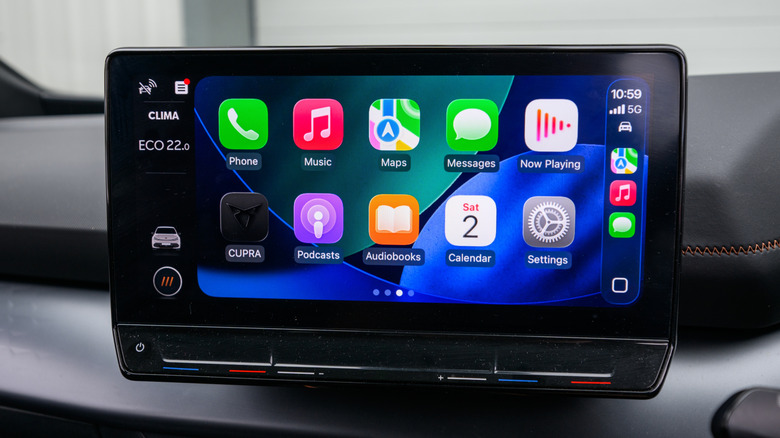
Apple Inc.’s automotive footprint is divided between standard Apple CarPlay, a decade-old smartphone projection system available across hundreds of vehicle lines, and CarPlay Ultra, a next-generation platform designed to take over every screen across a vehicle’s dashboard.
CarPlay Ultra was unveiled at Apple’s Worldwide Developers Conference (WWDC) in June 2022. Its architecture extends the Apple user interface beyond a single central console, reading data streams from a vehicle’s onboard networks to place the speedometer, tachometer, fuel level, coolant temperature, and tire pressure monitors on digital instrument clusters behind the steering wheel.
The original CarPlay was first announced at the Geneva Motor Show in March 2014 and launched alongside iOS 7.1. It established a standardized method for projecting iOS applications onto vehicle touchscreens, connecting an iPhone through a wired USB connection or short-range wireless protocols that combine a Bluetooth handshake with Wi-Fi data transfer.


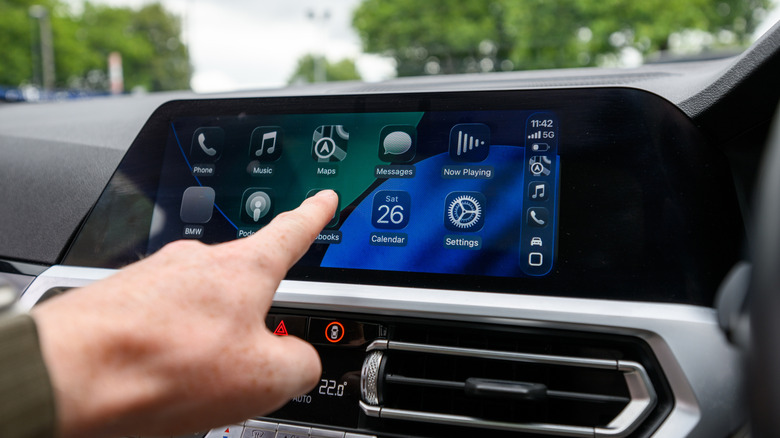
Standard CarPlay operates as a sandboxed secondary layer on central infotainment displays and offers a curated selection of third-party and native iOS applications. Its main uses include satellite navigation, digital audio streaming, and voice-controlled messaging through Siri.
CarPlay Ultra adds custom color palettes, gauge dial geometries, and data widgets across different screen aspect ratios. Its software interface also incorporates native vehicle controls, including seat heaters, dual-zone temperature settings, and interior lighting.
Under the standard implementation, the software remains isolated from the vehicle’s core mechanical and environmental hardware. Drivers must switch between the smartphone interface and the automaker’s proprietary menus to adjust cabin heating, ventilation, and air conditioning (HVAC) systems.
The same separation applies when drivers modify drive modes, tune terrestrial AM/FM radio stations, or view trip computer metrics. Standard CarPlay therefore remains separate from the systems that CarPlay Ultra can access directly, including real-time telemetry, gauge clusters, climate controls, and multi-display digital cockpits.
The expanded platform has specific hardware and connectivity requirements. Unlike legacy CarPlay, which supports older devices over physical cables, the multi-screen system requires an iPhone 12 or newer running modern iOS releases and relies entirely on high-bandwidth wireless communication with the vehicle.
Standard CarPlay has reached more than 800 vehicle models worldwide, according to Apple, with availability across mass-market brands such as Ford, Honda, Toyota, and Hyundai.
CarPlay Ultra’s rollout remains concentrated in high-end luxury applications. British manufacturer Aston Martin was among the first to announce integration for select production models in the United States and Canada, with bespoke digital gauge themes tailored to the brand’s interior styling. Porsche also demonstrated preview designs for multi-display integration, while adoption among high-volume automakers has proceeded more slowly.
The deployment gap comes as the automotive sector weighs competing digital cockpit strategies. Some manufacturers continue to support Apple’s projection software, while other major automakers, including General Motors, have moved toward proprietary built-in software architectures based on Google’s Android Automotive OS. That shift away from third-party smartphone projection allows those companies to retain control over digital ecosystems, user interfaces, and connected-vehicle data services.









