

Why Automakers Are Turning Away From Apple CarPlay
Native vehicle software is replacing smartphone mirroring
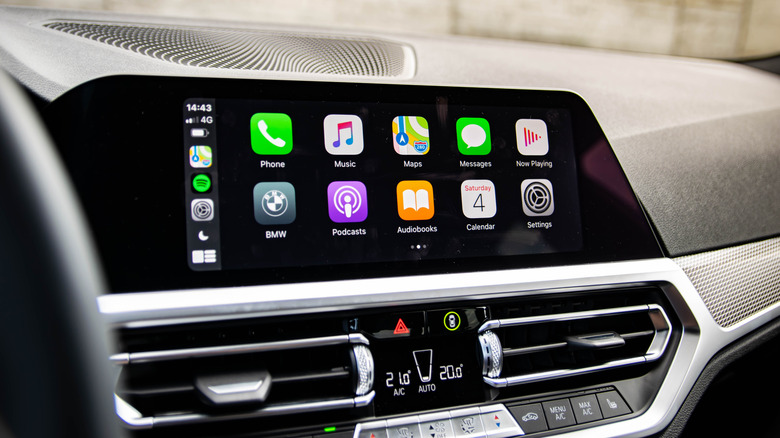
For more than a decade, drivers have relied on smartphone mirroring to replace inconsistent factory infotainment. Apple introduced CarPlay in 2014 as an evolution of its “iOS in the Car” project, and Google followed with Android Auto in 2015. Standard CarPlay now supports more than 800 vehicle models globally.
That consumer reliance is colliding with automakers’ push for control over cockpit software. Legacy and electric vehicle manufacturers increasingly want direct access to driver telemetry, simpler electric powertrain management, and recurring subscription revenue from connected services.

Before phone projection became widespread, automaker-developed systems often struggled with usability and updates. MyFord Touch faced extensive reliability complaints and was phased out after five years. Built-in navigation software also commonly required paid dealership updates to keep map databases current.
Consumer surveys continue to point in the opposite direction from the industry’s software strategy. Apple said during its 2022 Worldwide Developers Conference that 79 percent of U.S. car buyers would refuse to purchase a vehicle without CarPlay. Independent consumer research found that 55 percent of current CarPlay users regard the service as a critical requirement when selecting their next vehicle.
General Motors is the most prominent legacy automaker to move away from phone projection protocols. The Detroit vehicle manufacturer began removing Apple CarPlay and Google’s Android Auto from its electric vehicle lineup, starting with models including the Chevrolet Blazer EV.
GM’s newer vehicles instead use an embedded cockpit system based on Google’s Android Automotive OS, a standalone operating system that runs on the vehicle’s onboard processing hardware. The company’s long-term software plan calls for eliminating phone-projection software from its internal combustion engine vehicles when its centralized computing platform is deployed around 2028.
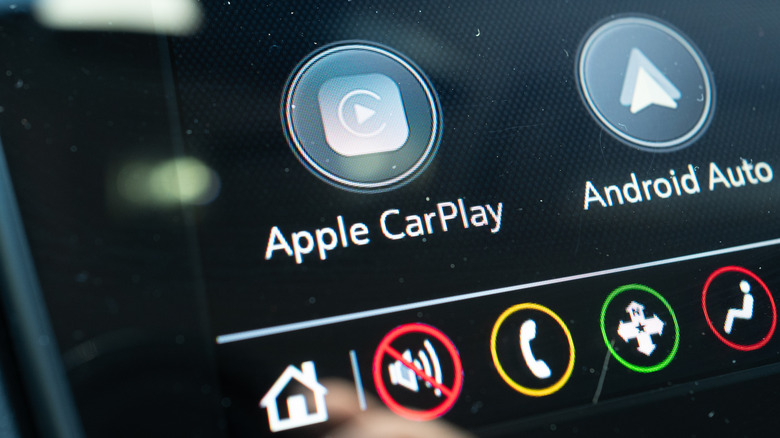
Unlike Android Auto or Apple CarPlay, which project apps from a smartphone, a native operating system connects directly with vehicle sensors and powertrain control units. Vehicle-integrated Google Maps can assess real-time battery state-of-charge, estimate energy consumption from driving conditions, schedule optimized charging stops, and precondition the battery pack before the vehicle arrives.
Mike Hichme, a GM executive involved in infotainment development, said in a 2023 interview that the automaker wanted a digital cockpit that did not depend on a driver connecting a smartphone. GM’s shift also gives manufacturers direct oversight of user data, driver telemetry, and digital service delivery.
Native software can record driver usage patterns, route choices, and charging behavior while making the dashboard a gateway to proprietary connected services. Applications using the vehicle’s native cellular connection may eventually require paid subscriptions after their initial trial periods end.
The expanded collection of telemetry has brought regulatory scrutiny. In January, the Federal Trade Commission issued an order barring General Motors from selling driver behavioral data to third-party data brokers for five years. The order followed allegations that GM collected and shared detailed driving habits without informed user consent.
Some electric vehicle companies avoided smartphone mirroring from the beginning. Tesla and Rivian have never offered Apple CarPlay or Android Auto in their production vehicles. Both rely on proprietary software architectures for native battery management, routing, infotainment, and over-the-air updates, although industry reports have said Tesla internally tested CarPlay.

Apple has responded to automaker resistance and increasingly complex multi-display cockpits with CarPlay Ultra. First unveiled at Apple’s Worldwide Developers Conference in 2022, the system extends beyond the center console to the primary instrument cluster, where it can display vehicle speed, fuel or battery levels, engine temperatures, tire pressure, and navigation maps.
CarPlay Ultra also lets drivers control climate systems, seat heating, and broadcast radio tuners through Apple’s interface. Automakers can customize its visual themes to complement a vehicle’s physical cabin design.
However, CarPlay Ultra still depends on processing power from an active iPhone connection. Its need for deep access to vehicle control networks, combined with continued smartphone dependence, has slowed adoption among automakers seeking control of software and subscription revenue. Aston Martin is currently the only manufacturer actively demonstrating models equipped with CarPlay Ultra, while Hyundai and Kia have indicated that they may integrate it in the future.
Attempts to monetize phone-based software have also met resistance. BMW once charged customers an $80 annual subscription for CarPlay access, then reversed the policy in 2019 after consumer opposition.







One Comment