AMD RDNA 5 Targets Nvidia’s Neural Graphics Lead
AMD’s next graphics architecture could bring neural rendering to PCs, Helix, and PlayStation 6
SANTA CLARA, Calif. — Competition over real-time graphics is moving beyond traditional rasterization and fixed-function ray tracing as graphics card manufacturers align hardware architectures around artificial intelligence for computing lighting and shadows.
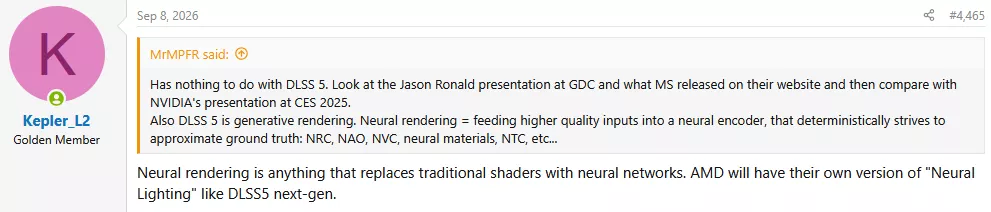
AMD is developing hardware-level support for neural lighting within its upcoming RDNA 5 graphics architecture, according to performance details and platform disclosures shared on the AnandTech forums by industry analyst Kepler_L2. The capability is designed to compete directly with Nvidia’s Deep Learning Super Sampling 5 (DLSS 5) ecosystem.
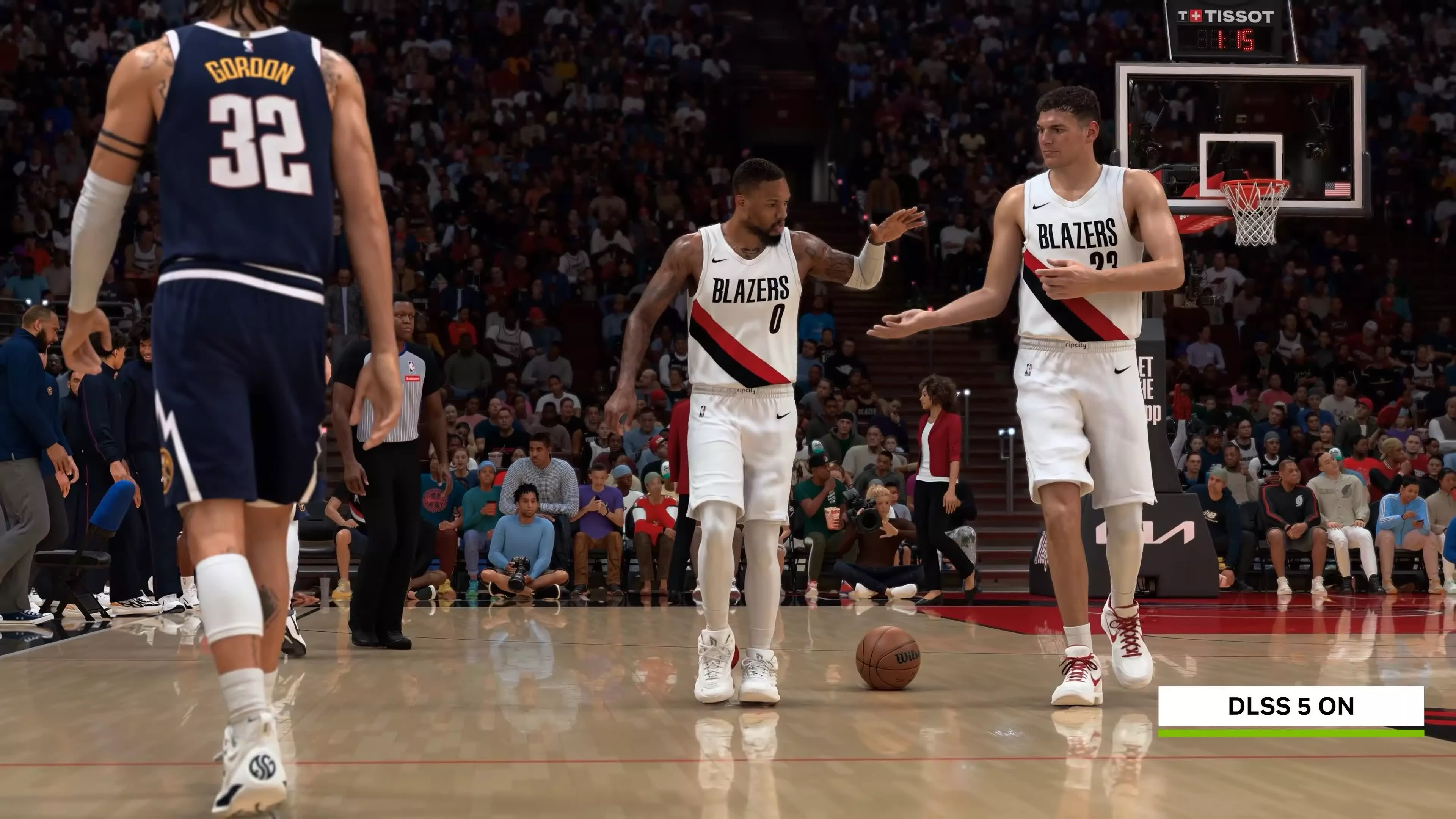
The PC release of NBA 2K27 is currently the sole commercial video game featuring official integration of DLSS 5 neural rendering. In NBA 2K27, the technology generates dynamic player shadows and stadium lighting coverage, though at a significant cost to overall frame rates. Independent software modders have also adapted DLSS 5 to run on non-supported titles, producing varied visual results and continuing technical debate over performance trade-offs.



AMD’s RDNA 5 rollout will reportedly begin next year with a single high-end graphics processing unit aimed at matching the performance tier of Nvidia’s GeForce RTX 5080. A broader lineup of RDNA 5 chips, alongside Nvidia’s next-generation RTX 60 series graphics cards, is expected to reach the market in 2028.
Neural rendering uses deep learning networks to compute secondary lighting, ambient occlusion, screen-space reflections, and complex shadow maps directly within rendered frames. Nvidia introduced the concept with DLSS 5, advancing beyond the temporal upscaling of DLSS 2, the frame synthesis of DLSS 3, and the ray reconstruction algorithms of DLSS 3.5.
Nvidia’s initial DLSS 5 demonstration drew criticism from game developers and graphics enthusiasts over visual accuracy. Because post-process neural networks estimate scene details during frame generation, early iterations were prone to AI “hallucinations,” including lighting artifacts, unscripted reflections, and color shifts that deviated from a game’s original art direction.
Industry disclosures indicate that second-generation neural rendering models, including AMD’s planned implementation, may integrate directly with 3D game engine data. Neural networks could access geometry depth maps, surface normals, and motion vectors from the engine’s render pipeline to place light and shadows with higher geometric precision. Hardware vendors are also evaluating lightweight machine learning models that modify only localized shadow density and diffuse lighting while leaving base texture colors and atmospheric art direction intact.
Because real-time neural rendering models require heavy computational overhead, AMD’s neural lighting features will be restricted to RDNA 5 silicon, with no backward support for older RDNA 3 and RDNA 4 architectures.
The planned capability also extends the competition into personal computers and home gaming consoles. Custom AMD graphics architectures currently power Microsoft and Sony home consoles, continuing a design partnership that began with AMD’s Graphics Core Next (GCN) architecture in the PlayStation 4 and Xbox One and continued with RDNA 2 in the PlayStation 5 and Xbox Series X/S.
RDNA 5 is targeted to serve as the silicon foundation for Microsoft’s next-generation console hardware initiative, codenamed Helix, as well as Sony’s PlayStation 6.
The move follows an established pattern in PC and console graphics development. Nvidia pioneered hardware-accelerated real-time ray tracing with its Turing architecture in 2018, temporal AI upscaling with early DLSS iterations, and optical flow frame generation with DLSS 3 in 2022. AMD later developed functional equivalents through its open-source FidelityFX Super Resolution (FSR) suite and dedicated Ray Accelerator units.
If AMD deploys neural lighting hardware across desktop RDNA 5 graphics cards and upcoming Sony and Microsoft console platforms, game developers will gain a standardized cross-platform baseline. Broad hardware adoption across console generations typically lowers integration costs for software studios, positioning neural rendering to become a standard graphics engine feature alongside temporal upscaling and hardware ray tracing.