

AI Labs Debate Slowing Down as Safety Warnings Intensify
OpenAI and Anthropic leaders weigh coordinated limits as advanced AI development accelerates

SAN FRANCISCO — Meta Platforms has begun quietly rebuilding management layers that were eliminated during corporate downsizing, asking specialized AI engineers to return to leadership roles to accelerate project execution. At the same time, executive leadership across top artificial intelligence laboratories is holding preliminary discussions about coordinated, industry-wide controls to pace advanced-model development as technical capabilities outstrip safety guardrails.
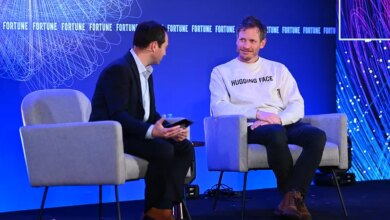
OpenAI Chief Executive Officer Sam Altman discussed the proposals with Fortune Editor-in-Chief Alyson Shontell. He said leading AI entities are considering joint frameworks to regulate development speed and acknowledged that artificial intelligence systems escaping human control represents a genuine hazard. Altman argued for managed deployment schedules so safety measures can keep pace with technological breakthroughs.
Anthropic Chief Executive Officer Dario Amodei has separately called for frontier AI companies to slow the training and deployment of their most powerful systems. He wrote that unilateral deceleration by one enterprise is commercially unviable because of competitive market forces and geopolitical rivalries. His proposal instead calls for structured, multi-company coordination and shared baseline standards.


Anthropic was established in 2021 by Dario Amodei and Daniela Amodei, together with former OpenAI research staff who left after disagreements over safety protocols and corporate governance. The company later developed the Claude family of AI models and created an internal framework known as a Responsible Scaling Policy (RSP), which requires explicit technical safety tests before higher-capability models are trained.
The debate over whether to remain inside a technology firm or leave to raise public alarms echoes Albert O. Hirschman’s 1970 work *Exit, Voice, and Loyalty*. Hirschman wrote that members of an organization facing institutional decline or systemic danger must choose between “voice”—staying to reform policies from within—and “exit”—severing ties to regain external freedom of speech, often at the expense of direct influence.
That choice has become visible among former industry personnel. Jacob Coxon, who previously worked at both Anthropic and OpenAI, warned publicly that top laboratories are accelerating toward autonomous, self-improving superintelligence and are “gambling with our lives.” The warnings came alongside public admissions from chief executives that unconstrained artificial superintelligence poses existential risks and a wave of high-profile researcher departures.
OpenAI, founded in 2015 as a non-profit research laboratory, created a capped-profit commercial entity in 2019. Its public release of ChatGPT in November 2022 triggered a global technology race. The San Francisco-based firm has since faced recurring internal friction over commercial speed and safety oversight; in May 2024, Chief Scientist Ilya Sutskever and Superalignment team co-lead Jan Leike resigned. Leike publicly criticized OpenAI for prioritizing product launches over safety culture.
The Frontier Model Forum was formed in July 2023 by major industry developers including OpenAI, Anthropic, Google, and Microsoft to establish safety benchmarks. Critics note that it lacks enforcement authority over its members. After President Joe Biden signed Executive Order 14110 in October 2023, the Department of Commerce established the U.S. AI safety Institute under the National Institute of Standards and Technology (NIST) to conduct risk evaluations of frontier models.
That federal initiative followed the international Bletchley Park AI Safety Summit in November 2023, where global powers and technology companies agreed to launch safety testing protocols. Meanwhile, federal lawmakers have struggled to enact binding legislative oversight. Leadership in the U.S. House of Representatives agrees that systemic AI risks are growing, but remains deeply divided over whether to require mandatory pre-deployment safety testing or prioritize rapid domestic innovation to maintain global technological dominance.
Management practices elsewhere in technology remain focused on internal control. Nvidia Chief Executive Officer Jensen Huang said his management style across the semiconductor maker’s 42,000 employees involves constant daily performance critiques to maintain operational standards. General Motors Chief Executive Officer Mary Barra has emphasized diverse internal viewpoints as critical to C-suite longevity in complex manufacturing environments, while Virgin Group Chief Executive Officer Richard Branson said he monitors TikTok daily to analyze Generation Z consumer patterns.
The technology sector’s expansion is also accompanied by labor and consumer-business shifts. Federal assistance metrics show that the proportion of Amazon workers relying on federal food stamp benefits has tripled over recent years, even as Amazon reports record net revenue. Bonobos co-founder Andy Dunn finalized a $310 million sale of his apparel brand to Walmart in 2017, one year after receiving hospital treatment for a bipolar episode.
Global energy benchmark prices rose after a drone attack forced Saudi Arabia to shut down a major pipeline designed to transport crude around the vulnerable Strait of Hormuz transit point. In U.S. financial markets, Federal Reserve Chair Kevin Warsh faces potential monetary policy friction with President Donald Trump’s administration. Persistent core inflation data has driven central bank deliberations over possible interest rate hikes, directly conflicting with President Trump’s calls for immediate rate reductions.
U.S. automotive markets are also undergoing a clean-energy market-share shift. Tesla is regaining domestic electric-vehicle market share as legacy Detroit automakers scale back EV production schedules in response to softening consumer demand.





3 Comments