
Teodoro Challenges China After South China Sea Note Disrupts Seoul Speech
A disrupted Seoul speech exposes deepening Philippines-China tensions
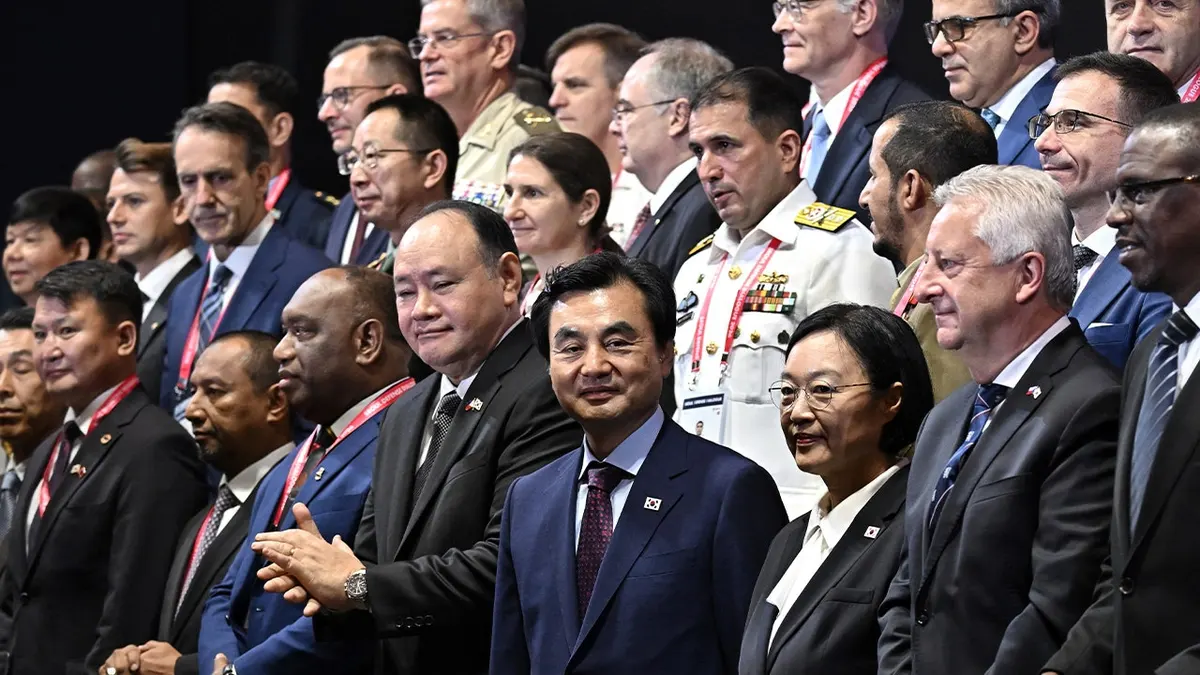
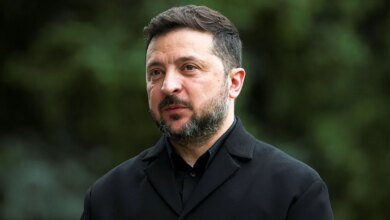
SEOUL — Philippine Defense Secretary Gilberto C. Teodoro Jr. used an unexpected disruption at the 15th Seoul Defense Dialogue to rebuke Chinese pressure tactics over contested maritime boundaries in the South China Sea.
During his address to international defense officials, diplomats and other delegates, an unidentified individual wearing a white sports coat approached the podium and placed a document directly beside Teodoro. He paused his prepared remarks, inspected the paper and then read its contents to the assembled audience.
The note stated: “China’s position on the South China Sea arbitration is clear, consistent and firm. They have no position. The arbitration violates fundamental principles of international law.”

Teodoro questioned whether international partners could engage civilly with a state that disregards established diplomatic decorum. “I ask you the question, is this the right paper to post to me when I’m being asked a question on the floor? And how will you treat this kind of behavior?” Teodoro said to the delegation.

He continued: “It not only disrespects, shows, if this is a Chinese position sent to me, it not only disrespects international law, throwing UNCLOS to the floor and trampling upon it, but it also disrespects the basic decency accorded that should be accorded to our most gracious host, the Republic of Korea and the rest of the audience here.”
Teodoro described the physical delivery of the statement as an extension of Beijing’s operational posture in contested waters, calling it “actual coercion, bullying and aggression.” He said he would retain the note as a physical reminder of what he termed Beijing’s “desperate” efforts to assert its stance in public forums.
The written statement referred to the landmark 2016 ruling by the Permanent Court of Arbitration in The Hague. The Philippines brought the case under the 1982 United Nations Convention on the Law of the Sea (UNCLOS), and the tribunal unanimously rejected China’s expansive “nine-dash line” territorial claims across nearly 90 percent of the South China Sea.
That tribunal ruled that Beijing’s claims to historic rights within the sea area were incompatible with UNCLOS. It also found that China had violated Philippine sovereign rights by constructing artificial islands, interfering with Philippine fishing and energy exploration, and operating dangerously within the Philippines’ 200-nautical-mile Exclusive Economic Zone (EEZ).
Beijing refused to participate in the arbitration proceedings and declared the final ruling “null and void.” China has continuously rejected its legal validity while maintaining that its operations in the region are lawful actions designed to protect its sovereign territory.
Pressure on the Philippines’ exclusive economic zone has intensified in recent years, prompting Manila to fundamentally restructure its foreign policy and security architecture, Teodoro said in Seoul. “I think it is well known to the public, to everyone here about the Philippine situation where we face challenges daily from the People’s Republic of China which tries to occupy and illegally assert its presence over our territory and especially our exclusive economic zone,” he told the conference.
He added: “We live in a very interconnected world, and there is no right for any state of that matter to appropriate an international common for its exclusive use or right, contrary to what the international norms clearly state.”
The confrontation has focused on low-elevation features in the West Philippine Sea, Manila’s official designation for areas of the South China Sea within its EEZ. Key flashpoints include Second Thomas Shoal, also called Ayungin Shoal, where the Philippine Navy maintains a garrison aboard the grounded World War II-era vessel BRP Sierra Madre.
Other flashpoints are Scarborough Shoal, or Bajo de Masinloc, and Sabina Shoal, or Escoda Shoal. Philippine resupply missions to those features have frequently encountered aggressive blockades by the China Coast Guard (CCG) and accompanying Chinese maritime militia vessels.
According to the Philippine Coast Guard, documented tactics include close-quarters maneuvering by Chinese ships, high-pressure water cannons, high-intensity acoustic devices and military-grade lasers aimed at Philippine crew members.
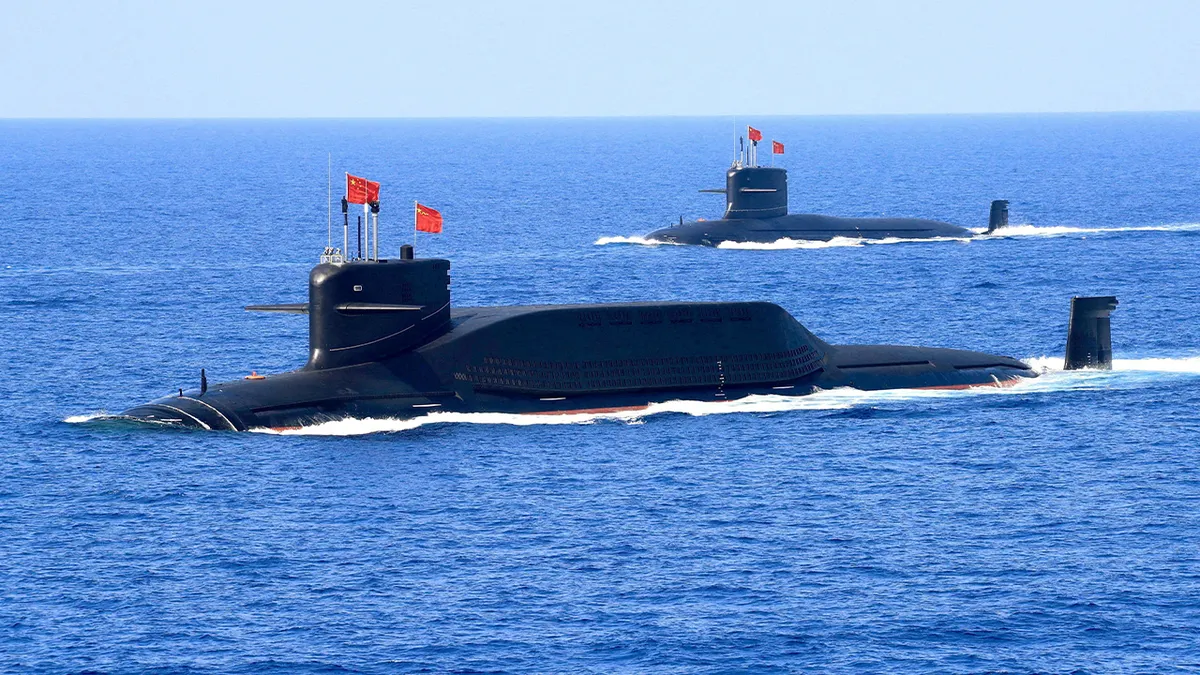
Beijing has also expanded its naval footprint across key maritime corridors by deploying People’s Liberation Army Navy (PLAN) surface strike groups, advanced guided-missile destroyers and nuclear-powered ballistic missile submarines, including Type 094 Jin-class vessels.
Under President Ferdinand Marcos Jr., who took office in mid-2022, Manila has moved away from the previous administration’s non-confrontational stance toward Beijing. The Philippines has been actively modernizing its armed forces while forging new security pacts.
Teodoro said the continuing friction had driven the Philippines to establish “creative defense arrangements and alliances.” Manila has reinforced its long-standing 1951 Mutual Defense Treaty with the United States and expanded the Enhanced Defense Cooperation Agreement (EDCA), giving U.S. forces access to nine strategic Philippine military bases, including sites near Taiwan and facing the Spratly Islands.
The Philippines has additionally executed a Reciprocal Access Agreement (RAA) with Japan and expanded joint exercise frameworks with Australia. It has also launched multilateral joint maritime patrols known as Cooperative Maritime Activities with naval and air forces from the United States, Japan, Canada and Australia inside its economic zone.