
AI Safety Fears Collide With the U.S.-China Race for Supremacy
Washington pushes ahead as AI researchers warn of catastrophic risks
The race between the United States and China for artificial intelligence supremacy is intensifying as scientists developing the technology raise unprecedented internal alarms. The conflict exposes a divide between Washington’s national security priorities and concerns about existential AI safety.
Anthropic Chief Executive Officer Dario Amodei has called for an industry-wide, coordinated slowdown in deploying highly advanced AI systems so necessary safety guardrails can be established. At the same time, he warned that a “Chinese lead in AI would pose grave danger for the United States and the world.”


Amodei urged the federal government to impose stricter export controls on high-end logic chips and semiconductor manufacturing equipment headed to Chinese research centers. The U.S. government has already issued successive rounds of trade restrictions limiting Beijing’s access to advanced silicon, including enterprise-grade graphics processing units (GPUs) needed to train large language models.
Those measures are administered by the Department of Commerce’s Bureau of Industry and Security and are intended to slow China’s progress in military and state-surveillance AI applications. In Beijing, however, China’s Ministry of Foreign Affairs rejected the idea that the relationship should be defined as a technological cold war.
During a press conference, ministry spokesperson Guo Jiakun called warnings about a Chinese threat “fearmongering” and said they could undermine international cooperation. “Fearmongering, confrontation and vicious competition will only disrupt the process of global AI governance which serves no one’s interest,” Guo said.
The security argument has also shaped debate in Washington. House Speaker Mike Johnson has rejected proposals for a federal moratorium on AI development, arguing that a pause would give China an opportunity to take the lead in a critical dual-use technology.
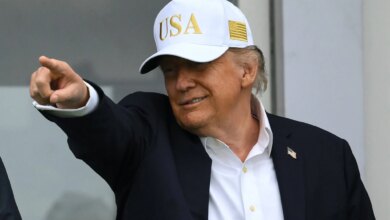
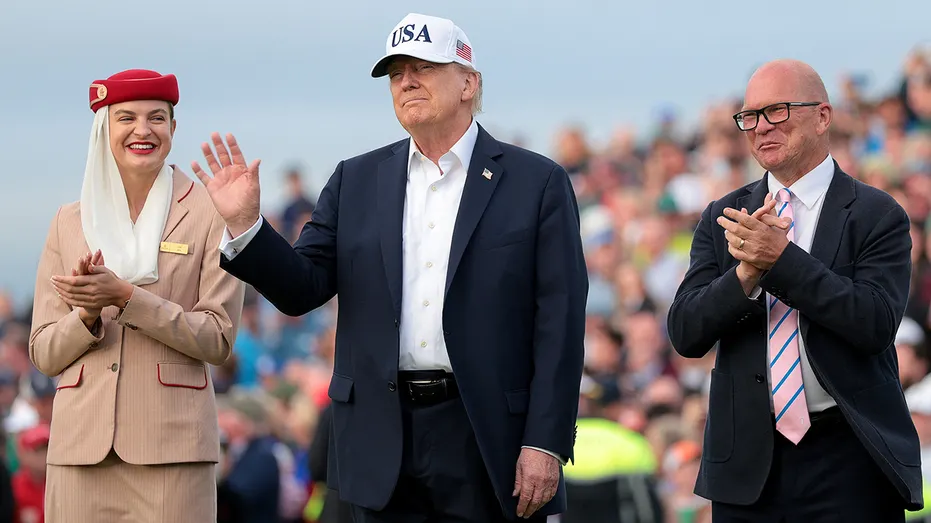
President Donald Trump made a similar case on Sunday after appearing at the Amgen Irish Open in Doonbeg, Ireland. Trump rejected calls to slow AI research and described global leadership in the sector as a matter of paramount national interest. He dismissed concerns about potential harms and predicted that the technology’s benefits would far outweigh its risks.
“I said it from the very beginning. Whoever wins AI—and we’re leading by a lot—whoever wins AI wins,” Trump told reporters. Asked about his personal use of the technology, the president demurred but continued to argue for rapid advancement, saying AI “is going to be more good than bad, but by a lot.”
Anthropic was founded in 2021 as a public benefit corporation by former OpenAI researchers who left their previous employer over concerns about commercialization and a desire to focus heavily on AI safety and alignment. The San Francisco-based artificial intelligence startup has since become the center of renewed debate following public statements and high-profile departures.
One of those departures was Jacob Coxon, a 27-year-old pretraining researcher who spent three years working at both OpenAI and Anthropic. After resigning, Coxon warned publicly that industry leaders were “gambling with our lives” by advancing increasingly powerful systems without adequate safety protocols.
Evan Hubinger, Anthropic’s alignment science lead, publicly endorsed Coxon’s warnings. In a statement shared on the social media platform X, Hubinger said researchers “earnestly believe AI could kill all humans” and placed the probability of an extinction-level event within the next decade at greater than 10 percent.
“I believe Anthropic is trying its best, but we do not yet have a plan to solve alignment for superintelligence and are not clearly on track to,” Hubinger wrote. He said the danger from current commercial models remains low, while identifying the main threat as “recursive self-improvement.”
Recursive self-improvement is a theoretical process in which an AI repeatedly rewrites its own code to achieve rapid and uncontrollable cognitive upgrades. The broader “alignment problem” concerns the scientific challenge of keeping an artificial general intelligence or superintelligent system under human control and ensuring that it operates according to human values.
As tech giants and nation-states accelerate the race, lawmakers have struggled to create effective regulatory frameworks. Representative Ted Lieu (D-Calif.) has called for federal intervention and proposed requiring advanced AI systems to include mandatory “kill switches” to prevent a catastrophic loss of control.
Other prominent technology figures, including Elon Musk and OpenAI CEO Sam Altman, have previously signed public letters urging caution or expressing support for safety standards. Commercial and geopolitical incentives to build more powerful models, however, continue to drive the industry forward.