
The Silicon Prairie Fight Over America’s AI Power
Regional leaders challenge Silicon Valley’s control as AI infrastructure spreads across the United States
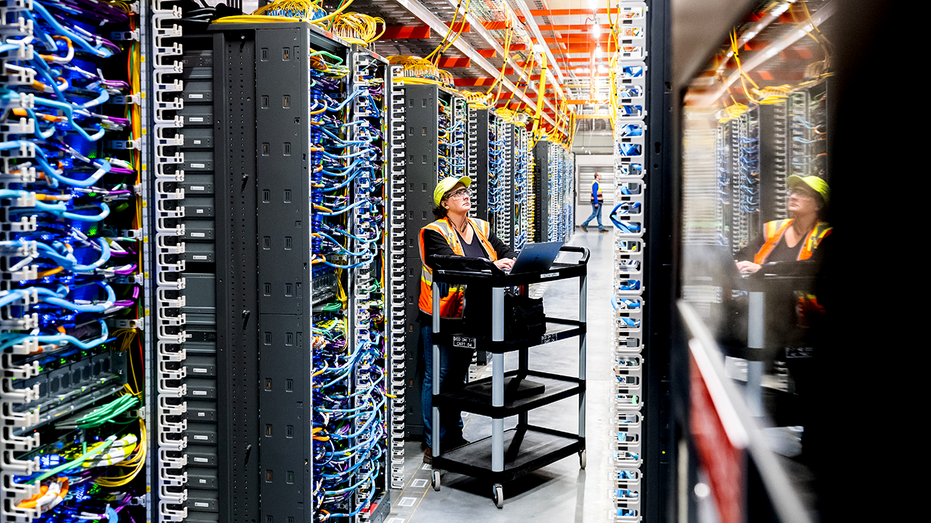
WASHINGTON — Artificial intelligence workloads are placing unprecedented strain on energy grids, land resources, and supply chains as the United States undergoes a broad economic and technological realignment. States including Texas, Iowa, Ohio, Nebraska, and North Dakota have become major destinations for data center construction, high-voltage power substations, and fiber-optic networks.

The expansion has opened a national debate over where computing power should live and who should control it. Major Silicon Valley conglomerates continue to centralize advanced AI development, while a growing coalition of regional cloud providers, energy producers, and political leaders is calling for digital infrastructure to be distributed across heartland regions known as the “Silicon Prairie.”


John Johnson, chief executive officer of cloud infrastructure provider Patmos, said the technology could benefit communities if development includes them. “The truth is AI can be a tremendous economic engine for communities if we’re willing to build with them, not over them,” Johnson said during an appearance on FOX Business’ “Varney & Co.”
The push for regional construction also reflects concern over single points of failure and the distribution of economic gains from the technology boom beyond traditional coastal hubs. Johnson urged immediate public and private investment in distributed local computing facilities to prevent a small group of corporate technocrats from establishing monopolistic control over foundational computing networks.

“Right now, we need infrastructure to be built as quickly as possible. All over the country and decentralize power from the Silicon Valley to where I’m sitting right now in the Silicon Prairie and everywhere in between,” Johnson said.
The geopolitical competition between Washington and Beijing has added pressure to the infrastructure debate. Johnson said domestic power concentration poses a more immediate structural threat to the nation than foreign competitors. “I think if we can continue to compete on the infrastructure side, we’re going to be OK against China. But the real problem is not China as much as it is a centralization of technological power in the United States,” he told host Stuart Varney.
Major market “hyperscalers”—including Microsoft, Alphabet, Amazon Web Services, and Meta—are committing tens of billions of dollars in quarterly capital expenditures to acquire specialized graphics processing units (GPUs), build multi-gigawatt facilities, and secure long-term power purchase agreements. Jason Katz, managing director and senior portfolio manager at UBS, said on “Varney & Co.” that market shifts, fluctuating Treasury yields, and retail sector downgrades have intensified financial scrutiny around the immense capital expenditures required for AI infrastructure.

The consolidation of AI capability has also intensified national anxiety over ethical boundaries involving synthetic media, deepfakes, and automated social influence. Generative AI models are increasingly capable of cloning human voices, generating photorealistic video, and crafting natural human-like interactions at scale.
Johnson warned about the potential misuse of human-impersonating software. Although AI models lack self-awareness or independent will, he said their ability to present synthetic human behaviors provides a powerful mechanism for centralized control. “What they can do really well, which is scary, is present a counterfeit of the human person. And I think that will be what these technocrats try to use to control the world, which is really what they want to do,” Johnson said.

He added that the public must resist an automated future in which citizens are expected to submit to algorithmic authority. “That’s a proposition that Americans are just not going to accept.”
The concerns are part of a policy debate in Washington and abroad over the speed of AI development and regulation. Former President Donald Trump recently responded to escalating safety concerns by saying AI technology would ultimately be “more good than bad” and arguing that aggressive deployment is vital for American economic supremacy.
House Minority Leader Hakeem Jeffries and other congressional leaders have pushed for federal guardrails addressing election interference, algorithmic discrimination, and synthetic media. International efforts have also drawn attention, including King Charles III hosting tech executives and heads of state in the United Kingdom to establish international standards for AI safety.
Within the technology industry, executives remain divided over the pace of rollouts. Microsoft Chief Executive Officer Satya Nadella has publicly insisted that advanced artificial superintelligence must remain permanently “under human control,” while industry leaders and commentators debate whether technology companies should voluntarily slow frontier-model development until comprehensive safety frameworks can be established.