
MagSafe 3 or USB-C: The MacBook Charging Choice That Changes Everything
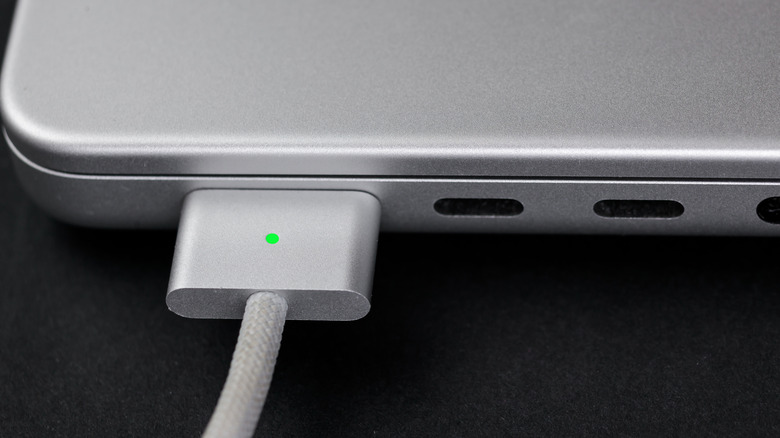
Modern Mac laptops can draw power through dedicated MagSafe 3 ports or their multi-purpose USB-C ports. The systems are engineered to accept power from only one source at a time, giving users a choice between Apple’s magnetic charging standard and the cross-device flexibility of USB-C.
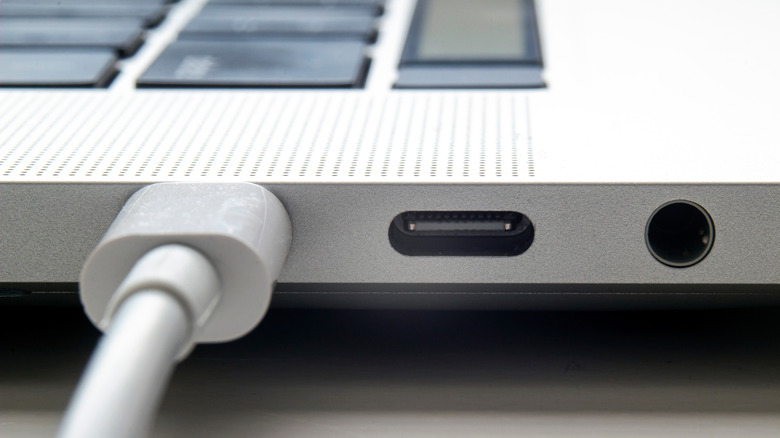
That choice affects more than charging speed. MagSafe 3 uses a physical pin-based connector held in place by magnets, while USB-C relies on a rigid friction-fit connection. A MagSafe cable can detach sideways or linearly when exposed to sudden tension, helping protect the laptop enclosure and internal logic board.
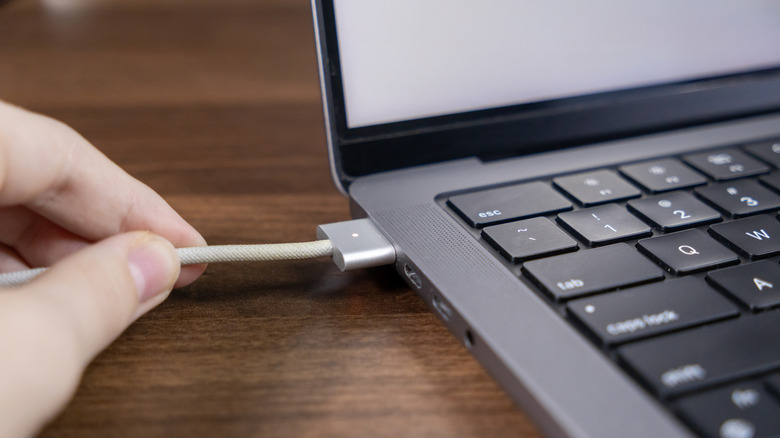


Apple’s current magnetic system is the third generation of MagSafe. The company introduced the original version in January 2006 at the Macworld Expo, replacing the cylindrical barrel power connectors used by the PowerBook G4 and iBook series. Its purpose was to stop a tripped or tugged cable from pulling a laptop off a desk.
MagSafe 3 also leaves every available USB-C and Thunderbolt port open for external storage drives, displays, and other peripherals. Its fast-charging capability reaches up to 140W on supported hardware, including MacBook Pro models from 2021 or later and MacBook Air models from 2022 or later.
Apple changed direction in 2012 with MagSafe 2, which arrived alongside the thinner Retina display MacBook Pro and redesigned MacBook Air. That connector used a wider, thinner head. Beginning with the 12-inch Retina MacBook in 2015 and continuing with the 2016 MacBook Pro redesign, Apple removed MagSafe in favor of USB-C and Thunderbolt ports for both power and data.
A compatible MacBook connected through MagSafe 3 can charge from zero to 50 percent in 30 minutes when paired with Apple’s higher-wattage adapters, including the standalone $99 power adapter. Apple restored the magnetic system in October 2021 with the 14-inch and 16-inch M1 Pro and M1 Max MacBook Pro models after consumer feedback about the loss of the quick-release connection.
USB-C charging typically operates under baseline USB Power Delivery, or USB-PD, standards and supplies up to 60W. That output can power smaller laptops or charge systems under light workloads, but it is less than half the maximum throughput available from MagSafe on high-end configurations.
The magnetic feature returned before Apple expanded it to the redesigned M2 MacBook Air in July 2022 and later M3 and M4 generation laptops. USB-C, meanwhile, can provide broader compatibility beyond the MacBook itself.
With updated USB Power Delivery specifications, including USB-PD 3.1 Extended Power Range standards, specialized USB-C cables can handle 100W or as much as 240W. Apple sells a standalone 240W-rated USB-C cable for high-power applications. For MacBook Pro models released after November 2023, the company enabled USB-C charging at up to 240W when compatible high-wattage adapters are used with EPR-rated cables.
A single high-wattage USB-C cable and power brick can supply electricity to a MacBook, iPad, iPhone, and non-Apple peripherals, reducing the number of cables needed during transit. MagSafe 3 cables instead use a proprietary magnetic head that connects only to compatible Mac laptops.
The rigid USB-C connection has a different physical risk. Sudden tension on a plugged-in cable creates a mechanical leverage point that can pull the laptop from a surface or damage the port assembly.
Apple uses the name MagSafe for two separate technologies. MacBook MagSafe is a physical magnetic plug for direct wired power transmission, while iPhone MagSafe, introduced with the iPhone 12 in 2020, is an inductive wireless charging standard based on the Qi format and an internal ring of magnets. The two systems are not physically or electronically interchangeable.
Laptop MagSafe generations are also restricted by physical compatibility. MagSafe 1, MagSafe 2, and MagSafe 3 have different physical dimensions, pin configurations, and electrical specifications, so cables from one generation are incompatible with non-native laptop ports without external adaptors.