How Much Gas Is Actually in Hormuz LNG Traffic’s 31 Tankers?
Thirty-one tankers left the Gulf in October, the best count since February. Weighed against February's 6.2 million tons, they carried 2.7 million — and the strait around them is still running at a fraction of normal.
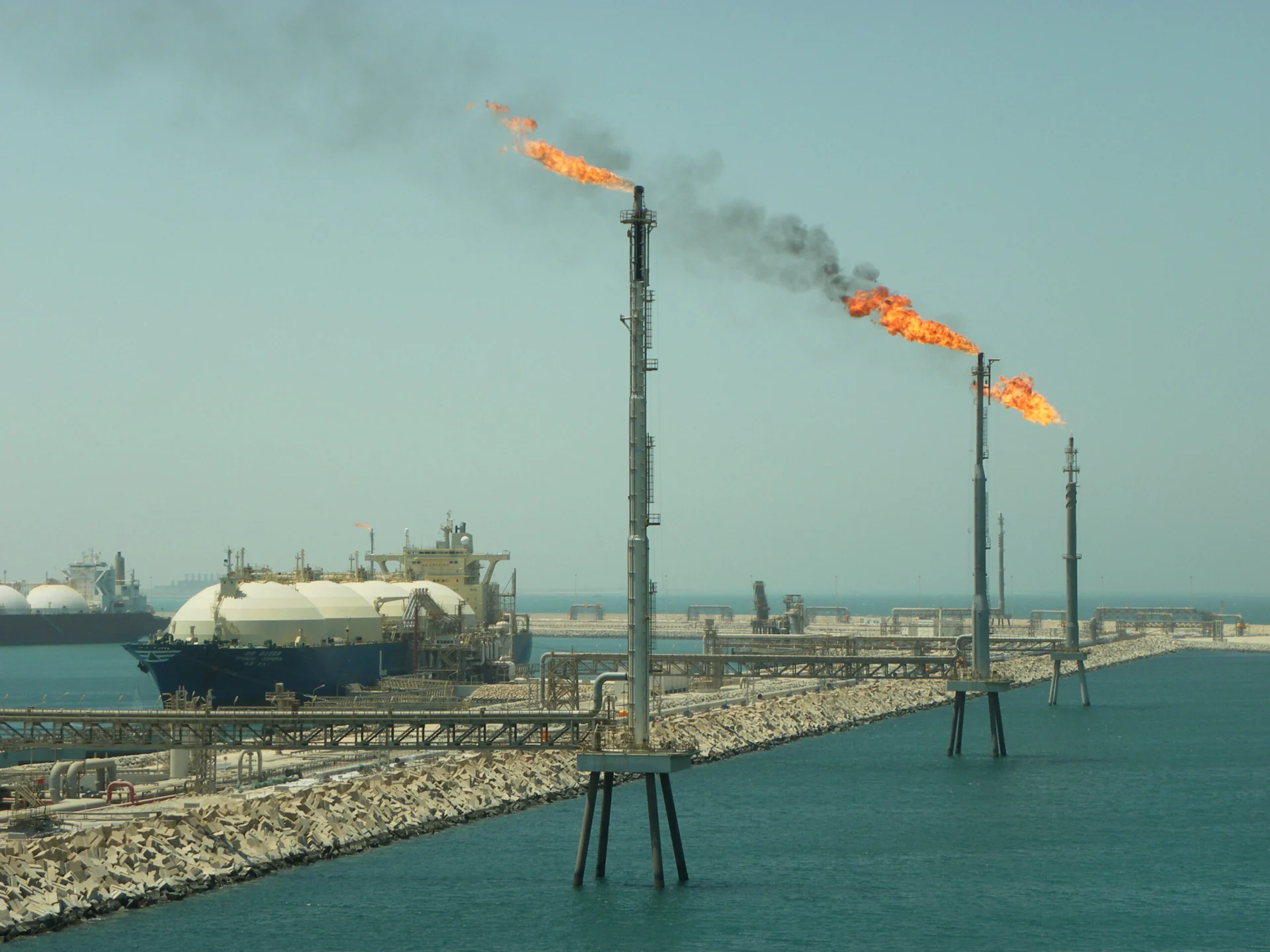
Hormuz LNG traffic reached 31 laden tankers in October, the highest count since February. The September count was 23.
The count is ships. Ras Laffan loaded 2.7 million tons in October, the most since the war began, while Qatar exported about 6.2 million tons in February, so October’s loadings were 44 per cent of February’s.
A second count of the same month does not match the first. Kpler counted 42 LNG cargoes loaded in October. Only 31 laden tankers left. Eleven cargoes were loaded and had not yet sailed when the month ended, and at Ras Laffan the gap was 12: 35 loaded, 23 out. The queue is not only outside the strait. Part of it is sitting inside the Gulf, loaded and waiting.

A third count looks at everything, not just gas. The IMF’s PortWatch project counted an average of 3.8 transits a day through Hormuz in October, all ships included, against a pre-crisis baseline of 84.8 a day, 4.5 per cent of normal. On 1 November, the latest published day, it counted one. S&P Global counted about 750 crossings in October, roughly 24 a day, the most since July. On 27 September, Windward logged 24 transits, 14 of them with their tracking switched off.
The two ends of the strait did not recover together. Das Island, the UAE terminal, was never hit, and its seven October loadings were flat on September. The United Arab Emirates is back to pre-war transit levels, according to S&P Global Energy. Qatar sits above 30 per cent of its pre-war transits, because Ras Laffan was hit.
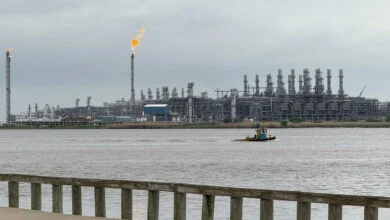
Iranian missiles hit Ras Laffan on 18 and 19 March. Two of the terminal’s 14 production trains were damaged, 12.8 million tons a year of capacity, about 17 per cent of Qatar’s exports. QatarEnergy’s chief executive, Saad al-Kaabi, put the lost revenue at about $20 billion a year and the repairs at three to five years. QatarEnergy declared force majeure on contracts with buyers in China, South Korea, Italy and Belgium, for up to five years on some of them. Al-Kaabi also put LPG losses at 1.281 million tons, about 13 per cent of Qatar’s LPG exports, and one train at the Pearl gas-to-liquids plant is offline for at least a year. For Pakistan, the force majeure was extended to 29 December.
The people who warn ships about the Gulf still rate the threat SEVERE. The Joint Maritime Information Center says deliberate attacks are highly likely, and it has confirmed 18 attacks in the strait since 6 October. About 490 vessels were waiting outside the strait on 1 November, around 175 of them off Fujairah and Khor Fakkan. In about 52 hours from 1 to 3 November, four ships were attacked off Musandam: a bulk carrier sent a Mayday call, a tug sank, a tanker was struck by two projectiles, and a dhow was attacked with one crew member killed and 13 rescued. The LNG carrier Al Mayeda was attacked on 30 October, about 40 nautical miles south of Lavan Island, with a fire on board and her crew safe. She was carrying Qatari gas to Pakistan, hours after Pakistan had received Iranian clearance for the voyage, and she turned back toward Qatar.
The Hormuz LNG traffic that does get out now leaves by other means. Off Sohar, in Oman, the SC Prestige transferred its cargo to the BW ENN Crystal Sky, bound for South Korea, and the Al Mafyar split its cargo between the Shandong Redwood and the Ejnan, both delivered to Pakistan.
Qatar, the world’s biggest LNG exporter, is buying American gas to cover its own shortfall. Two deals with Cheniere, signed on 22 October, cover up to 4 million tons a year from Sabine Pass and Corpus Christi, with deliveries from 2031 to 2054. Woodside will supply up to 3 million tons a year from Louisiana from 2030, and talks with Venture Global cover at least 3 million more. Wood Mackenzie expects Qatar to be the biggest buyer of American LNG by 2033, at about 23.7 million tons a year including its share of Golden Pass. Other ships are going the long way round. The Cape of Good Hope averaged 87.1 transits a day in the week of 19 to 25 October, against a normal 46.2, up 89 per cent, while Hormuz ran at 3.3 against 86.4, down 96 per cent.
The International Energy Agency ran the numbers for a cold winter with Hormuz still disrupted into the first quarter of 2027. European storage would close the heating season 7 per cent full, 80 per cent below its five-year average and the lowest on record, falling below 10 per cent of working capacity by early March. Europe would need 57 to 83 billion cubic metres to refill storage next summer, against a five-year average of 50. Across 2026 to 2030, the agency puts the cumulative LNG supply loss at 150 billion cubic metres, 15 per cent of all the new supply due to be added worldwide in the period. The price signal is already there: the European benchmark averaged about $20 per million British thermal units from March to October, 70 per cent higher than a year earlier, and the Asian spot price about $21.50, 80 per cent higher, both the highest since 2022/23. Euronews counts about 50 million Europeans unable to heat their homes adequately.
In Pakistan, the two gas companies cut piped gas to eight hours a day from 4 November, in three windows: 6:30 to 9 in the morning, noon to 2:30, and 6 to 9 in the evening. The price shock came earlier. In March, a Pakistani wrote on Reddit that a 15kg refill had been quoted at 6k, against Rs. 3600 before: “War is effecting us all.” The same writer added that the price had reached 400 a kilo: “No one’s talking about these things.” On 6 November, a Karachi resident asked whether to buy a cylinder from the state oil company or a local shop, and how long a typical 10kg cylinder lasts. Pakistan’s petroleum minister said on 1 November that Qatari gas “is arriving”, with abundant supply through December and January. The minister’s assurance is about the cargoes. The cylinder question is about what a household pays for the gas it still needs.
In Britain, one household wrote in March that it had kept its thermostat at 22 degrees since late September and never switched it off. “The highest bill I had was £220 in Jan this year. The rest have average £175,” the writer said, adding that the bill covered gas and electricity combined. Another, a single person in a one-bedroom flat, wrote in March that “my heating bill is regularly £150-£200 per month”, for electric heating, she said, and could not understand why.
The Joint Maritime Information Center has logged 172 incidents in the strait since 1 March. The United States is facilitating 31 to 39 transits a day, against about 138 a day in 2025.