European Gas Prices Hit €100 Again on a Thinner Winter Cushion Than in 2022
The benchmark touched €100 on Wednesday; storage holds 849 terawatt-hours, about 170 short of the bloc's 90% target.
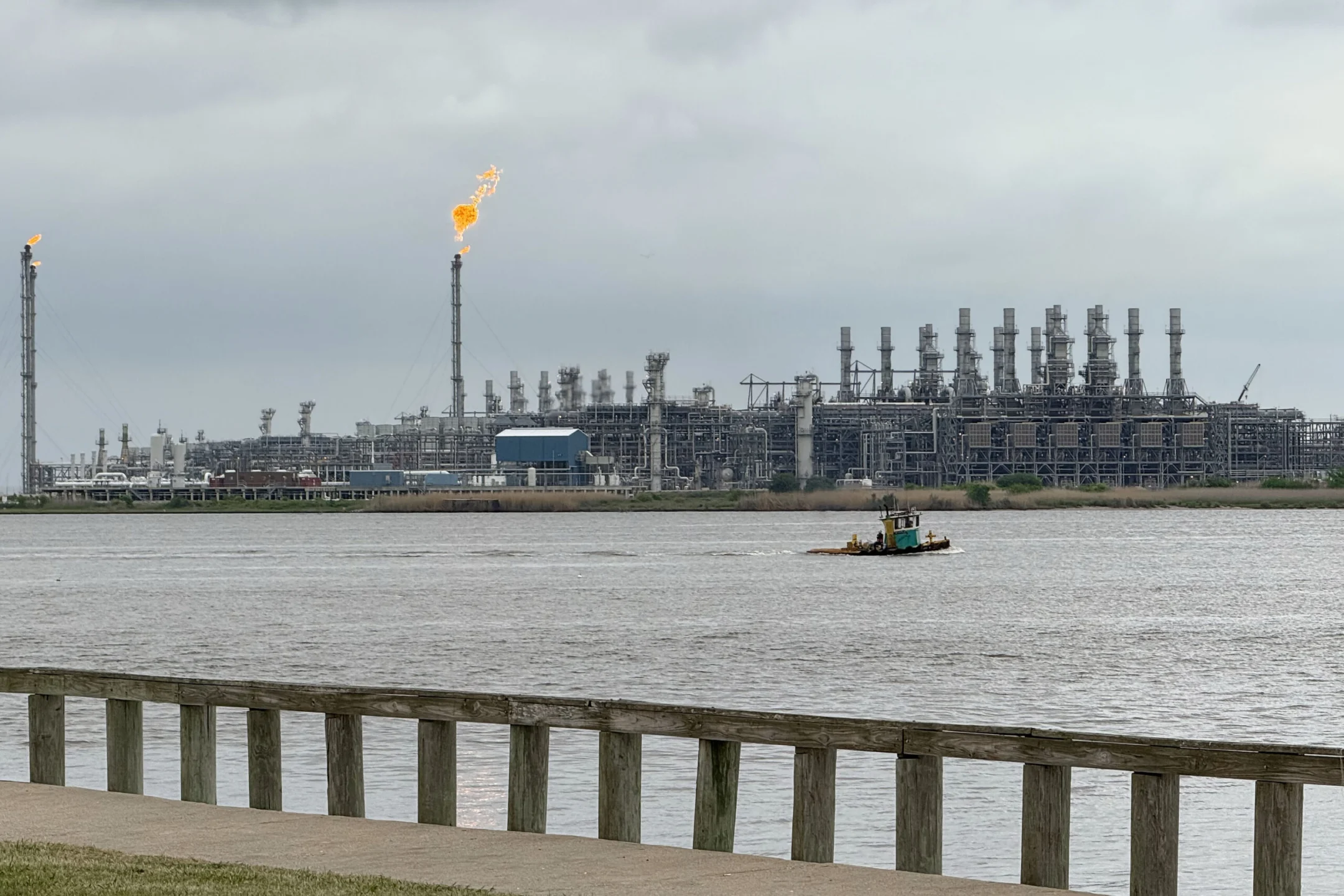
European gas prices touched €100 per megawatt-hour on Wednesday, the first time since December 2022, and the Dutch front-month contract at the TTF hub settled 4.85% higher on the day, according to ING’s commodities note. Reuters put the intraday touch at €100 around 13:35 GMT on Intercontinental Exchange data. AFP put the afternoon peak at €100.45. Behind that number, the stock underneath it is thinner than the last time it printed: EU underground storage held 849.1 terawatt-hours on 27 October, according to Gas Infrastructure Europe’s AGSI data, 168.3 terawatt-hours below the five-year seasonal average, and the refill added just 0.5 terawatt-hours in the latest daily reading after 3.7 terawatt-hours in the week to 25 October.
Europe rebuilt storage to 95% by 1 November 2022, about 1,060 terawatt-hours, which leaves today’s stock roughly 211 terawatt-hours below that level before the heating season has properly started. The gap opened during a winter that ended with stores at 28% on 1 April 2026, against 56% on the same date in 2023 and 34% in 2025. The injection season never closed it: on 1 October the EU held 811 terawatt-hours, or 72%, against 940 terawatt-hours, or 83%, a year earlier. At roughly 75% now, the bloc sits about 170 terawatt-hours short of its 90% filling target with the 1 November marker days away, and the target itself now bends, with member states allowed to deviate by up to 10 points in difficult market conditions and a further 5 at the Commission’s discretion. The average also hides the spread. GIE-compiled figures from mid-October put Italy at 89.5% and France at 87.4%. Germany, the bloc’s largest store, stood near 60%.
The price reached €100 in two waves. It traded between €28 and €40 per megawatt-hour early in 2026, then rose more than 60% in March after the Strait of Hormuz closed on 28 February, the largest monthly increase since September 2021, before an April ceasefire brought it back to about €49 by early June. A second wave began in late August as the refill fell behind schedule: the September average was €76.48, the contract crossed €80 for the first time since 2023, and it reached €86 on 13 October. October alone added 38%. Trading Economics put the four-week gain at 40.19% and the twelve-month gain at 203.24%. Goldman Sachs analyst Samantha Dart had said in late August that prices would need to rise near €100 to discourage Asian LNG demand and free cargoes for Europe, so Wednesday’s print landed on a number the market had already been told to expect, and investment funds raised their net long TTF position by 14.3 terawatt-hours to 207.4 terawatt-hours in the latest reporting week, according to ING.
The supply side lost pieces one at a time. The Hormuz closure kept more than 280 million cubic metres a day of LNG, roughly a fifth of global supply and mainly from Qatar’s Ras Laffan complex, from reaching the market. QatarEnergy declared force majeure on 4 March. Qatar supplied about 8% of EU LNG imports in 2025, and no Middle East LNG shipment has arrived since May, according to Bruegel. Iranian missile strikes in March damaged two Ras Laffan trains with a combined 12.8 million tonnes a year of capacity, about 17% of Qatar’s export total, with repairs expected to take three to five years, according to gCaptain. The United States now supplies roughly 30% of the EU’s gas, according to the EU Agency for the Cooperation of Energy Regulators. Russian LNG still made up about a fifth of EU LNG imports in the second quarter of 2026 ahead of the EU ban from January 2027. EU LNG imports ran 30% below a year earlier in the week ending 9 October, according to Rystad Energy, with unplanned Norwegian outages adding to the tightness. Equinor chief executive Anders Opedal warned on Wednesday that the winter could still produce another price spike. “Storage levels are at their lowest for this time of year since 2011, and there will be competition for LNG between Asia and Europe, especially if the weather turns cold,” he told a press conference, adding to Reuters that a cold spell late in the heating season, when storage is likely at its lowest, could lead to significant price volatility.
ENTSOG’s Winter Supply Outlook 2026/27 has EU storage closing the winter at 29% on 31 March 2027 in a reference winter with adequate LNG, and at 13% if LNG proves tight, with no demand response required in either case. A cold winter drops the closing level to 11% in both LNG cases, with strategic reserves of roughly 125 terawatt-hours left untouched in the model. Demand would then need to fall by 7% with adequate LNG and by 12% if LNG is tight. The cold scenarios require 237 to 437 terawatt-hours of demand response in total. South-Eastern Europe carries the sharp end: on a cold-winter peak day, with storage at 35% and no Russian pipeline gas, unserved demand there could reach 12%, against 6% across the EU. Gas Infrastructure Europe secretary general Lucie Boost put the position plainly in the industry body’s October study: “Europe is going into this winter with a resilient and highly interconnected gas infrastructure, but with less gas in storage and less room for error.”
The same outlook runs to September 2027. From October’s 72%, ENTSOG finds Europe could reach 90% by the end of September 2027 with adequate LNG, but only 65% if LNG remains tight, which would hand the next heating season the same problem with a smaller starting stock. Europe can regasify about 1,600 terawatt-hours of LNG each winter season. The cargoes to fill that capacity are the harder part, and the Institute for Energy Economics and Financial Analysis has estimated the EU may need to cut winter gas demand by about 7% against the previous winter once the Russian LNG ban takes effect. The one cushion that is genuinely thicker than in 2022 is demand itself, running about 20% lower than before the crisis, according to ACER, though Citi’s reading of that figure cuts against any comfort: industrial gas demand fell about 8% year on year in September and remained nearly 30% below pre-2022 levels in its six-country sample, which means part of the saving is demand destroyed by price rather than efficiency gained.
Power contracts already carry the wholesale price. The German front-year baseload electricity contract rose 1.7% to €159.30 per megawatt-hour, its highest since June 2023. The French equivalent stood at €122.50, close to a two-year high, because gas-fired plants typically set the price for electricity during periods of highest demand. Fertiliser producer Yara has curtailed ammonia production, and its European gas consumption fell by more than 7% year on year in the third quarter of 2026, according to ING. Households feel it later than industry because retail contracts lag wholesale prices, so most of the hit to bills lands in 2027, but German gas tariffs for new customers are already up 55% this year, bills in Britain are set to rise again in January, and EU governments have spent €17.9 billion this year cushioning households and firms against more expensive oil and gas, according to a European Commission note cited by Reuters.
EU energy ministers meet on Thursday to discuss energy security ahead of the heating season. Energy Commissioner Dan Jorgensen told reporters on Wednesday that the bloc faced a difficult winter, saying, “We are in a very serious situation now. It does not look like we have a security of supply issue but I would warn against neglecting that,” and arguing that available supply meant little to households and businesses that could not afford it. The Commission began talks with European refineries on Wednesday about boosting output, including through the possible easing of some technical specifications, and countries will discuss a proposal to cut electricity bills through tax and grid-fee reforms, such as taxing electricity at a lower rate than natural gas. Western powers also agreed this month to accelerate the release of more than 400 million barrels of emergency oil stocks after US pressure, and the EU and Canada are considering a long-term LNG agreement, according to a draft statement for their summit in Montreal on Thursday and Friday.
On 15 October Equinor agreed a change at the Troll field under which a planned second electric export compressor at Troll C will not be installed, a tweak expected to make around 2.3 billion standard cubic metres of additional gas available to the European market. Its contract for 1.75 million tonnes a year of US LNG from Cheniere has started up, and Opedal told Reuters some of those cargoes go to Europe and some go elsewhere.