New U.S. Solar Import Blocks Hit Before December Tariffs
Anti-stockpiling enforcement and Section 232 minimum import prices reshuffle the domestic solar supply chain
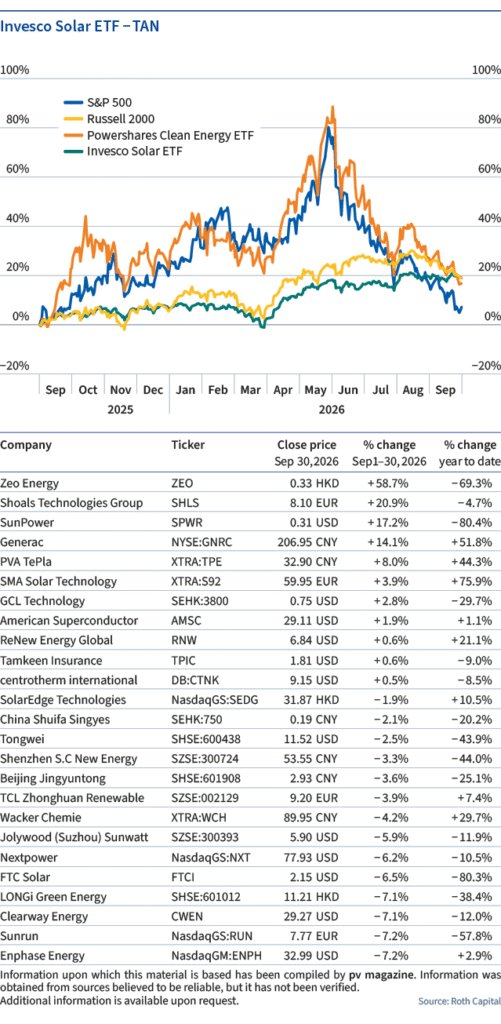
The Commerce Department and Customs and Border Protection have started blocking solar product imports, enforcing anti-stockpiling rules weeks before December 4 tariffs take effect. The enforcement began after an August 2026 Section 232 Proclamation set minimum import prices plus an extra 15% tariff on polysilicon and its derivatives, including solar cells and modules.
Officials announced the anti-stockpiling measures on September 22, 2026. Customs tracks covered products by tariff code and importer of record, comparing volumes against historical averages. When imports rise substantially, shipments can be halted and the importer must appeal to get them reinstated. New importers registered after August 6, 2026, face strict weekly caps: 12 kilograms of polysilicon, 7 kilograms of wafers, 2,000 solar cells, and 55 solar modules. Customs brokers who help companies evade the rules risk penalties, including license revocation.
President Trump signed the Section 232 tariffs following a national security investigation that linked polysilicon demand to both semiconductors and solar products. It is the first time Section 232 has been applied to clean energy technologies, and the first time minimum import prices have been set under such trade authority. The prices are $21 per kilogram for polysilicon, $100 per kilogram for polysilicon ingots and wafers, $0.22 per watt for solar cells, and $0.38 per watt for solar modules.


The barriers are already moving module prices and power purchase agreement rates. Solar PPA prices rose 4.9% in the third quarter of 2026, reaching $64.23 per megawatt-hour, with tariffs identified as a primary driver. Analysts project the Section 232 tariffs could add $3 to $7 per MWh to PPA costs. More than half of solar modules have been repriced, and average module costs could rise about $0.10 per watt. Thin-film module pricing has climbed 5% to 10% since the announcement, leading more developers to consider it despite a system-cost penalty of $0.03 to $0.07 per watt versus crystalline silicon.
The government is pairing the restrictions with domestic manufacturing incentives, including the Inflation Reduction Act’s Section 45X Advanced Manufacturing Production Credit. Enacted in 2022, Section 45X provides per-unit tax credits for domestically produced solar components such as photovoltaic cells, wafers, and modules. U.S. solar panel manufacturing capacity has climbed from 14th to 3rd globally since implementation. The Commerce Department is also authorized to run an onshoring incentive program, offering reduced tariffs for companies with approved U.S. investment plans that strengthen the domestic supply chain.
Broader solar tax credits are shifting as well. The Section 25D residential credit, which offered a 30% credit for homeowners, expired for new expenditures after December 31, 2025, following the One Big Beautiful Bill Act signed in July 2025. Third-party ownership models for residential solar may still access the commercial Section 48E credit, which remains available until December 31, 2027, with extended eligibility for projects that began construction before July 4, 2026.
Foreign Entity of Concern rules, which generally took effect January 1, 2026, add another layer. They restrict tax credit eligibility for projects and components receiving prohibited material assistance from prohibited foreign entities. Interim IRS guidance, Notice 2026-15, issued in February 2026, sets Material Assistance Cost Ratio thresholds, including a 40% minimum for qualified electricity-generating facilities in 2026.
The industry is also dealing with higher financing costs as interest rates climb, cutting returns on unhedged 2028 pipelines by at least 100 basis points. Demand for PPAs from large data center operators has moderated, and buyers are negotiating harder on price and terms. Residential solar installations fell 12% year-over-year in Q2 2026, and Wood Mackenzie forecasts a 23% decline for 2026, with a recovery anticipated in 2027. Financing bottlenecks, including delayed FEOC guidance and rising costs, are pushing installers into bankruptcy across the market, while grid constraints and interconnection delays continue to slow deployment.