Oven Mountain Is Dead: The $1.8 Billion Pumped Hydro Project Australia Couldn’t Afford to Build
A 900MW "critical state significant" project, a 7.2GWh hole in the grid, and a pattern nobody is tallying up: big Australian pumped hydro keeps dying of the same wound.
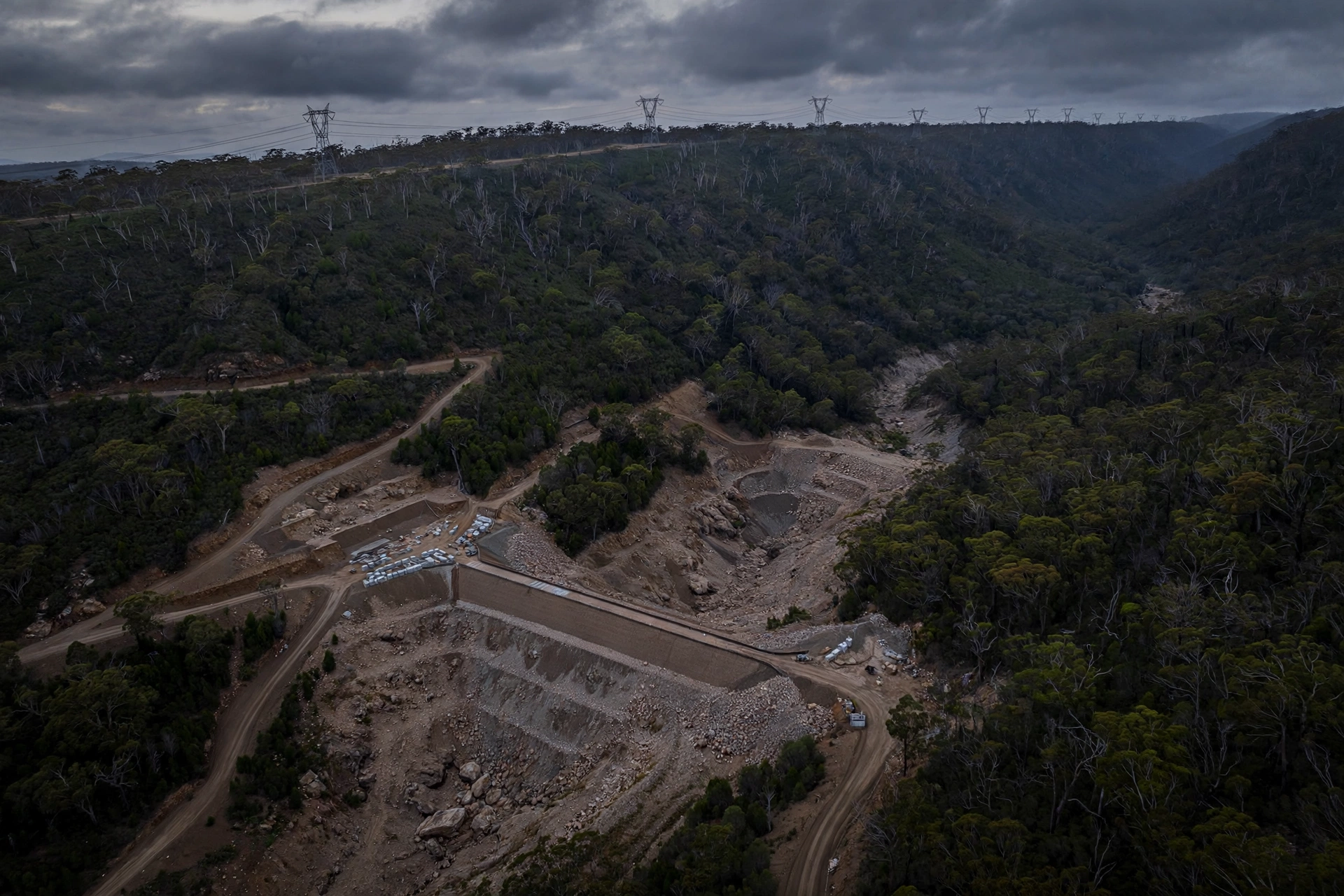
The announcement was eight sentences long. Alinta Energy has discontinued the Oven Mountain pumped hydro project — 900 megawatts, eight hours of storage, a venture it once called “a critical project for the NSW energy transition.” The reason given: “economic and timing challenges on key elements of the project, including a critical transmission line.”
Understand the scale of what vanished. Oven Mountain was designed to move water more than 600 metres uphill between two reservoirs near Carrai, halfway between Armidale and Kempsey in the New England Renewable Energy Zone, and let it fall back through turbines at evening peak. 900 MW for eight hours is 7,200 MWh. Alinta said that was enough to power more than 600,000 homes. For comparison, Origin Energy’s giant battery at the Eraring site — one of the largest batteries in the country — is rated at 700 MW and 3,160 MWh, roughly four and a half hours. Oven Mountain would have held more than twice its energy. A ~$1.8 billion project, gone in a paragraph.
And it wasn’t alone this month. Origin scrapped its proposed 870MW Skye Ridge Wind Farm near Walcha, also in northern NSW — the second state-significant renewable project to fall within weeks. The field covered both as separate incidents. Step back and the picture is uglier than either announcement admits.
Take the full ledger of Australia’s big pumped hydro. Pioneer-Burdekin in Queensland was supposed to be the world’s largest: 5GW, 120GWh, a 24-hour giant. The state government killed it in November 2024 after the bill reportedly reached AU$36 billion, and Queensland Hydro spent months offering the 58 voluntarily acquired properties back to the landholders it bought them from. Snowy 2.0, the 2.2GW flagship, was reset at $12 billion in 2023; by March 2026 it had already spent $11.1 billion against that budget, a June auditor-general report slammed its management, and the expected cost is drifting toward $20 billion with completion no earlier than late 2028 — a deadline the CEO admits he is “not feeling that comfortable” about. Borumba, the 2,000MW project west of the Sunshine Coast, has gone from $14.2 billion to more than $18 billion, its first power slipped to July 2035, and the government is reportedly weighing a scale cut of up to a quarter. What’s still genuinely moving? Queensland’s 2GWh Kidston project, the first new pumped hydro to reach the grid in some forty years, and the 750MW Capricornia hub, still in early contractor engagement. Everything else is a press release or a hole in the ground.
The wound is rarely the dam. It is the wire. Alinta named it outright: a “critical transmission line” whose economics and timing made the project unviable. The same bottleneck keeps appearing — delayed transmission zones have slowed NSW’s wind and solar rollout too, and the Queensland projects wrestle with their own transmission questions. Pumped hydro’s economics depend on the grid connection arriving when the reservoirs are ready. When it doesn’t, the arithmetic collapses and the developer walks. Years of studies, stakeholder engagement and planning applications become a website redirect.
There’s an ownership footnote worth reading. Alinta was bought by Singapore’s Sembcorp Industries, with the takeover completing in June. The June release listed a 3.4GW operating portfolio and a 10.4GW development pipeline. Pumped hydro wasn’t named separately. Four months later, the new owner killed the biggest storage project on the books. It is not hard to picture the review that happened between those two statements.
But the sharper irony is the stamp. Oven Mountain was granted “critical state significance status” in 2020 — the NSW government’s marker for projects that get priority treatment through planning. It turns out a significance stamp is a planning shortcut, not a viability guarantee. The market, not the minister, decides.
Now follow the consequence, because this is the part the announcements never say. NSW’s biggest coal plant, the 2,880MW Eraring, had its retirement pushed back in January from August 2027 to April 30, 2029 — explicitly so that replacement capacity, storage and transmission would have time to arrive. Every scrapped storage project is another argument, written in someone else’s handwriting, for keeping coal burning longer. The state already expects a reliability shortfall around 2033–34 when Bayswater and Vales Point retire. The dead ledger now reads: 120GWh at Pioneer-Burdekin, 7.2GWh at Oven Mountain, an 870MW wind farm — against a deadline measured in coal-plant retirements.
The question for NSW was never whether it could announce big storage. It was whether it could build any of it before the coal plants leave. October has not answered that question well.