
Why Did Hims Hers Q3 Shares Fall When Revenue Grew?
Revenue grew 49%. The margin fell to 57%, the subscriber count shrank, and the guidance cut says the old economics are not coming back.
On Friday, Hims & Hers shares jumped 8% after the company announced it would sell Eli Lilly’s weight-loss drugs at Lilly’s own prices. On Monday, the shares fell 11.8% before the company had said a word about its quarter. After the close, Hims Hers Q3 results landed — revenue up 49%, a loss of 14 cents a share where Wall Street expected a profit of 6 cents — and the shares fell about 3% more in late trading.
The quarter itself was a miss on the numbers Wall Street watches. Revenue of $890.4 million came in about $2 million short of the roughly $893 million Wall Street expected, and adjusted earnings of 3 cents a share missed the 7 cents expected by more than half. The guidance was worse than either: for the fourth quarter the company guided revenue of $875 million to $895 million, against $953 million expected, and for the full year it cut adjusted earnings before interest, tax, depreciation and amortisation to $257 million to $277 million, against $294 million expected.
A year ago, 74 cents of every revenue dollar became gross profit. In the quarter just reported, 57 cents did. The cost of revenue rose 143% to $381.2 million while revenue rose 49%, so gross profit grew only 15%, to $509.2 million. The margin was 74% a year ago, 64% in the second quarter, and 57% now. On a trailing twelve-month basis it has slid from 82.2% to 68.4% in two years.


The shift was deliberate, and the company said so itself. In the first quarter of 2026 it reshaped its American weight-loss offering around branded GLP-1 drugs, with compounded versions available only “on a limited scale”, and it booked $41.9 million of restructuring charges in the first nine months of the year. In August, chief financial officer Yemi Okupe told analysts that as branded weight-loss products and international revenue become a larger part of the business, gross margins “will remain below the levels we have historically achieved”. Trefis, which tracks the filings, reported that management expects the lower margin to last through the second half of 2026.
Hims got into weight loss on the cheap version. In May 2024 it began selling compounded semaglutide at $199 a month, a fraction of the branded price. In February 2025 the Food and Drug Administration declared the semaglutide shortage resolved, which meant compounders had to stop copying the drug. Hims found a partner instead: in April 2025 it struck an alliance with Novo Nordisk to sell Wegovy through the drugmaker’s own channel. Two months later Novo ended the deal, accusing Hims of illegal mass compounding and deceptive marketing.
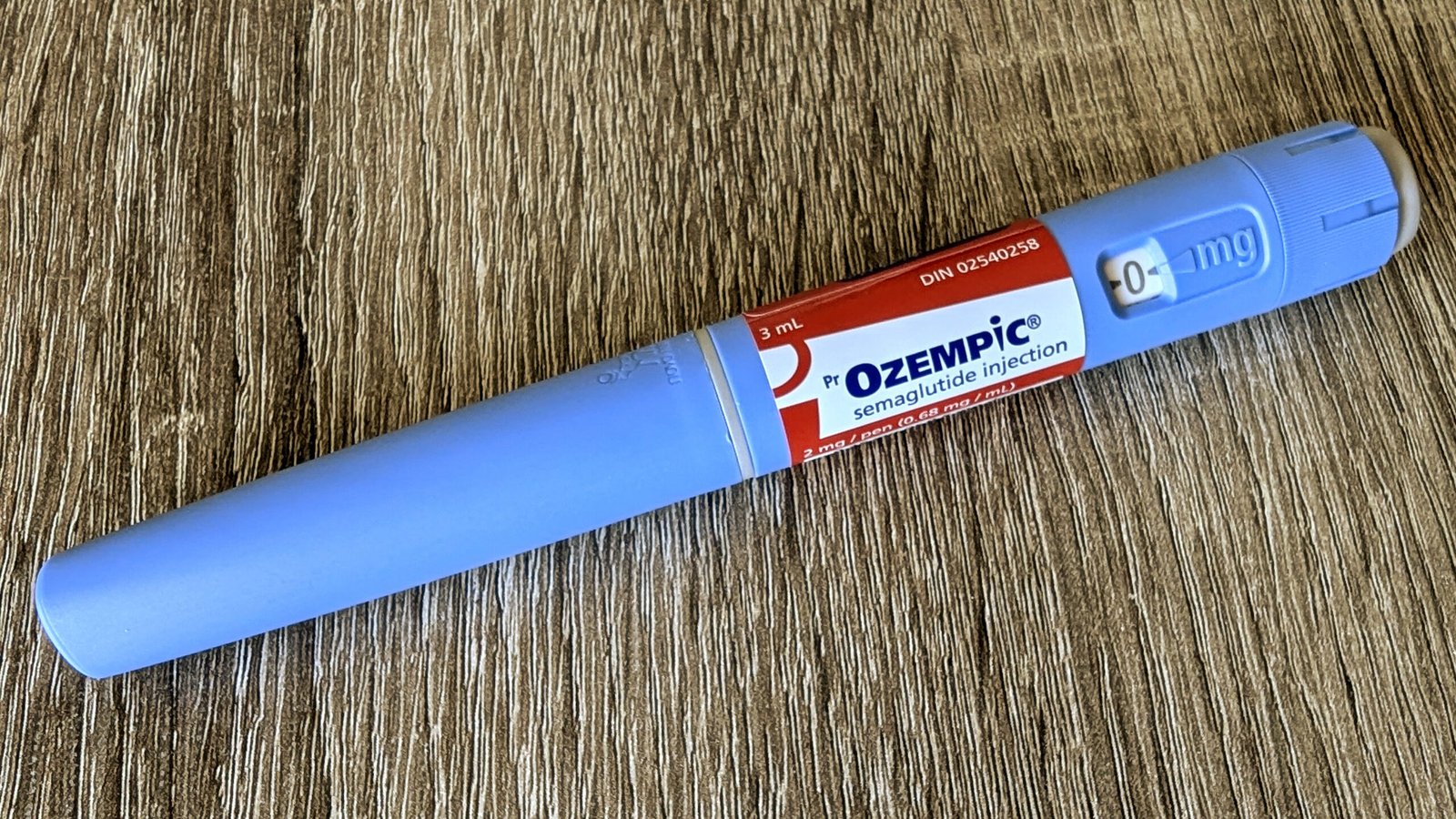
The reckoning came in stages. The FDA sent Hims a warning letter in September 2025, and in February its enforcement announcement named the company while the health department’s general counsel referred it to the Justice Department. On February 9 Novo sued in Delaware for patent infringement, days after Hims announced a compounded semaglutide pill at $49 for the first month and $99 after; Hims pulled the pill within two days. On March 9 Novo dismissed all its claims without prejudice, reserving the right to refile, and Hims agreed to sell branded Ozempic and Wegovy at Novo’s self-pay prices — $349 a month for the pen, $149 to $299 for the pill — and to stop advertising compounded GLP-1 drugs. On November 6 the company signed the same kind of deal with Lilly: Zepbound at $299 a month and Foundayo, Lilly’s daily pill, at $149, with Hims committing never to offer compounded copies of Lilly’s drugs. Zepbound alone brought in $5.35 billion in the quarter.
The subscriber count moved the wrong way while the price per subscriber moved up. Hims ended the quarter with 2.79 million subscribers, down from 2.89 million at the end of June, and about 250,000 short of the 3.04 million Wall Street expected. Each subscriber now pays $105 a month on average, up from $81 a year ago. The arithmetic fits the branded shift: the drugs cost more, the price passes through, and fewer people are paying it.
The growth that remains is coming from outside the United States. Revenue from the rest of the world rose 321% to $233.3 million and now makes up more than a quarter of the total, while American revenue rose 21% to $657.1 million. The third quarter was the first full quarter with Eucalyptus, the Australian company behind the Juniper and Pilot brands, which Hims bought in June.
For the fourth quarter, the company guided revenue of $875 million to $895 million, a midpoint $68 million below what Wall Street expected, and it cut its own full-year revenue top end by $150 million, from $3.3 billion to $3.15 billion. Hims still targets $6.5 billion of revenue and $1.3 billion of adjusted earnings by 2030, which implies a 20% margin, against 8% to 9% guided for this year.
Receivables stood at $427.8 million at the end of September, against $32.1 million at the start of the year, and they consumed $323.9 million of cash in the first nine months, against $16.1 million a year earlier. Operating cash flow fell by half over those nine months, to $118.8 million, and free cash flow in the quarter fell two-thirds, to $26.0 million. The branded-drug business ties up cash in receivables that the compounding business never did. Goodwill on the balance sheet quadrupled to $1.11 billion, convertible notes rose to $1.37 billion, and equity fell to $355.3 million.
On Reddit’s Hims & Hers forum that night, the holders split over what had happened. “The worst thing imo is the margin fell to 57% I was hoping that wouldn’t happen. But the other numbers aren’t too bad,” wrote u/ArchitettoGrande. “Revenue growing nicely. Almost 50% Y/Y. Earnings will get better over time. The narrative is killing the stock short-term tho,” wrote u/Veke98. Another holder, u/Crazy_Fishing_1944, argued the revenue miss was tiny — “only miss this by 2 million is very impressive actually and very good news”. u/gazilionar asked the question the Monday drop invited: “Makes you wonder who had access to these numbers at the beginning of the day?” The two defences both treat the fall as a problem of perception — a narrative, a small miss. Okupe’s August line says otherwise: the margin is structural, and management has said the old levels are not coming back. “In healthcare, whoever owns the customer relationship wins,” chief executive Andrew Dudum told investors in the release.
The release also carries $62.5 million of legal contingencies for the first nine months of the year. The Federal Trade Commission sued the company in July over its handling of customers’ health data and its billing and cancellation practices.