Carlos Jimenez ICE Lawsuit: The Prosecution Ended the Day After a Judge Ordered the Officers’ Texts
The criminal case closed without the messages being produced in court. The civil suit is where the record goes next.
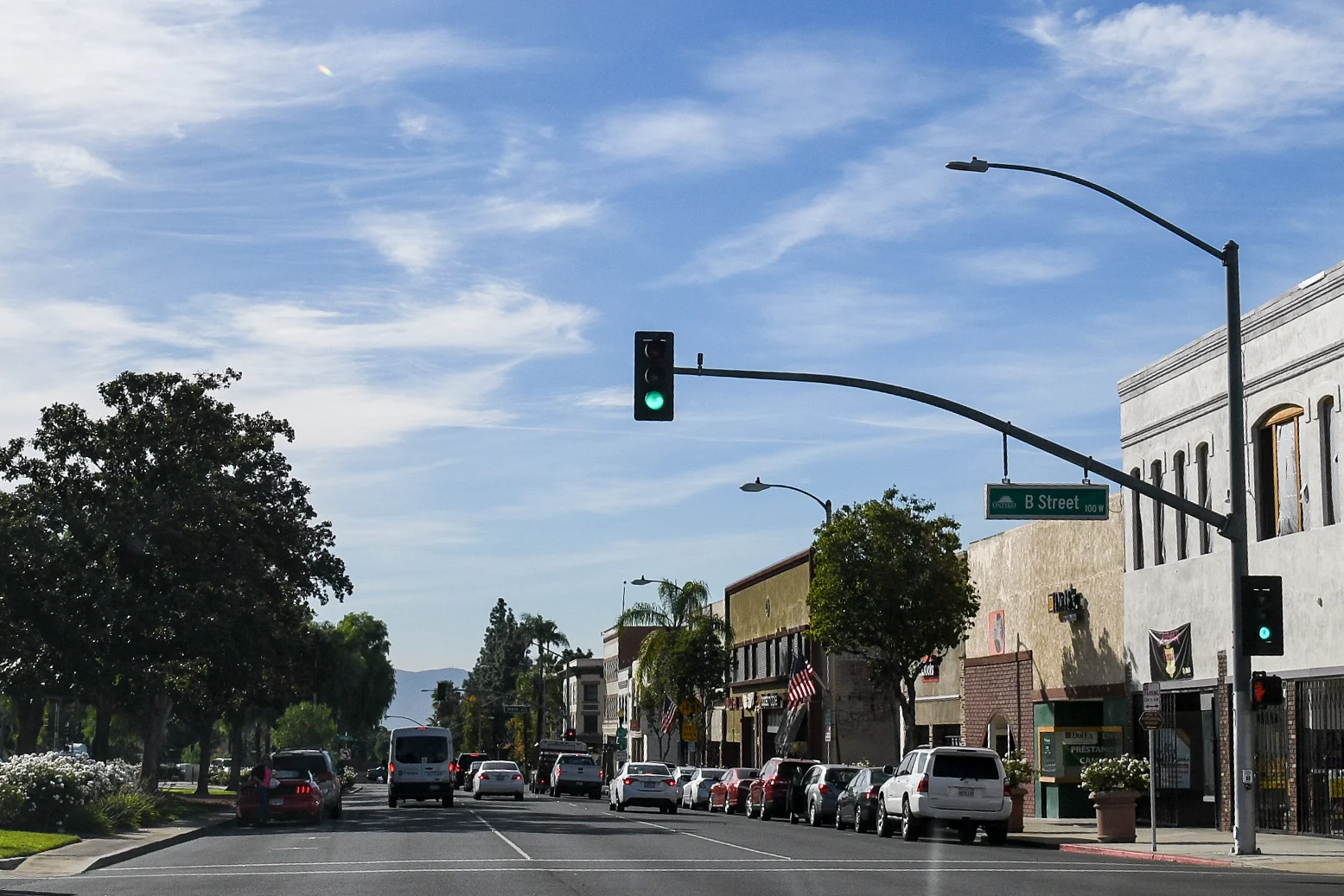
The criminal case against Carlos Jimenez ended with a stipulation, not a verdict. The assault charge filed against him the day after an ICE officer shot him in Ontario, California, was dismissed with prejudice last week, and on November 6 he filed the complaint that now carries the dispute: 54 pages, 13 causes of action, $25 million in non-economic damages and about $179,000 more for medical bills, lost earnings and property damage. The Carlos Jimenez ICE lawsuit names the officer who fired, the FBI agent who wrote the reports, and the county that held him.
It was about 6:30 on the morning of October 30, 2025. Jimenez, a United States citizen and father of three, left the mobile home park where he lives, at 1855 East Riverside Drive, and drove toward his job at a food pantry in Baldwin Park. On Vineyard Avenue, less than two blocks from his street, four federal agents had stopped a Honda Accord as part of a planned immigration operation. Jimenez pulled up and warned them that children would soon be gathering at a nearby school bus stop.
The complaint says ICE officer Eusebio Ortiz pointed a gun at Jimenez’s face, cursed and threatened to shoot him if he did not leave. He then holstered the weapon, showed pepper spray, and fired several rounds through the rear passenger-side window as Jimenez tried to turn his Lexus around. The Department of Homeland Security gives a different sequence: Jimenez parked in front of the officers, was told to move, and reversed toward them, and the officer fired in self-defense, fearing for his life. Jimenez drove home and called 911; his wife took him to hospital. A bullet had shattered the rear passenger window and struck him in the back and shoulder, displacing a fracture of his right shoulder blade, and fragments remain near his right lung.
The account does not stop at the roadside. It says FBI agents followed Jimenez to the hospital, interfered with his treatment and kept him from speaking with medical staff, then pulled him from his bed, put him in a waist restraint, and drove him back to the scene for questioning while the bullet and its fragments were still in his body. It says he bled and vomited in the agents’ van and was told not to damage it. He was then taken to the West Valley Detention Center, where the complaint says he was denied appropriate treatment and medication. The FBI declined to comment.
FBI Special Agent Estevan R. Banuelos is accused in the complaint of writing reports that put words in witnesses’ mouths. It says Banuelos attributed statements to Manuel Villareal and Beatrice Morales — that Jimenez had room to drive forward instead of reversing — and that both later told an investigator working for the defense that they had never given any estimate of the distance, never said he had room, and had not seen the shooting. The complaint argues the diversion deal that ended the criminal case was offered to keep Banuelos off the witness stand and Ortiz’s communications out of court. The Justice Department says the requested text messages did not exist, and that Jimenez asked for diversion.
The criminal file opens the day after the shooting. Prosecutors charged Jimenez on October 31, 2025, with assaulting a federal officer, the vehicle charged as the deadly weapon, carrying up to 20 years. A grand jury indicted him on November 18, naming the officer he was accused of attacking only as N.J., a Customs and Border Protection officer. Prosecutors asked that he be held; the judge refused, setting a $10,000 bond and an ankle monitor.
The defense then spent months pressing for the government’s own paper. Prosecutors had earlier offered a different exit — plead guilty and take a year — and the defense declined it. Its motion to compel, filed as ECF 53, sought the personnel files of the government’s witnesses and their communications. The government opposed it on April 16; the defense replied on April 20; a status report followed on April 29.
On May 5, Judge Kenly Kiya Kato ordered the government to produce what the defense had been asking for: discovery of ICE policies and ICE agent communications, messages on official and personal phones, and a sworn declaration from Ortiz if no relevant communications of his could be found. The next day, May 6, the parties filed a stipulation for pretrial diversion. On May 7 the court continued the trial, moving it to December 7, and stayed the evidence order. The trial never happened, and the messages were never produced in court.
What the record says about those messages comes from the San Bernardino County Sentinel, which followed the case through the spring. It reported that a Department of Homeland Security internal review had concluded Ortiz “overreacted” and that the charges against Jimenez had been “reflexively filed.” Two officers gave recorded statements on October 31, 2025. Ortiz waited about a month and gave his only with his personal lawyer present. The Justice Department’s position was that no texts from Ortiz existed — a claim the Sentinel called “a significant anomaly in the manner in which agents of [DHS] normally function.” Only Jimenez spoke to investigators without an attorney present, Greg Jackson, one of his lawyers, told the paper.
By the spring, Jackson had already put a price on the case: a claim of about $35 million under the Federal Tort Claims Act. The suit filed on November 6 asks for $25 million, and adds Banuelos, San Bernardino County and 20 unnamed defendants to the Trump administration and Ortiz. Jackson told the Sentinel the dismissal “bolsters our own argument that the shooting itself was unlawful and the charges against Mr. Jimenez entirely fabricated and baseless,” and that there was no condition in the deal requiring Jimenez to drop the civil claim. He also said Ortiz “violated department policy by firing his weapon at a moving vehicle.”
Jimenez’s lawyers have run this pattern before. On August 16, 2025, in San Bernardino, Francisco Longoria was delivering a water-slide inflatable in a work truck with his 18-year-old son and 23-year-old son-in-law when three unmarked vehicles boxed them in. Masked agents smashed the windows and punched Longoria; he drove away, and an agent fired three shots. No one was hit. A Department of Homeland Security press release said Longoria had tried to run the officers down and struck two of them. The San Bernardino police report said explicitly that he had not struck any federal agent.
Longoria was arrested at his home at 4 a.m. on August 28, charged with felony assault, and the charge was dropped on September 17, 2025. He stayed in immigration detention until early December. His civil suit followed on July 24, 2026. Jackson’s description of the stop was blunt: “It was an illegal stop. They saw brown people in a truck and decided to exercise their perceived authority over them.”
The word the public fastened on was the government’s own: “defensive.” On Threads, where the lawsuit was posted on November 9, a commenter who goes by @thatsfuppedduck wrote that police trainees are taught not to stand in front of or behind a vehicle, “and they’ve learned that if they ignore that training they can shoot whoever’s in the vehicle and get away with it. Third, shooting someone in the back is not defensive.” Another, @giselaglodeck, put it shorter: “Standard excuse except Carlos was unarmed.” The department’s account rests on the threat the car posed; the replies test that threat against the wound, which was in his back, and against the charge itself, which named the car, not a gun, as the weapon.
Not everyone on the threads took Jimenez’s side, or believed the suit would matter. “It won’t go anywhere. Not this term,” wrote @pash.usa on the same Threads post. On Instagram, under Newsweek’s post about the filing, @farleybegood wrote: “LETS GO ICE…..STILL HAVE MORE TO BE DEPORTED.” The complaint asks for $25 million in non-economic damages; the criminal case’s dismissal carried no finding on the officers’ conduct.
Representative Norma Torres, whose district includes Ontario, said on the day of the shooting that her office had asked ICE for information repeatedly and been refused, and that “statements from the Department cannot be taken at face value.” She is now calling for the release of all audio and video from the operation, and a petition demanding the same was published on November 5. The petition says the government has released only a partial clip. It had 97 signatures against a goal of 100.