
Deadly A66 crash forces UK crackdown on TikTok driving stunts and monetized road recklessness
UK authorities target viral driving videos after deadly A66 crash
British authorities are escalating pressure on major social media platforms to curb a rising tide of viral dangerous driving videos. The regulatory push comes amid a formal investigation by the Independent Office for Police Conduct (IOPC) into a fatal collision on the A66, a critical Trans-Pennine route connecting Cumbria and North Yorkshire. The high-profile crash, which has already led to several arrests connected to organized crime, has renewed scrutiny on how social media algorithms propagate highly dangerous stunts.
A survey by road safety charity IAM RoadSmart revealed that one in seven drivers under the age of 24 admitted to filming themselves while operating a vehicle within the past year. The financial ecosystem behind viral content remains a primary driver of the trend. According to road safety expert Pollard, the mechanics of modern social media platforms actively incentivize reckless behavior behind the wheel. “There is a financial incentive for people to post outrageous content that gets more people watching it,” Pollard explained, pointing to monetization models that reward high view counts and user engagement.
“The distraction caused by smartphone usage and driving is well documented, but it is horrifying that some people are now actively filming and flaunting such dangerous behaviours online,” said Nicholas Lyes, director of policy at IAM RoadSmart. Lyes emphasized that social media companies must do more to quickly identify and remove footage depicting illegal acts, arguing that platforms “have a duty to ensure that dangerous criminal activities are not circulated for likes and shares.”


The ongoing probe into the A66 crash has reached the highest levels of British governance. Officials at No. 10 Downing Street are reportedly in direct communication with TikTok and other tech firms regarding the proliferation of reckless driving videos. In response, TikTok defended its safety record and moderation protocols. The platform stated that during the first quarter of 2026, its moderation teams proactively detected and removed 98 percent of the content taken down for promoting dangerous behavior. TikTok also reiterated that its official community guidelines strictly prohibit content that could lead to physical harm, explicitly including dangerous driving.
Greater Manchester Mayor Andy Burnham condemned the trend, stating that “anybody who glorifies dangerous driving is doing something that’s truly reprehensible.” Burnham, who oversees policing and transport initiatives across Greater Manchester, has frequently advocated for stricter enforcement against anti-social driving. Despite TikTok’s assurances, safety advocates argue that enforcement remains inconsistent. Independent monitoring quickly reveals numerous videos showcasing illegal street racing, high-speed maneuvers, and anti-social driving on multiple platforms, with many posts securing thousands of views and interactions within minutes of being uploaded.
The government’s primary leverage against tech platforms lies in the Online Safety Act 2023. The landmark legislation, which grants sweeping powers to the media regulator Ofcom, is designed to compel platforms to protect users—particularly children—from harmful and illegal material. Under the law, platforms that fail to comply face severe penalties, including fines of up to £18 million ($22.3 million) or 10 percent of their global annual turnover. Ofcom is currently investigating TikTok’s compliance with its safety mandates. “Under the Online Safety Act, platforms must minimise children’s exposure to violent material and content promoting dangerous challenges,” an Ofcom spokesperson said. “In July, we launched an investigation into TikTok’s compliance with its child safety duties, and we’ve shown we’ll take action if evidence suggests companies are falling short.”
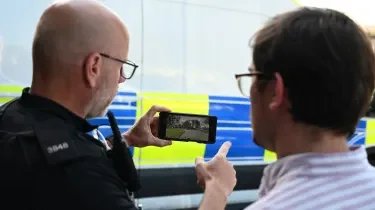
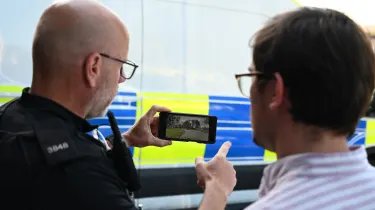
While regional police forces across the U.K. have increasingly turned to digital portals allowing the public to submit dashcam footage of traffic offenses, systemic coordination remains a challenge. Contacted for comment on the digital distribution of driving violations, the National Police Chiefs’ Council declined to comment on the ongoing regulatory discussions. In the United Kingdom, the phenomenon of drivers filming extreme behavior for online engagement has shifted from a nuisance to a systemic road safety crisis.