K&N Bypasses Auto Shops, Targets Walmart Aisles
The performance brand's disposable filter line targets everyday drivers shopping at big-box retailers instead of specialty auto stores.
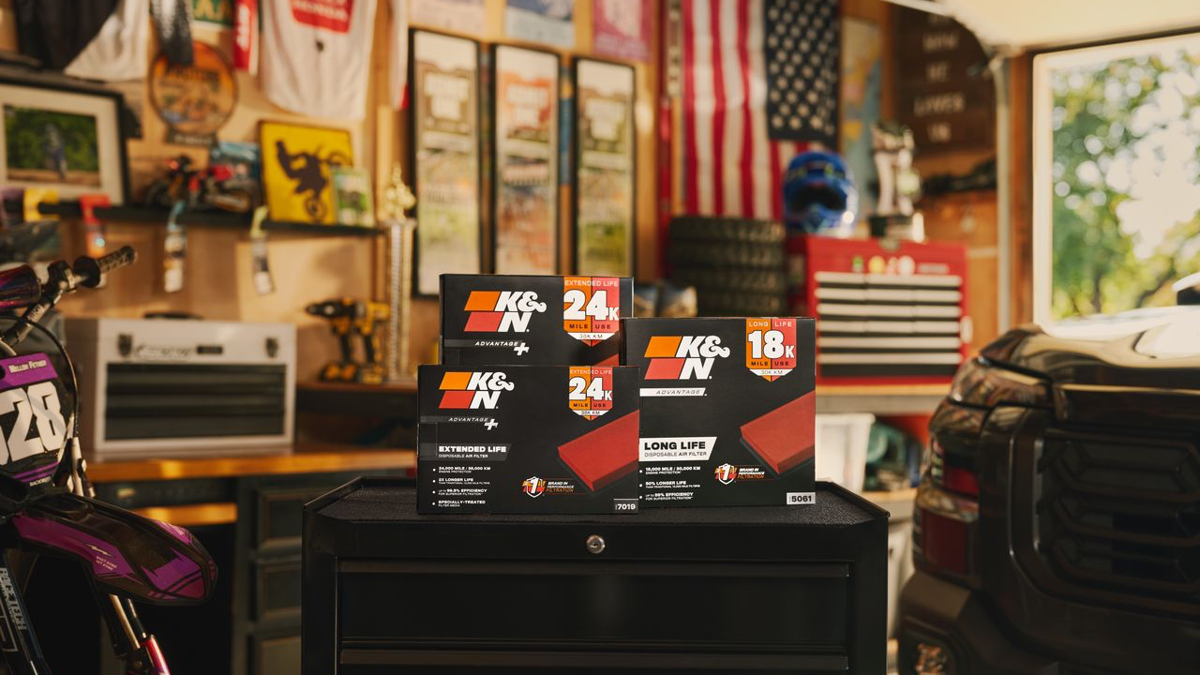
Walmart’s automotive parts aisles are about to stock a brand historically associated with aftermarket horsepower rather than routine errands. K&N announced October 20 that its Advantage disposable air filters are arriving at select Walmart stores nationwide and regional Blain’s Farm & Fleet locations, according to the company’s announcement.
The retail push marks a strategic pivot for a manufacturer whose core business relies on washable, reusable performance filters sold through specialty auto parts chains and online catalogs. By placing a throwaway product in big-box grocery destinations, K&N is targeting drivers who treat vehicle maintenance as an incidental task completed during regular shopping trips rather than a planned visit to an auto store.
Thinking about selling your car? Get an instant cash offer online now. Click here to get started.


K&N Advantage
K&N
Three Filters For Two Different Jobs
The Advantage family comprises two engine-filter lines and one cabin-filter line. Their purposes differ: engine filters protect the engine’s intake air, while cabin filters treat the air entering the passenger compartment. Start by identifying which maintenance item your vehicle actually needs.
Product
Claimed service life
Starting U.S. MSRP
Advantage Long Life engine filter
Up to 18,000 miles
$20.99
Advantage Plus Extended Life engine filter
Up to 24,000 miles
$36.99
Advantage Plus Replacement cabin filter
12,000 miles
$24.99
These are starting MSRPs from K&N’s announcement; fitment and retailer pricing can change the bill.
K&N says the engine filters use synthetic or cellulose-blend media, depending on the application. It claims filtration efficiency of up to 99% for Advantage and up to 99.5% for Advantage Plus. These are manufacturer-claimed figures, not results from an Autoblog comparison test. According to K&N, the cabin filter is also designed to reduce unwanted odors. The Advantage and Advantage Plus specifications describe the engine-filter claims.
The engine filters fit the factory airbox, and K&N says installation typically requires no tools. Owners should still check their vehicle’s instructions, since access varies. These are disposable filters, so buying one does not add a washing or reoiling routine to your weekends. K&N says Advantage Plus engine filters carry a one-year limited warranty. That is separate from the advertised mileage interval, which some drivers may not reach for two years.
Shopping for a new car? Click here to get a great deal on your next vehicle. Powered by Carvana: no-haggle pricing, 100% online.
Snow on highway
Getty Images
The product line first appeared online in 2024. Pricing starts at $20.99 for the Advantage Long Life engine filter, rated for up to 18,000 miles, according to the company. The top-tier Advantage Plus Extended Life engine filter carries a $36.99 starting MSRP and a 24,000-mile rating. Cabin filters start at $24.99 for a 12,000-mile lifespan.
Extended mileage claims require scrutiny against actual manufacturer maintenance schedules. K&N specifies normal highway driving conditions for both the 18,000-mile and 24,000-mile intervals. Dust exposure can change replacement needs considerably; anyone regularly driving unpaved roads should pay attention to filter condition and their vehicle’s maintenance guidance.
Automakers frequently set longer baselines than the aftermarket assumes. Ford’s 2026 F-150 owner’s manual, for example, specifies engine-filter replacement every 30,000 miles, with inspection and earlier service as conditions require. A 24,000-mile aftermarket rating would therefore mandate more frequent changes than the factory schedule for that specific truck. The “twice the life” marketing comparison relies on a 12,000-mile baseline that is not universal across modern vehicles.
Automotive Maintenance
Photo by Patchareeporn Sakoolchai on Getty Images
Federal FuelEconomy.gov guidance notes that replacing a clogged filter on modern fuel-injected vehicles doesn’t improve fuel economy, though it can improve acceleration. Older carbureted vehicles can respond differently. The financial math depends entirely on competing products available at the same retailer. At $36.99 over 24,000 miles, the cost works out to roughly $1.54 per 1,000 miles if the filter reaches its maximum claimed lifespan.
Autoblog aims to feature only the best products and services. If you buy something via one of our links, we may earn a commission.