

U.S.-China Tech Rivalry Drives ‘Over-Securitization’ as Southeast Asia Pushes for Strategic Autonomy
Despite a recent trade truce extension, massive gaps in tech capital spending and rising 1930s comparisons signal deeper structural challenges for global markets.
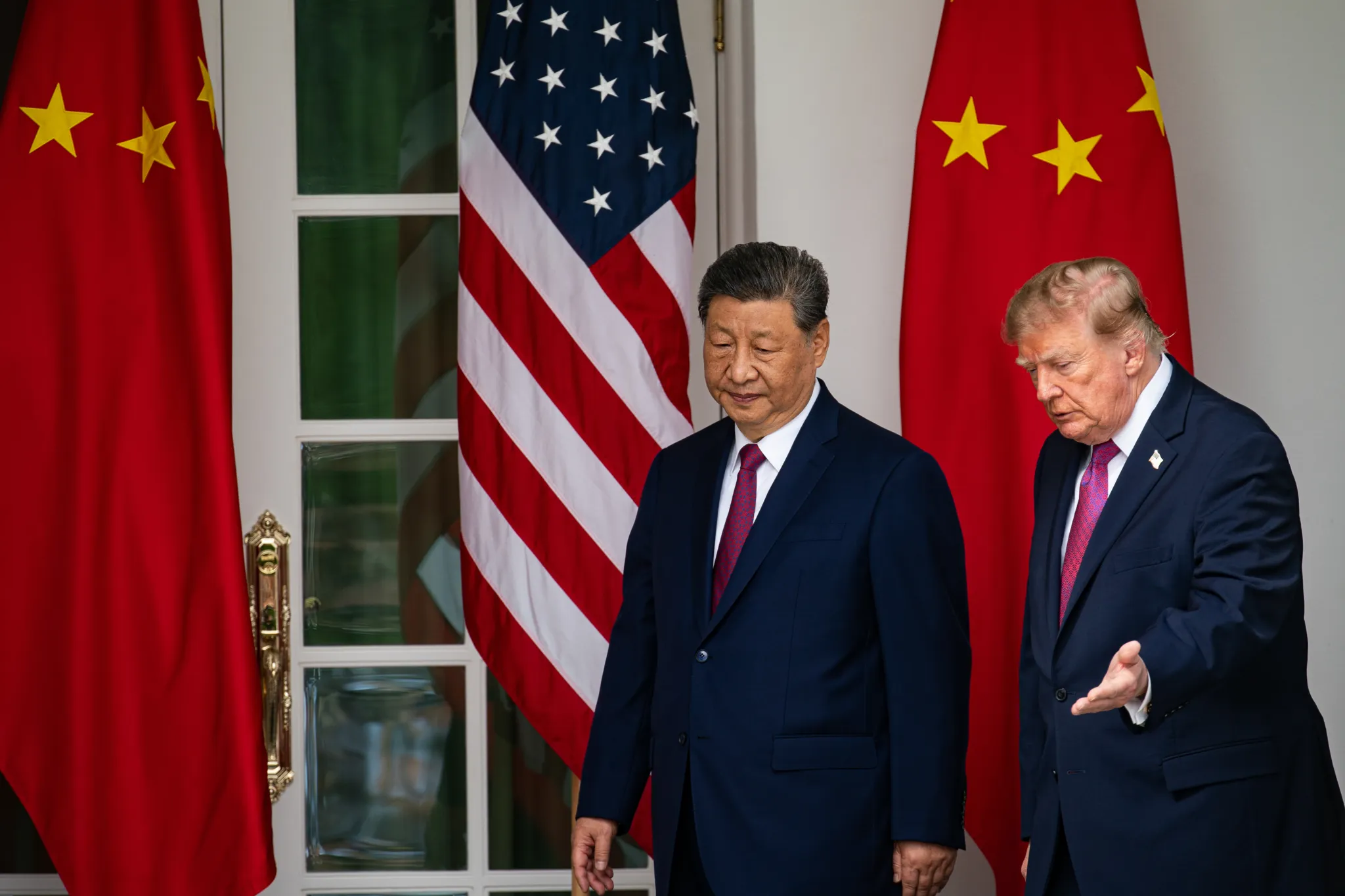
A two-month extension of the U.S.-China trade truce, signed during Chinese President Xi Jinping’s visit to Washington last week, has temporarily paused the escalation between the world’s two largest economies. But beneath the diplomatic thaw, leading strategists warn that a structural transformation in global competition—defined by the weaponization of technology and economics—is accelerating faster than bilateral agreements can contain it.
The current geopolitical climate mirrors the 1930s, characterized by rising nationalism, populism, and an “over-securitization of almost everything,” according to Yu Tiejun, president of Peking University’s Institute of International and Strategic Studies. Speaking Tuesday at the Asia New Vision Forum in Singapore, Yu argued that treating commercial and scientific exchanges primarily as national security threats is distorting global markets and pushing major powers toward historical fault lines.
Washington’s anxiety over Beijing’s technological rise, however, may be misaligned with the underlying financial realities. The United States retains a massive structural advantage in funding innovation. U.S. tech firms deployed more than $400 billion in capital expenditures in 2025, dwarfing the $63 billion spent by their Chinese counterparts, according to data from the Boston Consulting Group. This capital depth continues to drive valuations for American artificial intelligence developers like Anthropic and OpenAI far beyond those of Chinese competitors such as DeepSeek and Moonshot AI. The gap underscores how deeply entrenched U.S. capital markets remain in sustaining next-generation research, even as export controls on advanced semiconductors attempt to restrict China’s hardware access.


Beijing’s counter-narrative emphasizes systemic stability rather than direct technological parity. Yu reiterated China’s push for a multipolar global order, positioning the country as a stabilizing force while pointing to regional conflicts involving the United States and Russia as sources of international volatility. This framing aligns with broader Chinese diplomatic efforts throughout 2026 to court the Global South by presenting Western alliances as inherently destabilizing.
For Southeast Asia, the friction between these narratives presents immediate economic risks. The Association of Southeast Asian Nations (ASEAN) has historically relied on a strategy of hedging—maintaining security ties with Washington while deepening trade integration with Beijing. As technology supply chains bifurcate, maintaining that balance requires what Joseph Liow, dean of the Lee Kuan Yew School of Public Policy, describes as strategic autonomy. The objective for smaller nations is not total independence, but managing external dependencies so they do not crystallize into exploitable vulnerabilities.
The economic stakes for the region are substantial. The Asian Development Bank raised its growth forecasts for Southeast Asia to 4.7% for 2026 and 4.9% for 2027 on Sept. 23, driven largely by electronics manufacturing shifts and resilient domestic consumption. Yet translating that macroeconomic momentum into unified geopolitical leverage remains elusive. ASEAN integration is a “moving target” without a clear endpoint, Liow noted, hindered by divergent national interests among member states. Singapore, preparing to chair the bloc in 2027, has pledged to reinforce Southeast Asian centrality, though institutional mechanisms to enforce a unified foreign policy remain limited.
To insulate themselves from U.S.-China shocks, regional policymakers are increasingly leaning on broader coalitions. The ASEAN+3 framework, which incorporates Japan and South Korea alongside China, offers a diversified growth model based on openness and integration, said Yasuto Watanabe, director of the ASEAN+3 Macroeconomic Research Office. Unlike bilateral reliance on either superpower, this multilateral architecture is designed to absorb single-point economic disruptions.
Despite the strategic posturing, areas for practical collaboration persist. Liow identified AI governance and biotechnology as fields where joint U.S.-China efforts could yield global benefits, noting that the barrier to cooperation is fundamentally political rather than technical. Establishing shared safety protocols for frontier AI models has been a recurring topic in Track II dialogues throughout 2026, though formal government-to-government commitments have stalled amid broader tariff disputes.
The two-month trade truce secured in Washington provides a narrow window for de-escalation. Whether negotiators use the pause to address the structural securitization of technology or merely reset the timeline for the next round of tariffs will determine if the 1930s comparisons made in Singapore remain a warning or become a blueprint.









