Trump and Xi Reject Silicon Valley’s Push to Slow AI
Washington and Beijing resist a proposed AI slowdown before the Sept. 24 summit

WASHINGTON — As U.S. President Donald Trump and Chinese President Xi Jinping prepare for their scheduled Sept. 24 summit, a high-profile effort by top Silicon Valley executive officers to secure a coordinated U.S.-China treaty slowing artificial intelligence development has met firm resistance in both Washington and Beijing.
The talks were initially viewed by technology leaders as a possible venue for creating global guardrails on artificial general intelligence. Public statements from both governments, however, indicate that neither major power intends to cap technological momentum. Both instead frame AI as an unyielding contest for economic dominance and geopolitical advantage.
The U.S. administration has maintained stringent controls on high-performance microchip exports through the Department of Commerce’s Bureau of Industry and Security. The restrictions include Nvidia’s advanced graphics processing units and are intended to prevent Chinese state and commercial entities from obtaining the raw compute power required to train frontier models.


A proposal published Sept. 12 by Anthropic Chief Executive Dario Amodei intensified the debate over global AI governance. Amodei urged Washington and Beijing to establish an enforceable “speed limit” on frontier AI training. In an interview with CBS Sunday Morning, he compared the AI race with the Cold War nuclear arms buildup between the U.S. and the Soviet Union and argued that the two nations should at minimum prohibit the use of AI to develop biological weapons while preserving strict U.S. restrictions on advanced semiconductor exports to China.
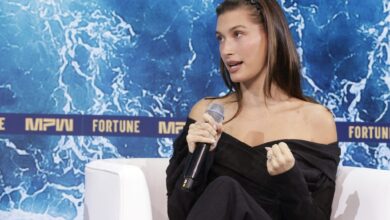
OpenAI Chief Executive Sam Altman separately called for a government-led bilateral agreement. Speaking to Fortune, Altman suggested that Trump and Xi could merit the Nobel Peace Prize if they negotiated a landmark pact on AI safety. His appeal followed widespread online discussion of warnings from AI safety researchers that unchecked artificial intelligence could pose existential risks to humanity before the end of the decade.
Trump explicitly rejected the idea of a technological pause. In a Sept. 14 post on Truth Social, he wrote that “the only controls or ‘guardrails’ the U.S. needs is a STRONG AND SMART (High IQ!) PRESIDENT,” followed by a separate statement: “Whoever wins AI, wins!”
During an unexpected phone call to Nvidia Chief Executive Jensen Huang while Huang was speaking on stage at an industry event, Trump described public backlash against AI data centers and fears that AI systems could escape human control as a “hoax.” Speaking over speakerphone to the audience, Trump addressed Amodei’s proposal directly: “Whatever Dario said this weekend won’t stop our progress.”
Chinese officials and state-aligned commentators have likewise dismissed American calls for an AI slowdown. They have characterized Silicon Valley’s safety campaign as a protectionist effort to preserve the U.S. advantage as Chinese developers narrow the capability gap. On Sept. 14, Chinese Foreign Ministry Spokesperson Guo Jiakun called the debate “fear-mongering” that “will only hamper efforts toward sound global AI governance, which serves no one’s interest.”
George Chen, partner and chair of digital practice at advisory firm The Asia Group, said Xi regards artificial intelligence as a foundational capability comparable to the emergence of the commercial internet. “Xi is unhappy with recent U.S. moves to contain Chinese advances in AI, robotics, and drones,” Chen said. “For Xi, AI is the new internet — a once‑in‑a‑lifetime chance to reshape the technological balance of power. China does not need U.S. permission to accelerate or decelerate its AI investments; Xi will pursue his own agenda.”
Commercial strategies in China also differ sharply from those of Silicon Valley. Leading U.S. developers such as OpenAI and Anthropic mainly use proprietary, closed-source architectures monetized through restricted interfaces, while Chinese firms have increasingly released open-weight models intended for broad, low-cost deployment.
That divide drew attention through a social media post by Shengyu Liu, an engineer at Chinese AI developer DeepSeek. Liu compared Anthropic reaching advanced artificial intelligence to “Hitler obtaining atomic-bomb technology before the Allies.” He said, “I still believe that frontier intelligence should be made available to everyone in an open and inexpensive form. I do not trust Anthropic or OpenAI to do this.”
Brosi Babic, a professor at the University of Hong Kong, called Amodei’s letter “self-serving editorializing” that was “conveniently coming at a time when the gap between Chinese and frontier US models is shrinking, as an attempt to hang on to a vanishing market lead.” Babic said the slowdown proposals had “been framed in such a conniving and childish way” that they were unlikely to shape Xi’s summit agenda.
The public debate also reflects differing cultural and political attitudes toward AI. U.S. discussion frequently centers on catastrophic scenarios involving existential risk, while public sentiment in China remains focused largely on economic productivity, consumer integration, and practical utility.
Paul Triolo, global technology policy lead at advisory firm DGA, said ordinary Chinese citizens generally hold optimistic views of technology after seeing rapid infrastructure deployment improve daily life over recent decades. “The vast majority of average Chinese citizens are very positive about technology in general and AI in particular,” Triolo said. “They have seen major improvements in the quality of life in China brought on by technology, and are very willing to use AI and other technologies. There is not really much discussion of some of the doomer themes on AI, such as existential threats to humanity.”
Chen said younger Chinese people are also showing growing national pride. “Younger generations in particular are adopting more pro‑government views, encouraged to feel pride as the ‘new generation of Chinese,’ with the narrative of ‘China rising, U.S. declining’ gaining traction,” he said.
Chinese technical and security institutions nevertheless treat AI risks seriously, using a framework centered on operational security and state control rather than existential scenarios. Domestic researchers focus on cybersecurity vulnerabilities, biosecurity risks, and algorithmic loss of control. Chen Yixin, head of China’s Ministry of State Security, recently warned that unmonitored artificial intelligence poses a direct challenge to state information security and political stability and urged expanded government oversight to protect the ruling Chinese Communist Party’s control.
Triolo said Xi is interested in a “serious dialogue on frontier AI model safety,” but formal agreements remain distant because the two countries have yet to “establish a baseline level of agreement on things like the role of government, [and] how and which models should be tested.”
As Trump and Xi prepare for their Sept. 24 meeting, policy experts say a binding agreement to halt model training remains highly unlikely. According to Chen, potential consensus areas are more likely to include commitments to prevent the weaponization of AI and shared principles against the misuse of advanced models by non-state actors. Discussions could address the protection of critical infrastructure and global financial systems from automated attacks—threats that neither Washington nor Beijing views as beneficial to national interest.