Thousands Rally Outside U.N. as Iran’s Pezeshkian Seeks Legitimacy on World Stage
Opposition coalition including Giuliani, Kellogg, and NCRI leaders demand regime change amid reports of thousands killed in 2026 crackdown
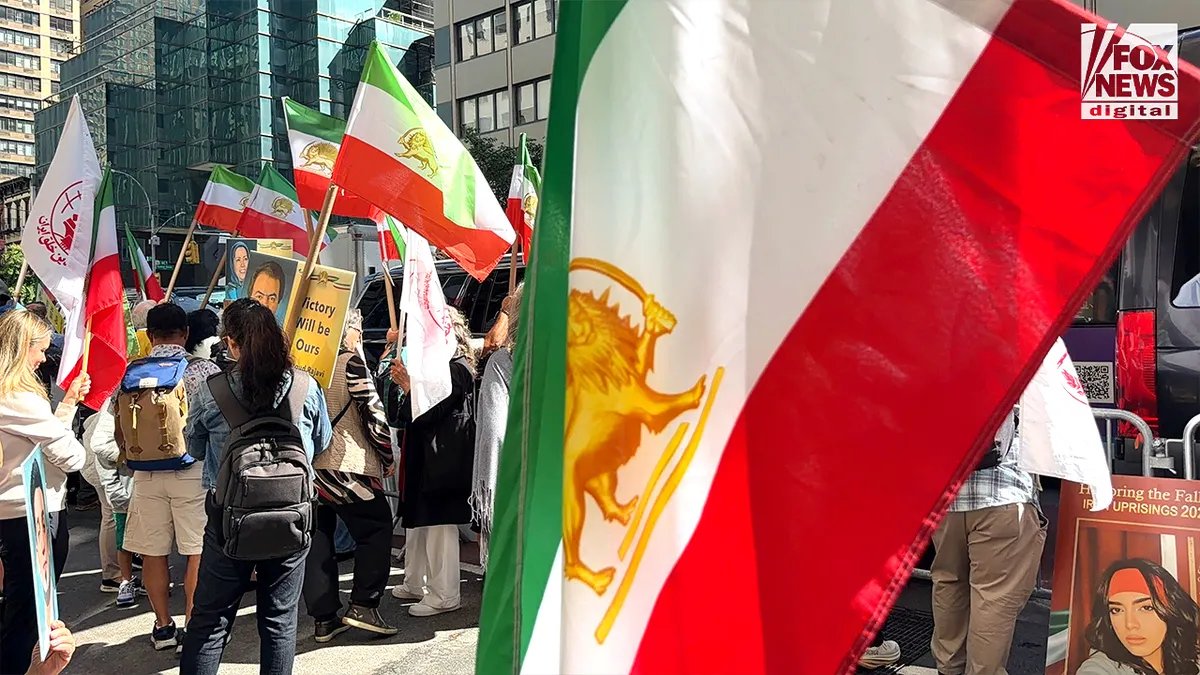
The 81st session of the United Nations General Assembly became a stage for competing narratives over Iran’s future when President Masoud Pezeshkian delivered his address to world leaders, portraying his country as the target of Western and Israeli aggression. But just blocks away, a sustained two-day protest organized by the Iranian diaspora and exiled opposition groups challenged that framing directly, with demonstrators demanding his arrest and calling for the end of the Islamic Republic.
The demonstrations, held Sept. 21 and Sept. 23 in New York, drew several thousand participants and featured speakers spanning former elected officials, retired military leaders, and leaders of Iranian opposition organizations. The breadth of the coalition underscored the depth of organized dissatisfaction with Tehran’s ruling establishment — a dissatisfaction that has simmered for decades but reached a new intensity following the wave of nationwide protests that erupted inside Iran earlier this year.
Former New York City Mayor Rudy Giuliani addressed the crowd with unqualified condemnation, calling the Iranian president a liar and a murderer. His remarks echoed a broader theme among speakers: that diplomatic engagement with Tehran has failed and that only sustained external pressure can force change. “It is useless to negotiate with them because they are terrorists, murderers,” Giuliani told the gathering, drawing a historical parallel to underscore the perceived danger of the regime.


Retired Lt. Gen. Keith Kellogg, who served in both Trump administrations, offered a different note — one of strategic possibility. He told the audience that a path exists toward a secular, non-nuclear Iran that could reintegrate into the Western-led order as a partner rather than a pariah. His remarks suggested that the opposition’s vision is not merely reactive but includes a concrete blueprint for transition.
Former U.S. Ambassador Marc Ginsberg focused on legislative action, urging Congress to advance the Maximum Support Act, a proposed package designed to sever the Iranian government’s financial lifelines, confiscate regime assets, and expand internet access inside the country. Ginsberg framed the legislation as both a moral imperative and a strategic necessity, arguing that arming the Iranian people with tools of organization and communication could hasten the regime’s collapse.
Maryam Rajavi, the president-elect of the National Council of Resistance of Iran (NCRI), addressed the rally through a video message, declaring that the Iranian people have rejected all forms of authoritarian rule — religious or monarchical. Rajavi, a longtime figure in Iranian opposition politics, has led the NCRI for decades and has maintained a presence at every major U.N. session during the life of the Islamic Republic. Her message reinforced the protest’s central demand: that Iran’s seat at the United Nations should not be occupied by what she described as “religious fanatics.”
Alireza Jafarzadeh, deputy director of the NCRI’s Washington office, drove home the argument that the regime is structurally incapable of reform. His position reflected a long-standing debate within foreign policy circles: whether Tehran can be pressured into behavioral change or whether the institution itself must be replaced. Jafarzadeh sided firmly with the latter view, insisting that concessions and negotiations have historically produced nothing but delays.
The protests took place against a backdrop of severe internal crisis. Estimates suggest that more than 20,000 people were killed by government forces during the wave of anti-regime demonstrations that swept Iran earlier in 2026, with weekly reports of executions of political prisoners continuing. The scale of the crackdown has drawn international condemnation and intensified calls for accountability.
Pezeshkian’s visit also carried symbolic weight beyond the podium. Photographs from the General Assembly showed him holding a portrait of Ali Khamenei, described in the image caption as the former supreme leader — a detail that signals a significant shift in Iran’s internal power structure. Khamenei’s departure from the position of supreme leader has created a vacuum that Pezeshkian, as president, now navigates amid both domestic instability and international scrutiny.
The rally’s message to U.N. diplomats was consistent over both days: the regime responds only to firmness, and sanctions remain the most effective external lever available. That message was reinforced by the broader geopolitical context, including ongoing regional tensions, the status of the Abraham Accords, and the question of Iran’s nuclear ambitions — issues that dominated the wider General Assembly agenda.
The contrast between Pezeshkian’s portrayal of Iran as a victim and the chants of protesters outside — “They are terrorists. They must go!” — captured the fundamental dispute at the heart of the assembly this week: who speaks for Iran, and who has the authority to represent its people on the world stage?