On Monday He Promised to Hand Over His Passports. On Tuesday Sources Said He Had Left Brazil.
A surrender order, a cancelled passport, and two different American answers — while his party accepts the result he refuses.
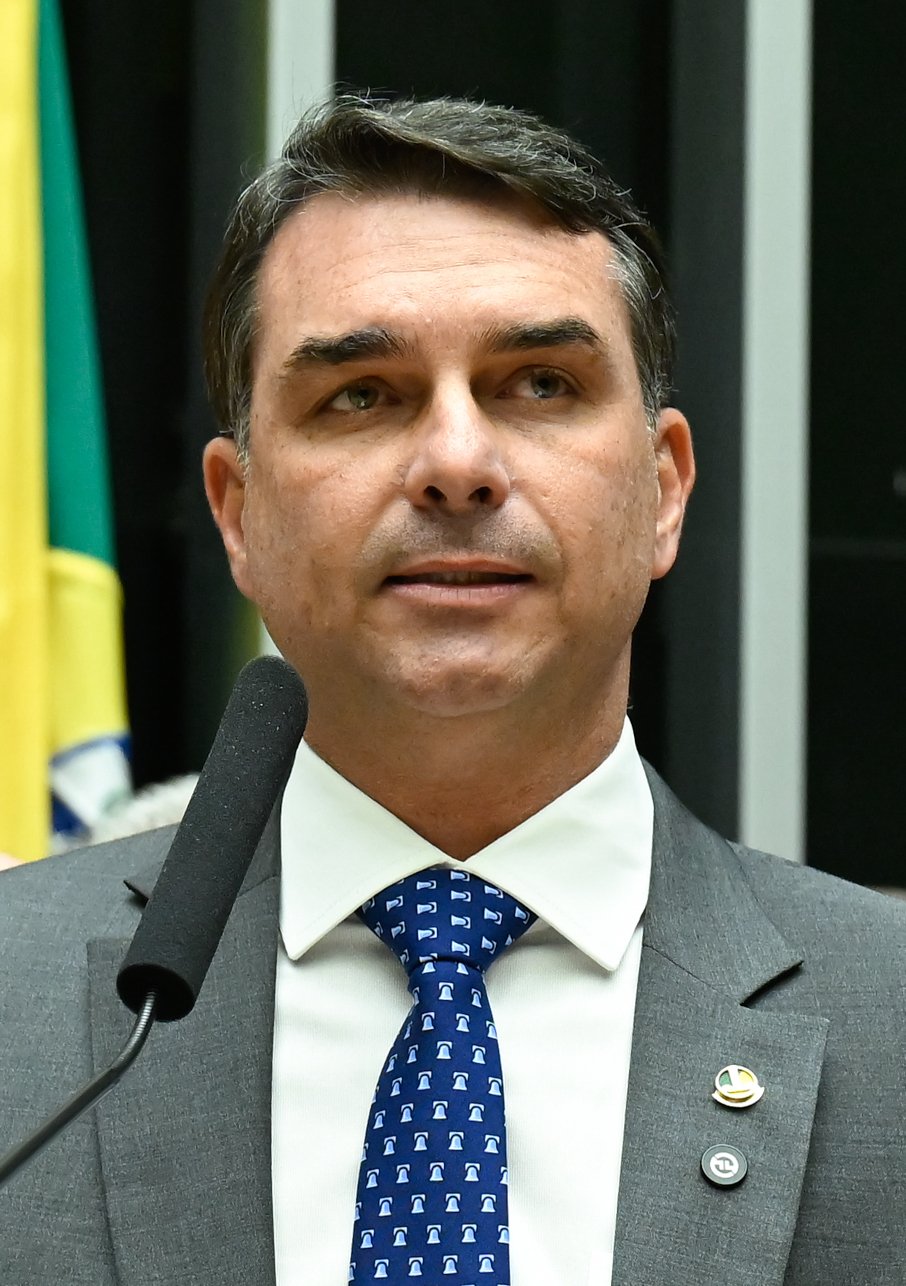
Flavio Bolsonaro was standing outside his father’s house on Monday, after visiting him, when Federal Police officers stopped him at the door and told him he was banned from leaving Brazil. “I have never thought about leaving the country,” the senator said in a video posted that afternoon. “I will hand over my passports and defend myself against this travesty, which is a clear attempt to intimidate me.” By Tuesday, three sources told Reuters he had left the country for the United States, and Brazil had cancelled the passports he promised to hand over.
Brazil’s Federal Police cancelled his passports after the 24-hour deadline set on Monday lapsed, according to two other sources cited by Reuters and a police source cited by AFP. A senior Federal Police official said Bolsonaro had not exited the country via any regular migration point, and no office in Brasilia would say where he was. Argentine officials denied a report by Infobae that he had travelled via Argentina, saying they had no record of him entering the country, and a check of a private plane at Iguazu International Airport found no flight plan listing his family. A spokesperson for Argentine President Javier Milei added that there was no asylum request.
A source close to the family told Reuters that Bolsonaro had arrived in the United States and that the Trump administration had granted asylum to him and his immediate family, without saying where he was. A State Department official told CNN something different: the United States will issue visas to Bolsonaro and his family, allowing them entry. A US official first told CNN he was headed to Florida, then said his exact destination was unclear, and a Brazilian source close to Bolsonaro told CNN he had feared arrest.

His younger brother Eduardo, who lives in Texas, called the reports that Flavio had fled a “lie” on Tuesday, weeks after telling podcaster Steven Crowder that if his brother did not win, he was in favor of him leaving the country. Donald Trump said on Monday that the Brazilian vote looked rigged, and made no mention of a departure. The US Embassy in Brazil, Bolsonaro’s lawyer and Lula’s office did not immediately respond to Reuters. Institutional Relations Minister Jose Guimaraes told CNN Brasil he had no confirmation from the Federal Police or oversight bodies, adding: “But this speaks a lot about our opponent’s lack of preparation to govern the country.”
His Liberal Party had already moved on Monday, acknowledging Lula’s victory while Flavio himself refused to concede and said he would seek to annul the result. Party head Valdemar Costa Neto said, according to CNN Brasil: “We recognize the presidential election results.” He added: “But we believe the issues raised need to be properly clarified.” The result he is challenging is not close on paper: the Superior Electoral Court’s final count gave Lula 64,256,232 votes, 51.79 percent of valid votes, against 59,826,041, or 48.21 percent, for Bolsonaro, a margin of 4,430,191 votes. Flavio led the first round on October 4 with 47.03 percent to Lula’s 45.16 percent. He is the first candidate since direct elections resumed in 1989 to trail in the first round and win the runoff.
Voting was supposed to close at 5 p.m. Brasilia time on Sunday. Supreme Federal Court Justice Cristiano Zanin extended polling to 7 p.m. after complaints about transport disruption and rain, applying the extension only to stations still open when the order issued, while stations already closed did not reopen. Flavio’s own campaign had asked the electoral court for a two-hour extension as well, citing heavy rain, flooding and power outages at polling places in Minas Gerais and Rio Grande do Sul. An annulment would have to present evidence affecting a margin of 4.4 million votes to an eight-member electoral court before certification on December 18.
Jair Bolsonaro took the same road in 2022, leaving Brazil on December 30, two days before Lula’s inauguration, skipping the ritual of passing the presidential sash to his successor, and spending about three months in Florida. He returned on March 30, 2023, on a commercial flight from Orlando, after his supporters had stormed Congress, the Supreme Court and the presidential palace on January 8, and he now serves a 27-year sentence for plotting a coup under house arrest. The difference this time is the welcome waiting in Washington: Trump, who called Jair’s trial a witch hunt and imposed a 50 percent tariff on Brazil last year motivated in part by that trial, is in office, and a circle of Brazilian conservatives, including Eduardo, former intelligence chief Alexandre Ramagem and podcaster Paulo Figueiredo, is already living in American exile. Figueiredo declined to answer questions about Flavio’s whereabouts.
Flavio Bolsonaro’s Senate term expires on January 31, 2027, and from the next day he will be out of public office for the first time since 2003, after serving as a Rio de Janeiro state deputy and then as a senator since 2019. He did not seek re-election to the Senate. Losing the seat will cost him parliamentary immunity, but it will not move his cases: under a doctrine the Supreme Court approved by seven votes to four in March 2025 and supplemented in May 2026, alleged crimes committed by officials while in office stay with the court after they leave their posts. There was no arrest warrant for him when he left, though legal analysts told CNN that defying the order to surrender his passports could itself be enough for one to be issued.
Justice Flavio Dino ordered federal police on Tuesday to investigate possible illegal foreign financing of Flavio Bolsonaro’s campaign, including the origin, circulation and destination of foreign resources, contacts involving the Rockbridge Network, a United States group co-founded by Vice President JD Vance, and two Brazilian businessmen, and whether intermediaries were used to conceal them. Dino also ordered police to examine election advertising linked to Polymarket and Meta, and what he called deliberate asymmetries and algorithmic manipulation by internet companies. Dino stressed that his order does not establish that illegal foreign financing occurred. Vance’s office did not immediately respond, and Meta denied favoring a candidate in the race.
One investigation concerns Dark Horse, a film about Jair Bolsonaro. Police are examining its financing after Flavio asked Daniel Vorcaro, the former owner of Master Bank, to fund it with 134 million reais, and prosecutors suspect, according to documents cited by the Associated Press, that banker funds went to pay Eduardo’s expenses and promote Flavio’s agenda with the Trump administration. Vorcaro is in pre-trial detention over a large financial fraud, and police have asked for 90 days more to finish their financial examinations and international cooperation requests. Flavio has acknowledged asking for film funding and denies offering favors in return.
Investigators in the second case are examining alleged money laundering through betting companies and payment platforms linked to lawyer Willer Tomaz, whose business activities were suspended and whose bank, tax and foreign-exchange secrecy was lifted as part of an asset freeze of up to 6 billion reais. Investigators found transactions totalling almost 130 million reais in accounts linked to Tomaz. Flavio Bolsonaro’s name appeared in the inquiry under a master user profile on an account belonging to Alcazar Holdings.