Spain Train Crash Marks the Second High-Speed Disaster on the Same Line in Ten Months
A rear-end collision near Urda, a train ahead reported stationary, a reported signalling fault, and a January investigation that found a warning 22 hours early — the questions now facing the same corridor.
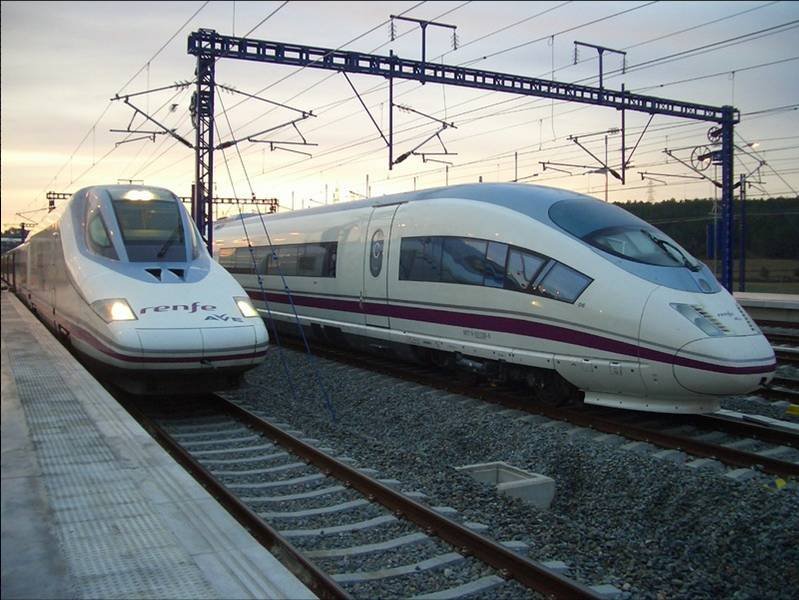
At 8.54am, according to Castilla-La Mancha’s 112 emergency service, two high-speed trains collided between Los Yébenes and Urda in Toledo province, and two carriages fell down an embankment. El Español, citing Castilla-La Mancha emergency services, reported at least 39 deaths, with dozens more injured, after the government had confirmed at least 10 by mid-morning. Adif, the infrastructure manager, described the collision as a rear-end crash and suspended traffic on the Madrid-Andalusia high-speed line.
The Renfe train involved was AVE 2080, which had left Madrid’s Puerta de Atocha station at 8am and was scheduled to reach Seville Santa Justa at 10.39am. El País reported that the Renfe service had stopped and slowed minutes earlier because of a traffic problem on the line, while initial accounts reported by The Spanish Eye said the Renfe train struck a stationary Iryo service. Conflicting early information about the trains’ directions of travel means the precise sequence remains unclear. Adif said in a message posted on X that traffic on the Madrid-Andalusia line had been suspended “following a rear-end collision between two trains.” The cause is not known. The operators had not yet given passenger numbers for the two trains involved by the time the first official toll was confirmed.
Firefighters from Alcázar de San Juan and Orgaz reached the scene with civil protection volunteers, three air ambulances and two mobile intensive care units, according to The Times’ account of the early reporting. Urda opened a sports hall to receive the injured, after civil protection asked the town hall to prepare it as a shelter. “There has been a collision between two trains, there are people injured,” Manuel Galán, the mayor of Urda, told TVE, while Jesús Pérez, the mayor of Los Yébenes, told the same broadcaster he had been told it was “something serious.” Transport Minister Óscar Puente left an event in Madrid after learning of the crash, El País reported.


Government sources told El País they feared a “very serious accident with many fatalities” that “could be worse than Adamuz.” That comparison is the reason this crash lands differently from an isolated accident report, because Adamuz, in January, was already the worst disaster in the history of Spain’s high-speed network, and its investigation is still the document that defines what went wrong on this line.
On January 18 at 7.43pm CET, an Iryo service running from Málaga to Madrid derailed near Adamuz in Córdoba and collided with a Renfe Alvia service travelling from Madrid to Huelva. Forty-six people were killed and 292 were injured. Iryo said close to 300 people were travelling on its train, and Renfe said its service was carrying 184 passengers. Adamuz was the first crash with deaths on Spain’s high-speed network since the first line opened in 1992.
Spain’s railway accidents investigation commission, the CIAF, concluded in a report sent to the court in Montoro that the cause of the Adamuz derailment was a rail break. The report placed the break in the outer thread of the rail on track 2 at kilometre 318.681, and said the analysed data showed no anomalies in either train before 19:43:33, the second the Iryo train passed the fracture point. Marks consistent with the fractured rail were found on earlier trains that had passed over the same stretch that day, showing the track had been failing while trains kept running over it.
A Guardia Civil investigation submitted to the same court then pushed the timeline back almost a full day. Its report said the rupture had happened about 22 hours before the crash. A track-monitoring system called SAM recorded a sudden voltage drop, from around two volts to 1.5 volts, at 9.46pm on January 17. The drop did not fall below the threshold that would have triggered an alarm. No warning went to maintenance teams or to the signalling system, and the system was not configured to flag such drops automatically, a limitation investigators described as known but never resolved. Nineteen drivers who passed through the section that day gave testimony, and only one reported feeling an unusual impact. A preliminary Civil Guard finding attributed the break to a poor weld made with an improper kit, compounded by inexperienced track inspectors and conservative programming of the track-circuit alert systems.
The Adamuz line reopened for service on February 17, after a month of repairs and testing, and the section of track where the break occurred had been refurbished in May 2025 as part of a 700 million euro upgrade. In August, Spain’s railway drivers’ union wrote to the national railway operator asking it to investigate flaws on train lines across the country and to reduce speeds at certain points until tracks were fully repaired, according to Associated Press reporting, and its recommendations covered high-speed lines including the one where Adamuz happened. A Reuters review of Adif’s own incident posts in January counted 10 infrastructure problems on the Madrid-Andalusia corridor since 2022, from signalling failures to overhead power line issues, each causing delays to high-speed trains.
The corridor itself is the oldest in Spain’s high-speed system. The 471-kilometre Madrid-Seville line opened in April 1992, built to standard gauge for the Seville Expo, and Adif described a 650 million euro modernisation programme for it in 2022 that included deploying the ERTMS signalling system and upgrading its superstructure. Spain now has more than 3,900 kilometres of high-speed track, the largest network in Europe according to the International Union of Railways, and the Madrid-Andalusia corridor carries the capital’s traffic to Seville, Córdoba and Málaga.
El Español reported that trains were operating under lineside signalling following a fault with the LZB train-control system. It has not been established whether that fault contributed to the crash.
Adamuz failed under a moving train, when a broken rail left a wheel with no surface to run on. Wednesday’s crash, on the early reporting, failed in a different place in the sequence, when one train struck the train ahead from behind. Investigators will now have to establish what the following train’s crew and systems were shown, what the traffic problem ahead consisted of, and how much warning the signalling gave. The Adamuz record shows a system can hold a warning for nearly a day without ever turning it into an alarm. Renfe’s president said after Adamuz that human error was practically ruled out there, on the grounds that automated safety systems are designed to correct such mistakes. The question in both cases is about the infrastructure and its warnings rather than about a single driver.
Renfe said rail traffic between Madrid, Ciudad Real and Andalusia was suspended, and that free ticket changes and cancellations were available for all affected trains. Passengers due to travel between Madrid and Andalusian cities, including Seville, Córdoba and Málaga, were advised to check with their operator before setting off.