Saudi Arabia Kenya Travel Ban Lands as Kenya’s 21-Day Quarantine Clock Runs Out
Riyadh's order has no end date and treats a nine-case cluster the same as the 10,351-case outbreak in the Democratic Republic of the Congo. It arrived two days after African health ministers agreed to keep borders open, and against the World Health Organization's standing advice.
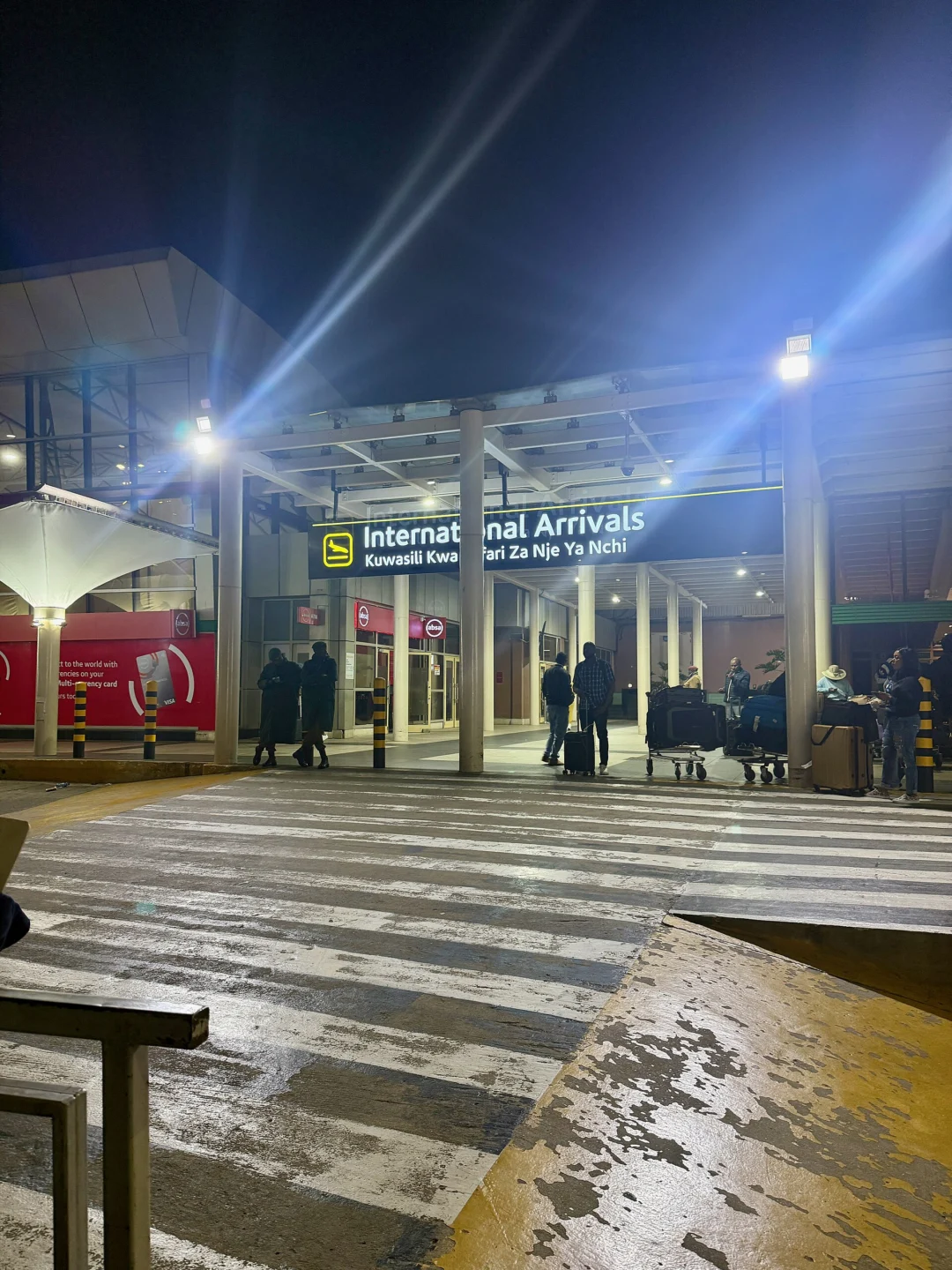
Saudi Arabia announced the ban on Friday, 30 October. Kenya’s Ministry of Health announced its own numbers the same day. Riyadh suspended travel by Saudi citizens to Kenya, halted the issuing of all categories of visas to travellers arriving from Kenya, and barred entry to anyone who had stayed in Kenya or another country with an active Ebola outbreak in the 21 days before arrival, even if they reached the kingdom through a third country. Nairobi, on the same Friday, said the country had gone 10 days without recording a new infection. “Kenya is making progress in containing the Ebola outbreak, with no new cases reported in the last 10 days,” Public Health Principal Secretary Mary Muthoni said at the ninth meeting of the national Ebola response task force.
The Saudi Press Agency said the measures followed “epidemiological assessments conducted by national health authorities.” The announcement listed four steps. The fourth continues the restrictions imposed in June on the Democratic Republic of the Congo, Uganda and South Sudan. Saudi Arabia’s preventive protocols for travellers from Ebola-risk countries date to July 2019. They were strengthened in May 2026, weeks after the Bundibugyo outbreak was declared in the Democratic Republic of the Congo. Entry-point screening was also tightened for travellers arriving from countries neighbouring Ebola-affected areas, with epidemiological investigations and early health response mechanisms. The kingdom’s Public Health Authority, Weqaya, said the health situation inside Saudi Arabia “remains reassuring and under constant surveillance.”
No end date was published with the order. Reporting of the Saudi statement says the measures will be reviewed on the basis of evolving epidemiological data, which is not the same as a date, and the freeze covers every visa category: work, business, family visits, Umrah and Hajj travel documents, and transit. Tuko’s reading of the order is that even a visa issued before the ban offers no guarantee of entry to a holder who has been in Kenya within 21 days of arrival. The Kenyan outlet Mwenendo, reviewing the published wording, found no exemption mentioned for Kenyans already living and working in the kingdom who travel home on leave.


The World Health Organization has advised against any restriction of travel to, or trade with, affected countries, in its Disease Outbreak News update of 23 October and again in its statement on Kenya three days later, and its Temporary Recommendations of 24 August press the same point: coordinated control, cross-border collaboration, surveillance and preparedness. Bundibugyo virus incubates for two to 21 days, and infected people are not infectious until symptoms begin. That is why the WHO prescription is entry and exit screening, surveillance and contact tracing rather than a ban. The epidemic itself has been determined a public health emergency of international concern.
Two days before Riyadh acted, more than 40 health ministers had met virtually on 28 October under the Africa Centres for Disease Control and Prevention. They agreed to prepare every country, coordinate across borders and keep crossings open under closer monitoring. Jean Kaseya, the Africa CDC director-general, told the meeting the response was losing ground. “We are not winning so far,” he said, citing 10,172 confirmed cases and 4,932 deaths. The agreement he reported was to “keep those borders open while watching them closely.” Kenya’s own government had taken the same line weeks earlier: Health Cabinet Secretary Aden Duale assured diplomats on 8 October that Kenya remained open for travel, trade and investment, and the Ministry of Health has repeatedly ruled out a lockdown or restrictions on travel and trade. By midday on Saturday, Mwenendo reported it had found no public statement on the ban from Kenya’s Ministry of Foreign and Diaspora Affairs or its Ministry of Labour.
El Salvador imposed an outright entry ban under Official Letter No. 2026-6000-055 covering Kenya and seven other countries, applied on travel history rather than nationality. CNN journalist Larry Madowo was denied a special entry permit on 14 October. South Korea took the narrower course from 20 October, designating Kenya a focused quarantine management area that requires a health declaration and enhanced screening for arrivals who had been in or transited through Kenya in the previous 21 days, without barring entry.
The United States raised Kenya to a Level 3 advisory on 19 October, urging Americans to reconsider travel and citing Ebola among crime, kidnapping, terrorism, civil unrest, traffic safety and health concerns. Israel briefly included Kenya in an Ebola-related entry ban and lifted it on 15 June after diplomatic protests from Nairobi. On 30 October, the day Riyadh acted, a Bahraini MP, Bader Al Tameemi, called on his own government to halt visas for travellers from Kenya and follow the Saudi example.
By 22 October, Kenya had screened 709,093 travellers. It had tested 461 samples across five laboratories. All 135 contacts of the imported case had been traced and quarantined. All eight secondary cases, four family members and four health and care workers, were already in quarantine when their symptoms began, and the WHO found no evidence of transmission outside the single cluster. Seven patients remained in isolation; two had tested negative and awaited repeat tests after 72 hours, and five were stable. When the first 20 contacts finished 21 days without symptoms on 26 October, they were released after a final health assessment, counselling on post-discharge precautions and follow-up where required. “We ask communities to welcome them home warmly,” Director General for Health Patrick Amoth said in the WHO statement. “Having completed 21 days without symptoms, they pose no risk of infection to anyone.” Dr Neema Rusibamayila Kimambo, the WHO representative to Kenya, said people who complete quarantine “have helped protect their families, their communities and the whole country.”
The case that started the cluster arrived already ill, through two countries Saudi Arabia had banned in June. A Kenyan man living in the Democratic Republic of the Congo had been ill for about a month, with other health conditions, and had been treated at several hospitals there. He travelled by road from Beni to Kampala on 2 October and flew to Nairobi the next day. He was isolated on arrival at a hospital in Nairobi, samples taken on 5 October tested positive for Bundibugyo virus at two national laboratories, he died that night, and he was given a safe and dignified burial on 6 October. Kenya notified the WHO the same day, under the International Health Regulations. Bundibugyo virus was first detected in Uganda in 2007. Uganda ended its latest outbreak in August 2026 after 20 confirmed cases and the 42-day countdown. France reported a travel-related case in June 2026. Nigeria confirmed an imported case in Abuja on 20 October in a patient who developed symptoms on 7 October and tested positive after seeking care on 11 October. Forty-four contacts were identified in Nigeria. Kenya was the fourth country to confirm a case in this outbreak. Nigeria became the fifth on 20 October.
One of Kenya’s busiest labour routes runs to Saudi Arabia, and it was already contracting. A government statement in July 2024 put the number of Kenyans working in Saudi Arabia at 310,266, the largest Kenyan workforce in the Gulf, while other official estimates run to about 200,000, including more than 150,000 domestic workers, most of them women. Money sent home from Saudi Arabia totalled $251.33 million in the first nine months of 2025, down from $302.35 million in the same period a year earlier, and the August and September flows were about half the $31.17 million monthly average of the first seven months of 2025, after the kingdom’s skills-based work permit reform. The United Kingdom has overtaken Saudi Arabia as Kenya’s second-largest source of diaspora money. Remittances from Kenyans abroad reached about $5 billion in 2024, 4.2 percent of gross domestic product, and about 650 billion shillings in 2025.
The Democratic Republic of the Congo’s Ministry of Health data, reported on 31 October, put the outbreak at 10,351 confirmed infections and 5,026 deaths, up 647 cases and 339 deaths from the WHO’s 20 October tally of 9,704 cases and 4,687 deaths, a crude fatality ratio of 48.6 percent. In the interval covered by the WHO’s 23 October update, 307 of 482 deaths occurred in communities rather than treatment centres. Contact follow-up across the Congolese provinces reached 79.7 percent of 30,130 contacts seen in 24 hours against a 95 percent target, with Nord-Kivu at 73.3 percent. Ituri and Nord Kivu held 9,186 of the 9,704 cases counted on 20 October. There is no licensed vaccine or specific treatment for Bundibugyo virus, although the Tumaini Phase 2/3 vaccine trial enrolled its first participants in Bunia on 23 October and Kenya has asked for 10,000 vaccine doses to protect health workers. Set against the 10,351 cases counted in the Democratic Republic of the Congo, Kenya’s nine amount to 0.09 percent of that figure, and every one of them sits inside the single traced cluster.
The WHO’s 42-day countdown to an outbreak-free declaration has not started in Kenya: it begins only when the last patient has tested negative twice, at least 48 hours apart, and has been discharged, and seven patients remained in isolation. Weqaya said it was tracking developments in the region and internationally in coordination with the relevant health agencies and would introduce further preventive measures when necessary.