The 500 Patriot Missiles Ukraine Bought Are the Second Half of a Swap Designed in September
Transmittal 26-113 approves 500 PAC-3 MSE interceptors for $2.1 billion and names no delivery date. The plan to cover the wait with other countries' stocks was drawn up five weeks earlier.
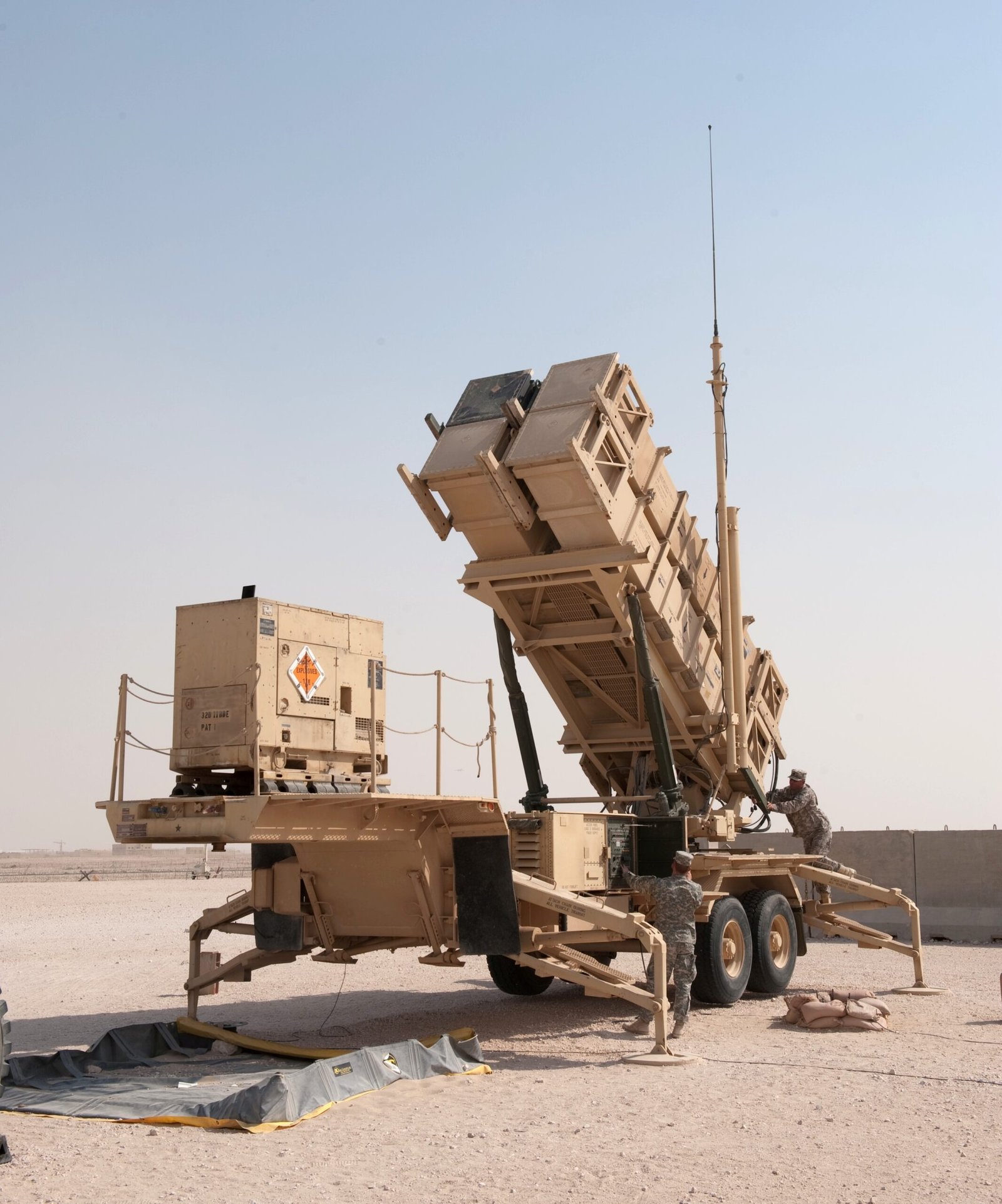
The State Department’s congressional notification is numbered 26-113. It approves a possible sale to Ukraine of 500 PAC-3 MSE interceptors, with classified and unclassified spare parts and logistics support, at an estimated $2.1 billion, with Lockheed Martin as principal contractor. It gives no delivery date. Two people briefed on the decision told Reuters the missiles have not been manufactured and are not expected until a couple of years into the 2030s, and Radio Free Europe/Radio Liberty correspondent Alex Raufoglu, citing sources, put it the same way on 31 October: production and transfer are not expected until after 2030. The notification is not a contract. Congress has its review period, then Ukraine and the United States can sign a letter of offer and acceptance, and only then can the Army place the order with Lockheed Martin.
President Volodymyr Zelenskyy answered the notice on social media the same day it was issued. “Five hundred PAC-3 interceptors is a substantial number, and very soon — this winter — they COULD make for a highly effective defence package,” he wrote. “However, it has been stipulated that deliveries may begin ONLY IN A FEW YEARS.” Ukraine had asked for a winter package of 100 interceptors a month, and Zelenskyy said Russian forces had carried out more than 30 strikes on key parts of the power grid in the last two weeks of October alone, targeting electricity, heating and water. He put the flow he is actually receiving at an average of 12 Patriot interceptors a month from the United States in 2026, against roughly 150 ballistic missiles a month that need intercepting. His proposal was to take the missiles from stocks now and replenish the donors later from the production Ukraine and its partners have already contracted and paid for.
That proposal was not drawn up on 30 October. On 25 September, European Pravda reported that European Union defence ministers would meet in Brussels on 28 September to discuss two ways of getting Patriot interceptors to Ukraine faster, and both of them were versions of the swap. Under the first, member states would give Kyiv their places in Lockheed Martin’s production queue. Under the second, a member state would transfer interceptors from its own stockpile at once, and Kyiv would use financing from the European Union’s €90 billion Ukraine Support Loan to order an equivalent number of replacement missiles for that country from the American manufacturer. Spain or Greece could take part, the report said, and no agreement with either country had been announced. The member states had already agreed to allocate €3.2 billion from the loan toward purchases of American-made PAC-3 interceptors for Ukraine. Agence Europe reported a further variant the same week: European states supply missiles from their stocks now and receive interceptors originally scheduled for Ukraine in 2027. The September meeting’s agenda, published by the Council, listed military support for Ukraine, air defence and industrial cooperation, with Ukraine’s defence minister addressing ministers by video link.


Zelenskyy, speaking to journalists in Turkey after the October approval, described the queue swap as an established practice rather than a new invention. “Several times during this war, we have done this,” he said, according to Ukrinform, “and in various discussions, this arrangement of swapping places in the queue has worked. I will try to do this with some partners. With that package of 500 [missiles], we could get 10, 20 or 30 [missiles] from someone else, sign the relevant guarantees and agreements that we would later replenish those supplies from the U.S. package, with some interest or perhaps without interest.” The interest is his own flourish, and it is the measure of how the arrangement works in practice: a small number now, borrowed against a large number later, with the terms negotiated case by case.
Since the summer, that case-by-case negotiation has produced a record of its own. Poland transferred five PAC-3 MSE missiles, the exact number established by Defence24 from the Polish defence ministry’s declassified aid list, published in July 2026. Defence Minister Władysław Kosiniak-Kamysz said the decision was made at the request of NATO Secretary General Mark Rutte and the Supreme Allied Commander Europe, after consultations with Patriot operator nations, and that five was “the limit of our capabilities” without affecting Poland’s air defence. Deputy Minister Cezary Tomczyk said Poland had agreed with the NATO secretary general and the United States that in exchange it would receive “ten times as many missiles and systems of this type within the first 24 hours of a threat” — fifty for five. Defence Express put Poland’s holding at up to 208 PAC-3 MSE missiles, and noted that Ukraine uses one interceptor per ballistic target because of the shortage, so five missiles cover five targets at most.
In Germany, the same queue was worked with money rather than missiles. The Bundestag’s Budget Committee approved on 14 October the purchase of two Patriot systems to replace ones Germany had given Ukraine, at about €650 million according to hartpunkt, which cited its own sources, with an advance payment of €560 million immediately after signature to secure priority in the delivery schedule and Norway contributing more than €300 million. Deliveries were expected to begin in late 2026 and finish by 2028, the same schedule as the systems originally intended for Switzerland, which had been redirected to Germany to replace the batteries transferred to Ukraine. Defence Express, reporting the same details, was explicit that the Swiss identification is an assumption with no direct confirmation, and that Switzerland had sought earlier in 2026 to buy the redirected systems and Berlin had refused, because Germany aims to restore its own air and missile defence after its donations. Germany has transferred five Patriot fire units to Ukraine, according to Government Accountability Office data cited by Defence Express.
Greece and Spain show the other side of the same record. Rutte urged allies to hand over their own stocks bilaterally, and Euronews, citing NATO sources on 29 October, reported that Greece and Spain hold substantial reserves of the less advanced PAC-2 missiles and neither had heeded the call. Ukraine’s defence minister, Yevhenii Khmara, put the same request in countable form to the E5 group — Germany, the United Kingdom, France, Poland and Italy — on 27 October: consider transferring 10 percent of existing Patriot and IRIS-T interceptor stocks, in exchange for future deliveries already contracted and financed through the European Union loan, an exchange that “would allow for the rapid protection of Ukrainian cities and serve as a model for other nations,” according to the Ukrainian defence ministry’s account carried by Interfax. NATO sources told Euronews that allies were pessimistic about Ukraine receiving interceptors before the American midterm elections on 3 November, and one described the situation as unpredictable. The contrast inside the alliance was on display the day the notice was issued, when General Alexus Grynkewich, the Supreme Allied Commander Europe, told reporters in Riga that PURL deliveries were ongoing and that “every single third-party transfer that has been requested of the U.S. government has been approved,” while Zelenskyy had said days earlier that Kyiv had waited nearly a month for Defence Secretary Pete Hegseth to sign off on Patriot and NASAMS transfers from allied stocks.
In Kyiv, the announcement landed in the middle of the blackout routine it was meant to end. Yaroslava, posting on X on 31 October, the day after the approval, from the right bank of the city, where she had gone for a tour of artists’ studios, put the cuts in the terms the schedules use: “As for the power outages, they are hard. At my place, 9 hours without electricity, 2 hours with. We will cope. We will.” Five days earlier, Mila Konvaliya had posted a photograph of autumn leaves and a darkened street on Threads, on a +12°C day: “A blackout for almost the entire day. Outside, there’s a unique vibe created by the sound of generators—the city is alive. Wishing everyone a peaceful evening.”
Neither post mentions the 500 missiles. That is the point the official statements miss. General Grynkewich’s assurance in Riga, that deliveries were ongoing and every requested transfer had been approved, describes a pipeline. The two Kyiv posts describe a day measured in hours with and without power, and Zelenskyy’s own figure — 12 interceptors a month against roughly 150 ballistic missiles — is the arithmetic between the two. The swap’s first half, missiles handed over now from somebody else’s stocks, is the only part of the 30 October notice that would change either woman’s next day. The second half, the 500, arrives after the winter the posts are already living through.
The reason the swap is the only route to this winter sits in the factory record. Lockheed Martin’s own account, in its 8 January 2026 release, is that a framework agreement with the United States government will raise annual PAC-3 MSE capacity from approximately 600 to 2,000 over seven years, that the company delivered more than 600 interceptors in 2025, a 20 percent increase on the year before, and that production had risen more than 60 percent over two years. The July 2026 Army contract, worth up to $58.6 billion, funds the expansion toward 2,000 a year by the end of 2030, according to Reuters. Boeing said on 5 October that Lockheed Martin had awarded it a contract worth about $14.7 billion to triple production of the PAC-3 MSE seeker, the guidance unit in the missile’s nose.
The expansion reaches past Lockheed’s own plant. General Motors’ defence arm signed a memorandum of understanding in June 2026 to help build missile housings and delivered its first batch of components 22 days after signing a formal contract. Lockheed Martin signed a similar memorandum with Germany’s Diehl Defence in October 2025 to explore PAC-3 MSE production in Europe. Defense Express reported that the full production cycle for one missile takes about 24 months. The notice’s own fine print adds two further facts: the sale will not require additional American government or contractor representatives in Ukraine, and the department said it will not affect the defence capabilities of the United States. The purchase is financed through JUMPSTART — the Joint Ukraine Multinational Programme, Services, Training and Articles Rapid Timeline — with donations from Canada, Germany and Norway and national funds financed by the European Union’s Ukraine Support Loan, and no American funds are involved. The department said it knew of no offset agreement proposed in connection with the sale.
One more thread from September is still open. Trump raised the possibility of a licence for Ukraine to manufacture Patriot missiles at the NATO summit in Ankara on 8 July, and on 25 September Zelenskyy said Trump had told him a final decision had been made to grant the licences. The State Department had said on 23 September that no final decision had been made, and the White House had not publicly confirmed the decision as of 25 September, according to The New Voice of Ukraine. Raufoglu reported on 31 October that the Pentagon had answered the licensing question by saying it required “further review,” that there was no agreement on joint production, and that in practical terms Kyiv had no authorisation or concrete timeline for domestic production. No donor has been named for the stockpile half of the September plan, and the notice itself carries no delivery date for the 500 missiles it approves.