Why Did the Contship Jet Sink When the Drones Were Spotted 30 Minutes Early?
The warning got 18 crew off in 12 minutes. The line 12 miles out decided everything else.
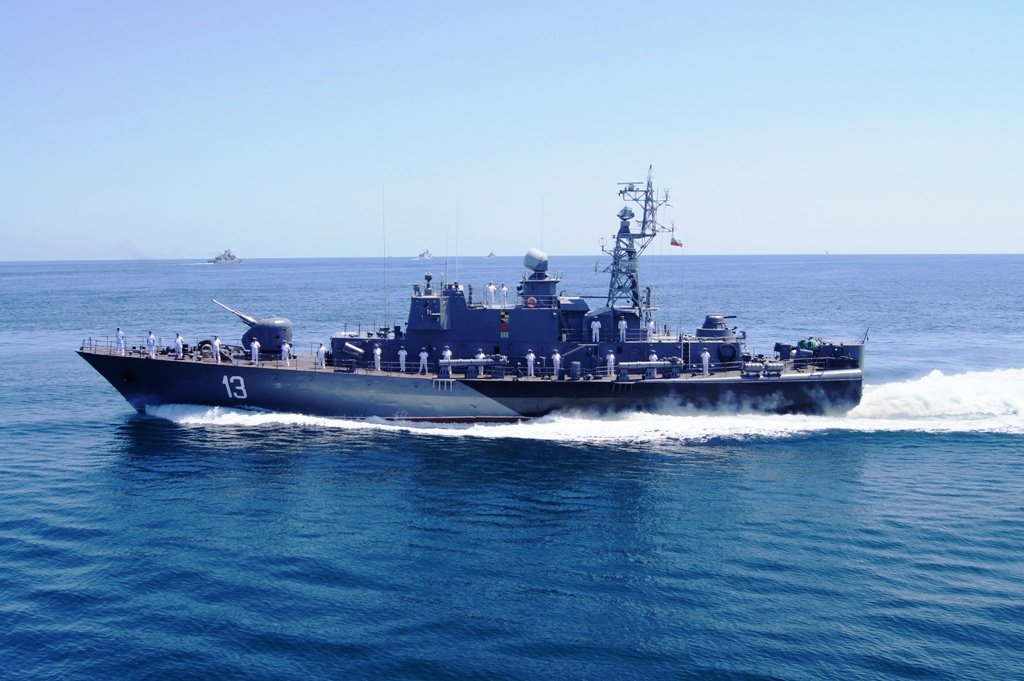
A French Atlantique 2 patrol plane had the drones in sight at least half an hour before they reached the Contship Jet, Prime Minister Rumen Radev said on Oct. 29, and the plane relayed their heading to the Bulgarian Navy. Romania’s maritime rescue centre in Constanta passed the alert to Bulgaria at 12:01 p.m. local time on Oct. 28, and the 18 crew abandoned ship at 12:13. By 12:53, eight sailors were aboard a Bulgarian Navy boat and ten were in the ship’s own lifeboat. The crew, 14 Filipinos and four Ukrainians, reached Varna unhurt. Bulgarian authorities interviewed them at a hotel there while repatriation was arranged.
The ship’s manager, Contships Management of Athens, put the attack at about 15 nautical miles off the Bulgarian coast and said the vessel listed 20 to 30 degrees before the master and crew left her. Bulgaria’s defence minister, Dimitar Stoyanov, put the same position at 21 nautical miles southeast of Shabla, and the Defence Ministry put it at 17 nautical miles east of Cape Kaliakra. The three figures describe one position in Bulgaria’s exclusive economic zone from three reference points, all outside the 12 nautical miles Bulgaria treats as its own water. The Liberian-flagged Contship Jet, chartered to ZIM, carried 421 boxes from Haifa to Constanta in 1,267 container slots. She sank during the night with the cargo still aboard.
PedaLangga, a seafarer posting on Facebook, filmed the attack from the bridge of a nearby ship. He put the distance at 10 to 12 nautical miles from the Contship Jet. The captain had the crew film what happened and put them on standby, he wrote in the video’s on-screen text, because more than one drone had been seen in the vicinity. “Nag Mayday na ang Contship jet dahil natamaan na sila,” the on-screen text read: the Contship Jet had sent a Mayday because it had been hit. On the radio, he wrote, a French surveillance aircraft was calling out the coordinates and heading of the sea drones. A NATO warship standing by nearby answered at once and went to rescue the Contship Jet’s crew, he wrote. His own bridge crew monitored what happened and documented it on the captain’s instruction. His account also described weeks of preparation for a Black Sea destination, with “Every Saturday Drill at Safety meeting lagi for possible scenarios na pwedeng mangyari during the Passage.”

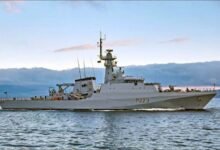
Bulgaria’s outgoing chief of defence, Adm. Emil Eftimov, told the broadcaster bTV on Oct. 29 that the drones had come from the east and that the armed forces had intelligence about a possible attack. “We are not at war. The drones did not enter territorial waters, so we did not take action,” he said, according to the state news agency BTA. Radev said L-39 jets at Balchik were ready to fire if the drones had crossed into territorial waters, and that operating outside them would breach international law. Ivaylo Mirchev, co-chair of the opposition party Yes, Bulgaria, argued the opposite reading, that drones sailing under no flag could be neutralised as a hazard to navigation. Romania had already shown the other side of the same line when its F-16s shot down two drones over Romanian territorial waters on Oct. 17. The seafarer’s account and the ministers’ account describe two different responses to the same half hour: a NATO warship close enough to answer at once, and a Bulgarian force that, on its own account, could watch the drones but not stop them outside the line. Eftimov said bad weather had hampered the Bulgarian effort, and that since the summer the Navy had answered more than 100 reports of drones and aerial and maritime debris.
Nine merchant ships were struck in the strip between Oct. 5 and Oct. 28. On Oct. 5 the Royad Mammadov caught fire and sank about 30 nautical miles south of Sfantu Gheorghe in Romania’s exclusive economic zone; two people died and 11 were rescued. The next morning, about 70 nautical miles east of Byala, the Alfa Watan sank with ten crew missing, while the Able caught fire nearby and all 18 of her crew were rescued, two of them seriously injured. On Oct. 13, off Byala and Krapets, the Chelsea 3 was hit by three aerial drones and all 15 crew, seven Ukrainians and eight Azerbaijanis, were rescued, and the HS Dignity sank about 17 nautical miles east of Krapets. The first count for the HS Dignity was five rescued and 11 missing; when Bulgaria ended the search the next afternoon, the count stood at six rescued and ten missing from a crew of 16, 14 Syrians and two Egyptians.
The Yara J caught fire eight to ten nautical miles southeast of Sulina, inside Romanian territorial waters, and her crew put the fire out themselves and all were reported safe, while Romanian authorities investigated a possible drone attack without confirming one. The Wine Trader caught fire 13 nautical miles southeast of Sulina, one mile outside Romanian waters, and five of her 12 crew were rescued while seven remained missing. On Oct. 23 the Khoryv sent a distress call reporting a drone attack about 13 nautical miles off Constanta; nine crew were rescued alive, one body was recovered and three remained missing from a crew of 13. Counted ship by ship from the reports above, the toll stands at three confirmed dead and 30 missing. Reuters put the toll from the October attacks at about 34 sailors killed or missing. The Contship Jet, hit on Oct. 28, was the only one of the nine whose crew all came home unhurt.
London’s insurers had drawn the same line weeks before the first of these ships was hit, and they drew it for money. On Sept. 16 the Joint War Committee, in circular JWLA-035, extended its listed war-risk area to almost the whole Black Sea, excluding the territorial waters of adjoining countries other than Russia and Ukraine. The circular’s own definitions put a named country’s coastal waters at up to 12 nautical miles offshore. A voyage that crossed the line therefore needed separate war-risk cover. BPG Shipping director Gennadiy Ivanov told Türkiye Today the market was testing rates of 0.6 percent to 1 percent of a ship’s value, up from 0.2 percent to 0.5 percent the week before. Owners answered by hugging the coast inside the 12-mile strip, on a route from Istanbul to Constanta about 90 to 100 nautical miles longer than the direct sailing, adding about $20,000 in charter and fuel costs on a round trip. Through October the attack distances closed: 70 miles out on Oct. 6, 17 and 18 on Oct. 13, inside the line at Sulina, 13 at the edge, 21 by Stoyanov’s reckoning for the Contship Jet.
A crew member filmed the Contship Jet attack, and the footage, published by the Bulgarian outlet Maritime.bg and checked by Reuters, showed a matte-black boat 16 to 20 feet long running alongside the ship before swinging into her side. Tomas Alexa, a senior analyst at the maritime risk firm Ambrey, told Reuters the boat was likely a version of Russia’s Murena-300S or built from that design, and that its manoeuvres suggested remote steering. Andriy Ryzhenko, a former senior Ukrainian naval officer, told Reuters the boat did not resemble any Ukrainian naval drone he knew. Moscow denied any link to the attacks on merchant ships off Bulgaria and did not comment on the Contship Jet specifically. A NATO military source told Reuters the drones that hit the Wine Trader and the Yara J were of Russian origin, while Romania’s President Nicusor Dan declined to say whether Russia was responsible. Radev said Bulgaria had no clear evidence so far, and that the foreign minister would summon an ambassador only once an origin was established. The motive reading does not survive the sailing list on its own: Ambrey linked the campaign’s objective to Ukrainian trade, yet the Contship Jet was sailing from Haifa to Constanta with no Ukraine leg, the Wine Trader was empty on a Tunisia-to-Romania run, and the Chelsea 3 and the HS Dignity were sailing empty. On Nov. 1 Russia’s Defence Ministry said drones had struck another bulk carrier off Odesa; it named no ship, and no independent confirmation followed. NATO said two other vessels had been targeted the same night the Sulina tankers were hit.
On Oct. 29 the Sofia Military District Prosecutor’s Office opened proceedings under Article 415(1) of Bulgaria’s Criminal Code, concerning violations of international rules governing warfare, and cited paragraphs 41, 42 and 67 of the San Remo Manual on international law applicable to armed conflicts at sea. The office described the attack as the alleged use of prohibited methods of warfare, called Liberia, the flag state, neutral, and assigned a military investigator. Military police in Varna were told to question the surviving sailors, while investigators established ownership, cargo, route, crew and damage.
Nothing in the treaty or alliance machinery on the table promised the ships an escort. Under the Montreux Convention, warships from outside the Black Sea may stay no longer than 21 days, and Turkey has closed the straits to the warships of warring parties since 2022. The mine-clearance task group run by Bulgaria, Romania and Turkey covers clearance, surveillance and rescue, not escorting merchant ships. Article 4 of the NATO treaty was never invoked; President Nicusor Dan of Romania said on Oct. 15 that it had not been requested, and Radev had ruled out both Article 4 and Article 5 after the Oct. 6 attacks. The European Parliament voted 432 to 52, with 88 abstentions, on Oct. 22 for the European Union to consider a naval operation and a Black Sea hub. NATO, after an Oct. 20 meeting, announced additional maritime patrol aircraft, surveillance equipment and drones for the region, and Bulgaria, Romania and Turkey, whose defence ministers had been meeting in Sofia on the day the Contship Jet was hit, agreed to share more intelligence and early warning. A cabinet memorandum on air defence against low-altitude threats, agreed on Oct. 28, still awaited ratification.
The manifest, as described by Bulgaria’s Environment Ministry, listed lithium-ion batteries, acids and other corrosives, ethanol and other flammable liquids, household chemicals, plastics, food, building supplies, lumber and machinery parts, and the ship ran on marine gas oil. Twenty containers went over the side before she sank. Crews took seawater samples at five points along the shore, and the Maritime Administration said it did not expect a spill to reach the Bulgarian coast. On Nov. 1 Bulgaria’s VTMIS ship-traffic system spotted four containers at four points east of Burgas Bay and warned ships to pass with extreme caution, calling the wreck and the drifting containers an immediate danger to navigation.
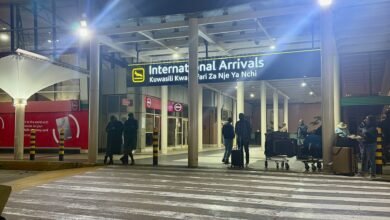
The 14 Filipinos landed back in the Philippines on Nov. 2, on a Qatar Airways flight from Doha to Clark International Airport, where officers of the Overseas Workers Welfare Administration met them and gave airport assistance. The administration’s post about the return said the group had been given financial assistance and psychosocial services, and thanked the Philippine Embassy in Ankara and the Bulgarian authorities. Marino PH, a news page for Filipino seafarers, had posted on Oct. 28 that the attack was “raising concerns over the safety of seafarers and global shipping routes.” The administration’s regional office said it was prepared to provide post-repatriation services.