NASA Astronaut Applications Open for a Moon Base That Does Not Exist Yet
Twenty-six days to apply. Two years of training. A base that is still a plan — and a corps of 32 to cover it all.
NASA has given Americans twenty-six days to apply to be an astronaut. The window opened on November 7 and closes at 11:59 p.m. EST on December 3, and it is the shortest the program has offered in its modern history: the last call ran forty-two days, the one before it twenty-nine, and the record call of 2017 ran sixty-six.
NASA astronaut applications opened on Saturday at an air show at Kennedy Space Center. NASA Administrator Jared Isaacman said the people selected “could walk on the Moon, live and work at the Moon Base, and help pioneer the systems and operations that will ultimately carry crews to Mars.” It is the 25th astronaut class since the Mercury Seven, and the first since 2024, when more than 8,000 people applied and 10 were chosen.
Marzano Malone’s reply sat pinned at the top of NASA’s announcement on Threads. “Time to polish up the resume! 🚀 Who hasn’t dreamt of going to the Moon?” Elaine Acamp, posting as @elaineacamp, wrote about her granddaughter instead: “My granddaughter is obsessed with space. A book about Pluto is being read to her 15 times a day. She’s two. I’ll bet she’ll apply one day!”

The NASA astronaut requirements are blunter than the announcement. It lists the duties first: operations in low Earth orbit, on the Moon and beyond; spacewalks; time as CapCom in Mission Control; and serving as “the public face of NASA.” It also lists the degrees that do not qualify — Technology, Psychology, Exercise Physiology, Social Sciences, Aviation. Applicants are sorted into seven sub-disciplines. One of them, Operations, is for people whose experience comes from high-consequence work: flight test, saturation diving, cave diving, nuclear submarine operations, rescue operations, special operations with direct action. K-12 teaching in a related technical field counts. Cheating, the posting warns, includes “use of SI (Super Intelligence)” and means removal from consideration. And it states plainly that selection as a candidate “does not guarantee selection as an astronaut.”
Citizenship is the first filter, and the replies keep tripping over it. “Can a none American apply for this?” asked @ryyyaaaaannnnn on Instagram, spelling as written. The posting’s answer is its first condition: U.S. citizenship required. Age draws the opposite answer. “I wish I was young. I’d do it in a minute,” wrote @cnunespdx on Threads, and another reply, from @astromandi, corrected him: “There is no age restriction.” NPR confirmed there is no official age restriction. The astronaut salary is $164,395 a year to start, up from about $152,000 when the last round opened in 2024.
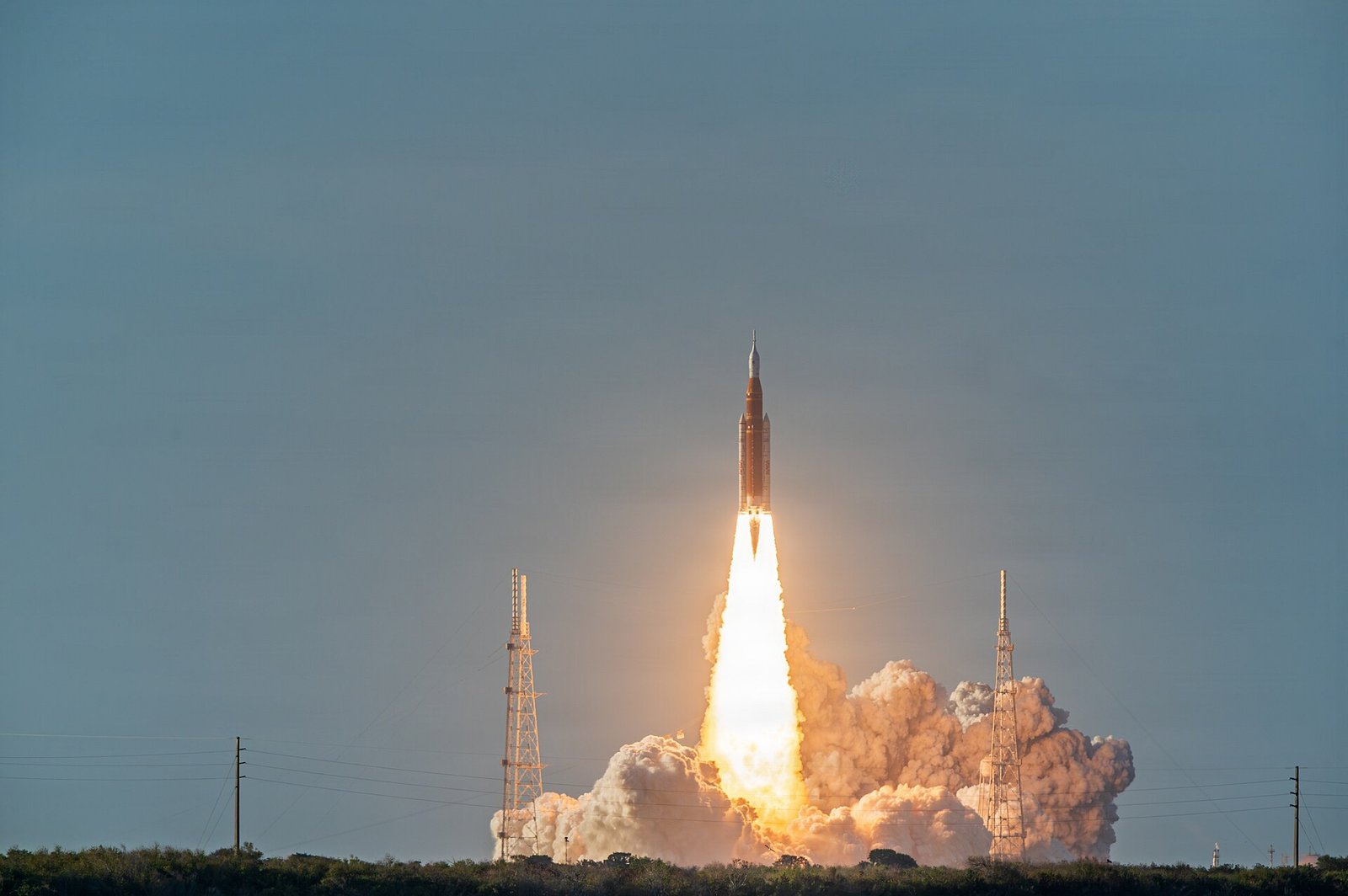
The final selection comes in late 2027. The training that follows lasts about two years, which puts the new class ready around 2030. Artemis IV, the first crewed landing, is targeted for early 2028, and Artemis V for late that year. The new class will miss both. Artemis II has already flown — four astronauts around the Moon in April — and Artemis III, once the landing mission, is now a 2027 rehearsal in Earth orbit, docking Orion with two landers still in development. NASA reshaped the sequence in February 2026 and named the Artemis III crew in June: Randy Bresnik, Luca Parmitano, Andre Douglas and Frank Rubio.
The base itself is a plan with a procurement pipeline. NASA unveiled it in March 2026 at an event called Ignition: about $20 billion over seven years, as reported from the presentation, in three phases — robotic missions through 2029, infrastructure from 2029 to 2032, a permanent presence from the early 2030s. The site is the lunar south pole, chosen for its water ice, locked in craters that never see sunlight. A presidential executive order from December 2025 sets the targets: humans back on the Moon by 2028, the first elements of a permanent outpost by 2030.
The hiring and the hardware arrived on the same day. At the same air show on November 7, NASA announced a package of Moon Base contracts: a ten-year pool of eight cargo-lander companies under a $10 billion ceiling, which is a maximum rather than money spent; a nuclear-powered rover called PROMISE, built from spare Mars rover parts, to drill a metre into the south pole’s soil; and about $1.3 billion in launch and transport orders. The rover’s launch is targeted for late 2028. NASA said in October that the first element of the base is due to launch in December, with robotic missions following almost monthly from early 2027.
The corps the new class joins is smaller than the mission list. NASA counted 48 active astronauts in April 2020; it counts 32 now. The ten chosen in 2025 — six women and four men, the first class with more women than men — are still in training, so the working corps that must cover the space station, the 2028 landings and the base is 32. The queue is shorter too: 18,300 people applied in 2017, more than 12,000 in 2020, more than 8,000 in 2024. Behind the 2017 class, the funnel ran from 18,354 applicants to 120 invited to Houston, 50 put through a full week of tests, and 12 chosen.
“Crying because I don’t like heights or flights, what a dream though,” wrote @acaseyinthewild on Threads. Ivan, posting as @ivan.17774 on Instagram, wrote that he had been waiting 30 years. The officials sell the destination; the replies test the door, one filter at a time. For the body, the posting’s answer is a medical exam, with interviews and medical and psychiatric screening for the finalists.
NASA has not said how many places the new class will have. The posting puts the chosen few on 30-month time-limited appointments, permanent only after the training is done.