Apple’s Touchscreen MacBook Pro Is Its Second Touch Bet, Ten Years After the Touch Bar
The strip took the keys away. The touchscreen is reported to keep them.
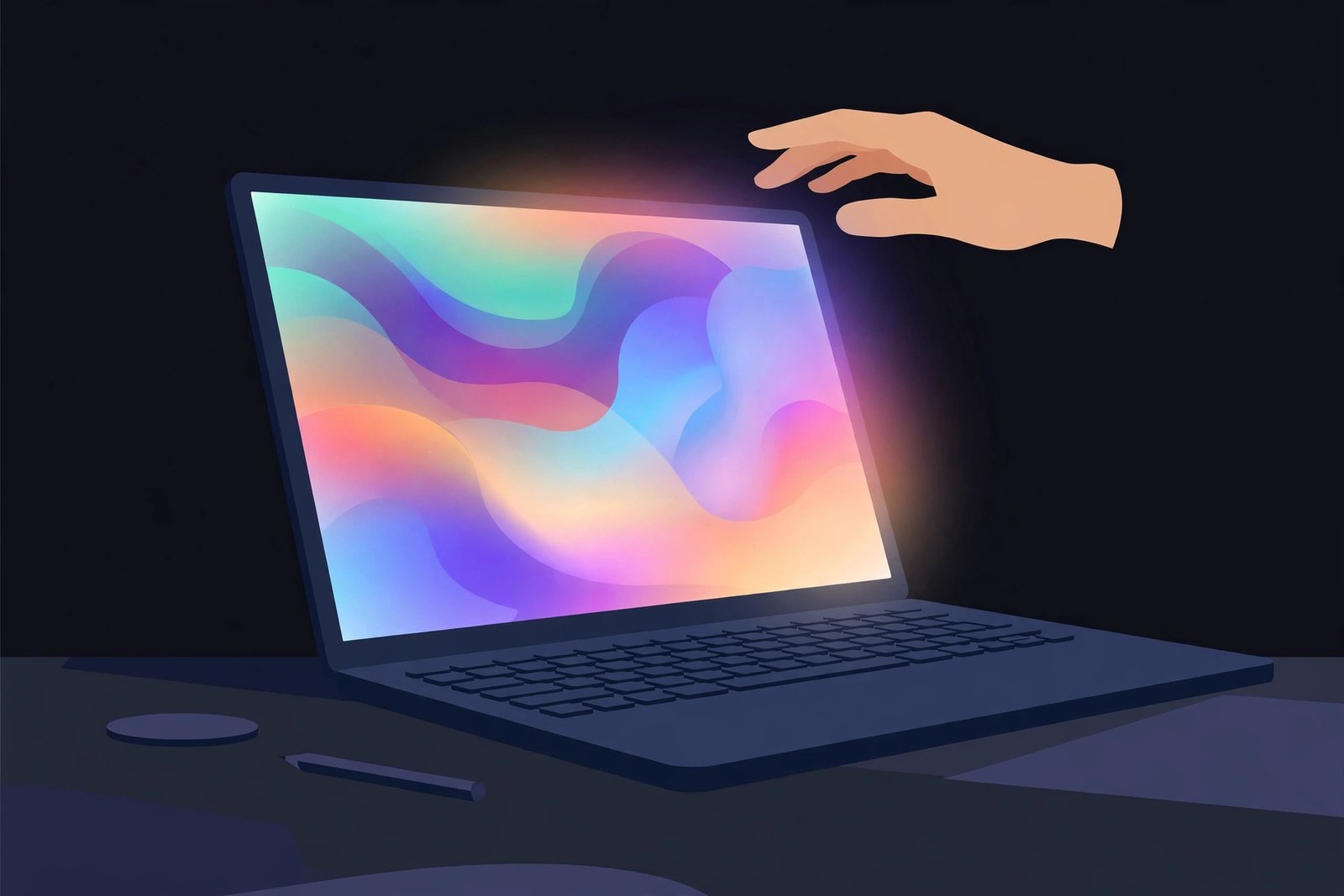
The strip sat where the function keys used to be, a thin ribbon of glass that changed its mind with whatever app was open. Apple introduced it on October 27, 2016, as the MacBook Pro‘s revolutionary new idea, and for seven years it was the closest the company came to putting touch on a Mac. That was ten years ago today, and tomorrow Apple is expected to go all the way, with a MacBook Pro whose screen itself takes touch.
Steve Jobs had already said no, in terms that left little room for a sequel. Touch surfaces don’t want to be vertical, he told an audience in October 2010, because after a short demo the arm starts to fatigue and eventually wants to fall off. Tim Cook picked up the objection two years later, comparing the merger of a keyboard computer with a touch computer to merging a toaster and a refrigerator.
Phil Schiller, who pitched the strip in 2016, later said Apple’s teams had prototyped touchscreen Macs a number of times over the years and each time concluded it was not the right thing to do. Craig Federighi, Apple’s software chief, kept the same case going in interviews. In 2014 he said it was obvious and easy enough to slap a touchscreen on hardware but asked whether that made a good experience, and answered himself that it did not. In 2018 he told Wired that a Mac user’s hands rest on a surface and lifting an arm to poke a screen is a fatiguing thing to do. When the roomier macOS Big Sur redesign set off a fresh round of touch rumors in 2020, he said the redesign had nothing to do with touch at all.


The strip lasted seven years, and its retreat came in stages. A typist had to look before tapping, which made every adjustment slower than pressing a key it replaced, and the strip never reached the MacBook Air or any desktop Mac, so a developer adopting it could never assume most Mac users had one. It never spread. A physical Escape key returned to the 16-inch MacBook Pro in 2019, the high-end models dropped the strip in 2021, and the 13-inch MacBook Pro, the last machine carrying it, was discontinued in October 2023.
Bloomberg’s Mark Gurman has reported the shape of tomorrow’s machine: 14-inch and 16-inch MacBook Pros with OLED touch displays, a Dynamic Island in place of the notch, and lighter bodies, running the M5 Pro and M5 Max chips that arrived in March. Apple has invited media to an all-day “Pro and Tell” experience in Los Angeles on October 28, where the laptops are expected to be announced by press release and then handled in person. Apple itself has confirmed nothing about a touchscreen machine, and every detail in this paragraph comes from Gurman’s reporting rather than from the company.
macOS 27, codenamed Golden Gate, is reported to remember which input the user last used and present controls accordingly. A button tapped with a finger can bring up a menu around the fingertip, while the same screen answers a trackpad with smaller, cursor-sized targets. The Dock and Menu Bar are reported to be reworked for touch in the same way. The keys stay. Touch is positioned as an additional input alongside the keyboard and trackpad, not as their replacement, and that is where the new design parts from the old one: the screen the buyer already watches gains a second job, and no developer has to gamble on whether the feature is present, because it sits on the display every unit of the model carries.
$1,999 buys the new machine Apple actually announced today, a 14-inch MacBook Pro with the M6 chip, a 12-core processor, graphics Apple says run up to 30 percent faster than the M5, and up to 24 hours of battery, with education pricing at $1,899. An M6 iMac arrived alongside it at $1,499. On Gurman’s reported increase of up to $500 over today’s mini-LED prices, the touchscreen models would start at around $2,999 for the 14-inch and around $3,499 for the 16-inch. The buyer who wants touch would pay roughly $1,000 more than the M6 machine and get chips from March instead of the newest silicon. The M6 MacBook Pro takes pre-orders on October 28 and reaches customers on November 6, and Gurman has reported the same November 6 date for the touchscreen models.
Two things remain unanswered, and Apple has confirmed neither. Whether the new machine supports Apple Pencil is unknown, with only hopes expressed in coverage rather than any report of support, and whether the hinge stays a conventional clamshell or folds further is equally open. The price is also unconfirmed beyond the reported range, so the figures above stay estimates until Apple says otherwise.
The mini-LED MacBook Pros stay in the lineup for now, alongside the M6 machine. The current design keeps its full row of function keys, and the iMac with M6 starts at $1,499 with a screen that takes no touch at all.