Why Two iPhones Still Fight for Control of Your Car’s Dashboard
How to switch between two phones on CarPlay
DETROIT — Apple Inc. introduced CarPlay in 2014 at the Geneva Motor Show with manufacturers including Ferrari, Mercedes-Benz, and Volvo. Over the past decade, the platform has developed from a wired interface into a wireless standard available in the vast majority of new vehicles sold in the United States.
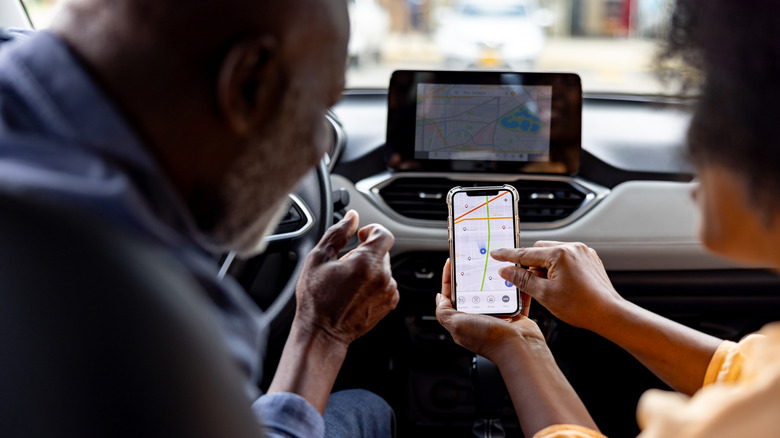
That expansion has not changed the platform’s basic design for a single user. When a driver and passenger bring previously synchronized iPhones into the same cabin, the vehicle can face a connection bottleneck. If the passenger needs real-time navigation updates, messaging applications, or specialized CarPlay apps, the primary connection still has to be manually transferred to the passenger’s device.
Wireless CarPlay uses Bluetooth for its initial discovery handshake and high-bandwidth Wi-Fi for subsequent screen projection. When the vehicle starts, its onboard computer scans for known media access control (MAC) addresses and often selects the first device that responds. That device is not always the driver’s phone.


Some manufacturers have built ways to change the active connection while the vehicle is operating. Hyundai, Kia, and Genesis, for example, offer software options that let users switch projection connections through the dashboard menus. Many modern infotainment platforms also provide a device prioritization menu under Bluetooth or device management settings.
The prioritization feature allows owners to designate a “primary” device for the vehicle to seek first, even when other registered phones are closer to the receiver. When software-based handoffs fail, drivers and passengers often turn to manual overrides instead.
The most direct workaround is to temporarily disable Bluetooth and Wi-Fi on the passenger’s device, forcing the vehicle to pair with the driver’s phone. Physical tethering through a USB cable is also frequently suggested, although its effectiveness varies. Some automotive USB ports provide power only and lack the data transmission lines needed to override an active wireless connection, producing mixed results for users troubleshooting the system.
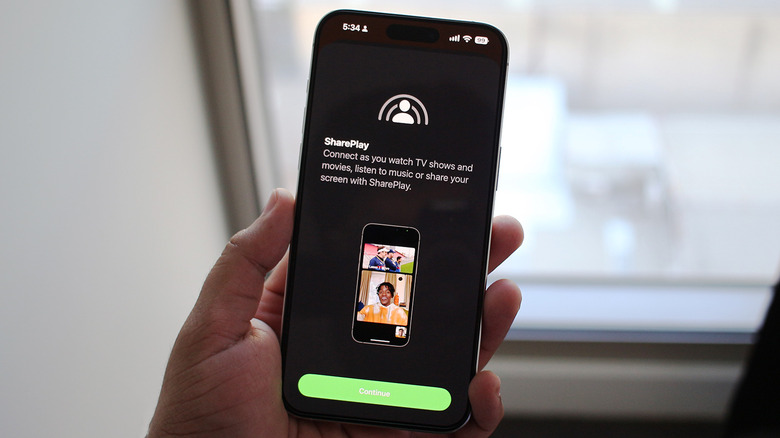
Apple introduced SharePlay support for CarPlay with iOS 17 in September 2023, focusing on passenger audio control. A passenger using an iPhone running iOS 17 or later can connect to the driver’s active Apple Music session, edit playlists, skip tracks, and manage the audio queue from the passenger’s own device.
The passenger does not need an active Apple Music subscription when the host phone initiating the session has one. Spotify offers a similar option for third-party audio services: in late 2023, it launched “Jam” as a replacement for its older “Group Session” utility.
Spotify Jam lets multiple users join a synchronized queue regardless of whether they use iOS or Android. In a car, passengers can contribute to music selection from their own handsets without a premium subscription, provided they are physically near the host.
Those collaborative features do not remove the dashboard’s broader control limitations. CarPlay apps now include parking reservation services, fuel price locators, and integrations with artificial intelligence platforms such as ChatGPT, but accessing those functions from another phone still requires transferring the primary CarPlay connection.
The issue is part of a wider industry debate over control of the dashboard screen. CarPlay and Google’s Android Auto remain highly popular with consumers, while some automakers are attempting to reclaim control of the cabin experience.
General Motors decided to phase out Apple CarPlay and Android Auto in its new electric vehicles, beginning with the 2024 Chevrolet Blazer EV. The company instead chose a built-in infotainment system co-developed with Google.
As automakers and technology developers negotiate these boundaries, the consumer experience continues to rely on a mix of local hardware settings, quick-and-dirty manual overrides, and increasingly collaborative software features designed to manage the digital real estate of the modern dashboard.