
VW Taps Rivian Software to Power $5 Billion Bet on Affordable ID.Every1 City Car
Volkswagen ID.Every1: A $5 Billion Bet on Affordable Urban EVs with Rivian Software
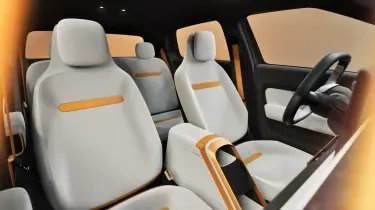
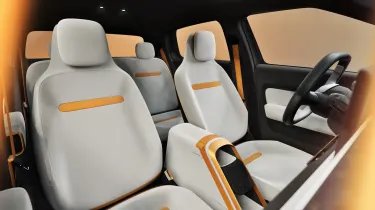
The ID.Every1, conceived as a spiritual successor to the Volkswagen up!, is designed to serve as an affordable point of entry into the company’s zero-emission lineup. Its styling was developed under Volkswagen Head of Design Andy Mindt, who took over the brand’s design leadership in early 2023. The concept draws inspiration from historic compact Volkswagen models, including the Lupo, introduced in 1998, and the original internal-combustion up!, which launched in 2011 and ceased production in late 2023.
Underneath its exterior, the ID.Every1 utilizes a compact adaptation of Volkswagen’s Modular Electric Drive Matrix (MEB) platform. To keep manufacturing expenditures down and reach competitive retail pricing, the vehicle will utilize lithium iron phosphate (LFP) battery chemistry, which avoids the higher material costs associated with nickel- and cobalt-based cells. The vehicle’s digital foundation relies on an all-new software-driven electronic architecture developed through Volkswagen’s joint venture with Rivian.
Announced in mid-2024 as part of a strategic partnership valued at up to $5 billion, the joint venture was established to supply Volkswagen Group models with Rivian’s zonal hardware design and integrated software stack. The architecture centers on comprehensive over-the-air (OTA) software updates, allowing vehicle operating systems, efficiency controls, and digital interior features to be updated continuously after sale. While official battery specifications for the production vehicle have not been fully published, the vehicle is expected to feature a battery pack capacity between 35 kWh and 40 kWh.
Mindt’s team applied the design language established with the 2023 ID.2all concept, creating a visual link across Volkswagen’s entry-level electric fleet. The concept’s body features structured proportions, wide flared wheel arches, and a slim glasshouse frame, all of which are planned to transition into final production. Engineers are working to adapt a 37 kWh battery module—originally designed for the upcoming ID. Polo subcompact—to fit within the shorter wheelbase of the ID. up! chassis.
Up front, the nose features a single headlight unit paired with a streamlined grille motif. Design details include headlight optics shaped to resemble human pupils and a curved lower air intake designed to give the front end an approachable expression. That battery setup is targeted to yield a driving range exceeding 200 miles on a single charge. In keeping with standard MEB platform engineering, the battery cells are arranged in a flat panel beneath the passenger cabin floor, positioned directly between the front and rear axles to optimize interior room and lower the center of gravity.
Additional exterior elements include a contoured roof structure with an integrated, hidden third brake light and oblong rear light clusters. The entry-level model forms a core part of Volkswagen Group’s broader strategy to expand its battery-electric offerings in response to growing global market demand and low-cost competitive pressure from international EV manufacturers. By combining the modular MEB platform with Rivian-derived software architecture, Volkswagen aims to deploy small, mass-market electric city cars at scale across its core brand lineup. The system is designed to streamline vehicle electronics, reduce total development timelines, and lower production costs.