
Gulf Sovereign Funds Pivot to Space and U.S. Assets as Regional Conflict Escalates
Middle East capital realigns toward orbital networks and North American industrial assets as regional instability mounts
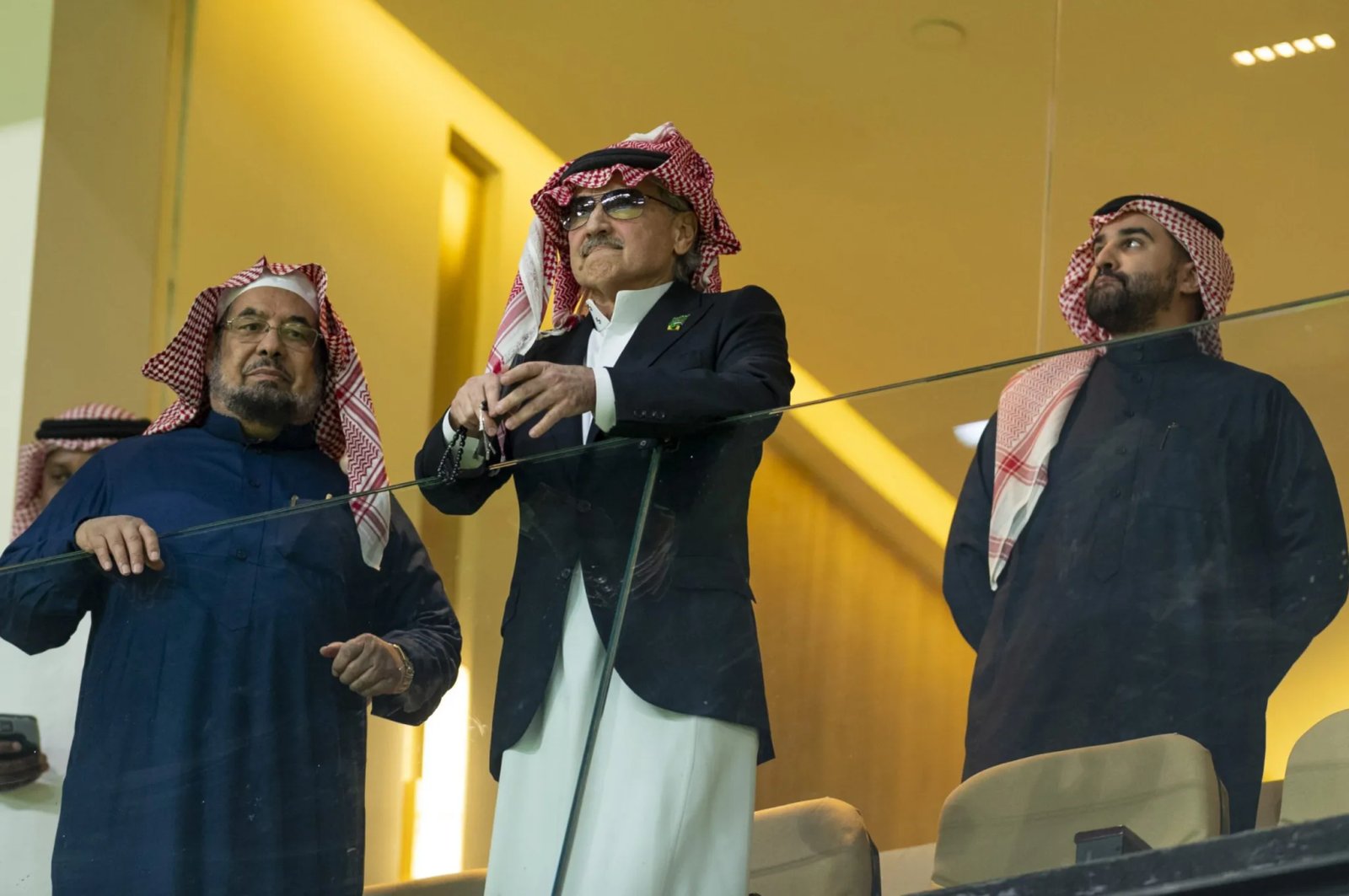
Gulf-based investors stand to realize substantial returns from the planned initial public offering of SpaceX, which is targeting a valuation of $1.77 trillion by offering 555.6 million shares at a fixed price of $135 each. The company, following its early February merger with artificial intelligence firm xAI, unites launch operations, the Starlink satellite internet constellation, and advanced AI development under single management led by President and Chief Operating Officer Gwynne Shotwell. Saudi Arabia’s Prince Alwaleed bin Talal holds a 0.63% direct stake in SpaceX through his investment vehicles, a position valued at approximately $10.6 billion at the target IPO price. Major regional sovereign wealth funds, including Saudi Arabia’s Public Investment Fund (PIF) and Abu Dhabi’s Mubadala Investment Company, hold additional direct and indirect holdings below public reporting thresholds.
This strategic pivot comes as the ongoing conflict with Iran exposes the physical vulnerability of terrestrial energy, maritime, and digital infrastructure across the region. In early March, three Amazon Web Services (AWS) data centers—two in the United Arab Emirates and one in Bahrain—were damaged by direct drone strikes and falling debris during regional hostilities. Concurrently, heightened tensions in the Strait of Hormuz highlighted the vulnerability of localized subsea fiber-optic cables, which carry critical data traffic through the same narrow maritime transit route as regional crude shipments. With subsea communications cables and physical cloud infrastructure facing direct military threats, Gulf states are leveraging massive paper gains from early-stage technology investments to fund a shift toward space-anchored networks and North American assets.
U.S. Treasury Secretary Scott Bessent is evaluating proposals to utilize frozen Iranian sovereign assets—estimated at up to $100 billion—to compensate Gulf states for infrastructure damage sustained during the conflict. In parallel, Khaldoon Al Mubarak, Chairman of the UAE Executive Affairs Authority and Managing Director of the $385 billion Mubadala Investment Company, conducted high-level meetings with White House officials in Washington to advance Abu Dhabi’s $1.4 trillion, 10-year U.S. investment commitment established in March 2025. Key developments under this initiative include the UAE receiving its initial shipments of advanced Nvidia microprocessors to support the construction of the 5-gigawatt UAE-U.S. Stargate AI campus, a centerpiece of the bilateral AI Acceleration Partnership intended to secure high-tech supply chains.

In its IPO prospectus, SpaceX detailed long-term plans to deploy an orbital network of up to one million data center satellites. Designed to operate outside Earth-bound regulatory and physical constraints, the proposed constellation would utilize solar arrays and optical laser communications to generate up to 100 gigawatts of power—equivalent to the output of roughly 100 nuclear power plants—with energy efficiency eight times higher than ground-based facilities. The push for space-based computing and communications follows direct disruptions to regional cloud architecture, with SpaceX’s Starlink network having increasingly functioned as an operational redundancy system for sovereign institutions and private enterprise during ground network outages.
Middle Eastern family offices currently hold roughly 50% of their total assets in North America. According to the UBS Global Family Office 2026 report, which surveyed 307 single-family offices globally with an average net worth of $2.7 billion, 82% of Middle Eastern family offices are actively adjusting asset allocations toward capital preservation and defensive growth. When deploying new capital, 50% of regional family offices identified artificial intelligence as their primary investment theme, followed by AI-enabled healthcare applications at 35% and critical infrastructure at 30%. By comparison, U.S. family offices demonstrated the highest home-market concentration globally, allocating 88% of portfolios to North America, with top investment priorities focused on artificial intelligence (65%), defense and security infrastructure (39%), and general physical infrastructure (35%).
Emirates Global Aluminium finalized a joint development agreement with Illinois-based Century Aluminium to construct a $4 billion primary aluminum smelter in Inola, Oklahoma. Designed to produce 750,000 metric tons annually, the facility represents the first greenfield primary aluminum smelter built in the United States since 1980 and will more than double existing U.S. domestic output. This heavy manufacturing investment coincides with downward revisions to regional economic growth forecasts. Following an official staff visit to Riyadh from April 28 to May 13, the International Monetary Fund (IMF) reduced its 2026 gross domestic product growth projection for Saudi Arabia to “about 2%,” down from the 3.1% forecast published in its April World Economic Outlook.
While elevated crude oil prices have cushioned fiscal balances and current accounts, the IMF noted that lower oil export volumes and dampened non-oil business confidence have weighed on overall growth. The fund also observed that while Saudi Arabia’s low sovereign debt levels and foreign currency reserves provide significant policy buffers, a prolonged military conflict poses risks to medium-term investment. In response, the Public Investment Fund revised its 2026–2030 strategic plan to prioritize financial return efficiency, rigorous project selection, and expanded private-sector co-investment.
On June 4, the Kingdom of Bahrain executed a $1 billion issuance of 10-year dollar-denominated sovereign bonds—the first public debt offering by a Gulf Cooperation Council member state since the outbreak of hostilities. Order books reached $3.2 billion, reflecting strong institutional demand for high-yield sovereign debt following liquidity support measures provided to Manama by the United Arab Emirates in mid-April. The debt issue is anticipated to receive “B” credit ratings from S&P Global Ratings and Fitch Ratings. Mid East sovereign wealth funds and private capital networks across the Persian Gulf are accelerating a systematic realignment of their investment strategies, channeling hundreds of billions of dollars into space-based telecommunications, U.S. artificial intelligence infrastructure, and Western heavy industry to insulate their economies from escalating regional instability.