U.S. Skilled Trades Face 1.7 Million Annual Job Shortage as Ford, BlackRock and Google Launch Workforce Alliance
Current training programs produce just 55 workers for every 100 needed, threatening federal infrastructure and semiconductor manufacturing goals.
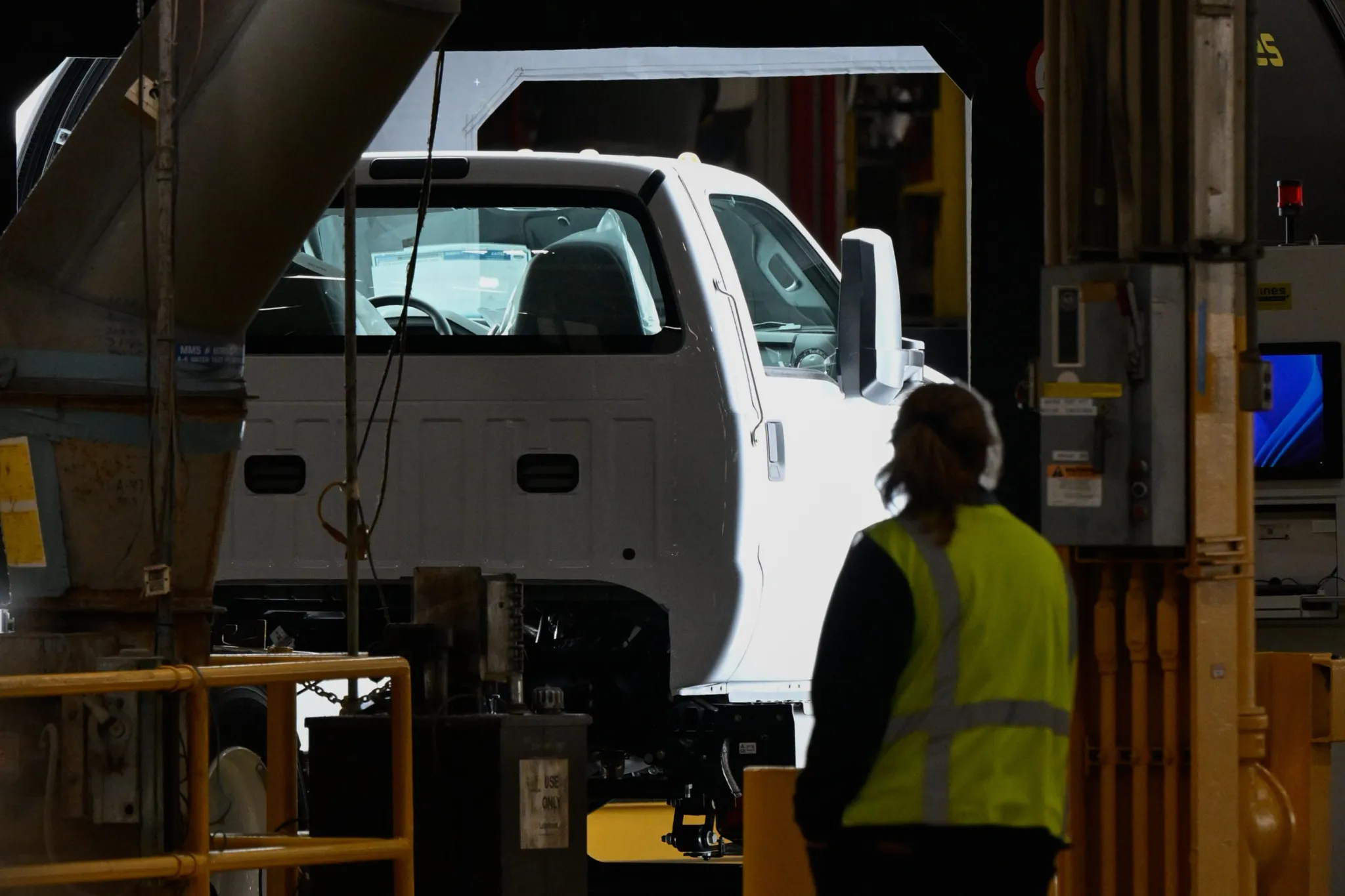
The United States is heading toward a structural labor crisis that threatens to stall the country’s most critical industrial ambitions. A sweeping national analysis released Thursday projects 1.7 million skilled trades job openings every year through 2035, with current vocational training pipelines producing only 55 qualified workers for every 100 positions employers need to fill.
The data, published in “The State of America’s Skilled Trades: A National Report,” was compiled by the research organizations Jobs for the Future and Burning Glass Institute across 124 distinct trade occupations. Roughly 600,000 of those annual vacancies will be net-new roles tied directly to artificial intelligence infrastructure, advanced manufacturing, and energy grid modernization. The remainder stems from an accelerating wave of retirements among baby boomers who built much of the nation’s existing physical infrastructure.
This widening gap arrives at a precarious moment for U.S. economic policy. Federal initiatives such as the CHIPS and Science Act and the Infrastructure Investment and Jobs Act have injected hundreds of billions of dollars into domestic semiconductor fabrication, bridge repair, broadband expansion, and clean energy deployment. Yet without electricians, welders, pipefitters, HVAC technicians, and heavy equipment operators to execute the work, those capital investments risk severe delays and cost overruns. Manufacturing reshoring efforts, designed to reduce reliance on overseas supply chains, face identical bottlenecks.


To coordinate a private-sector response, Ford Motor Co. established the Alliance for America’s Skilled Trades in July alongside BlackRock, Alphabet’s Google, and workwear manufacturer Carhartt. The coalition operates independently from any single corporate agenda, though its formation aligns closely with the commercial realities facing Ford Pro, the automaker’s division dedicated to fleet vehicles, software subscriptions, and services for contractors experiencing these labor shortages daily.
The shortage is driven less by a lack of available workers than by systemic barriers within the education pipeline. For decades, U.S. high schools have prioritized four-year university enrollment over vocational pathways, a cultural shift rooted in the late-20th-century transition toward a knowledge economy. Guidance counseling frameworks still largely treat apprenticeships as secondary options rather than direct routes to middle-class wages. Modern trade careers frequently involve robotics programming, drone operation, and complex diagnostics, yet public perception remains anchored to outdated manual-labor stereotypes.
Even when students pursue trade certifications, completion rates hover near 50 percent. Financial constraints, unreliable transportation, and childcare obligations routinely force trainees to drop out before finishing their programs. Addressing these friction points has become central to corporate interventions. Ford recently partnered with Bloomberg Philanthropies to pilot an automotive technology curriculum inside Detroit Public Schools and contracted Lyft to provide transit solutions for SkillsUSA participants traveling to apprenticeship sites. Separately, the company commissioned the Ad Council to map how parents, educators, and teenagers currently perceive trade careers, aiming to reshape recruitment messaging.
Broader regional strategies are also accelerating. Michigan Gov. Gretchen Whitmer joined JPMorgan Chase CEO Jamie Dimon and Ford CEO Jim Farley this week to launch Michigan LIFT (Launchpad for Industrial Innovation & Transformation), a public-private initiative designed to channel investment into local workforce innovation. Detroit serves as a testing ground; the city’s historical dependence on automotive assembly lines makes it uniquely positioned to measure whether legacy industrial centers can successfully pivot toward next-generation manufacturing talent.
Unlike previous workforce campaigns led primarily by government agencies or community colleges, the current mobilization relies heavily on multinational corporations treating blue-collar talent acquisition as a core operational risk. The Alliance for America’s Skilled Trades confirmed it will onboard additional corporate members throughout the fall, expanding its dashboard tracking system to monitor real-time hiring gaps against training outputs nationwide.