

Trump’s Xi Dinner Tests the Limits of Personal Diplomacy
A trade truce and personal rapport put U.S.-China strategy under scrutiny
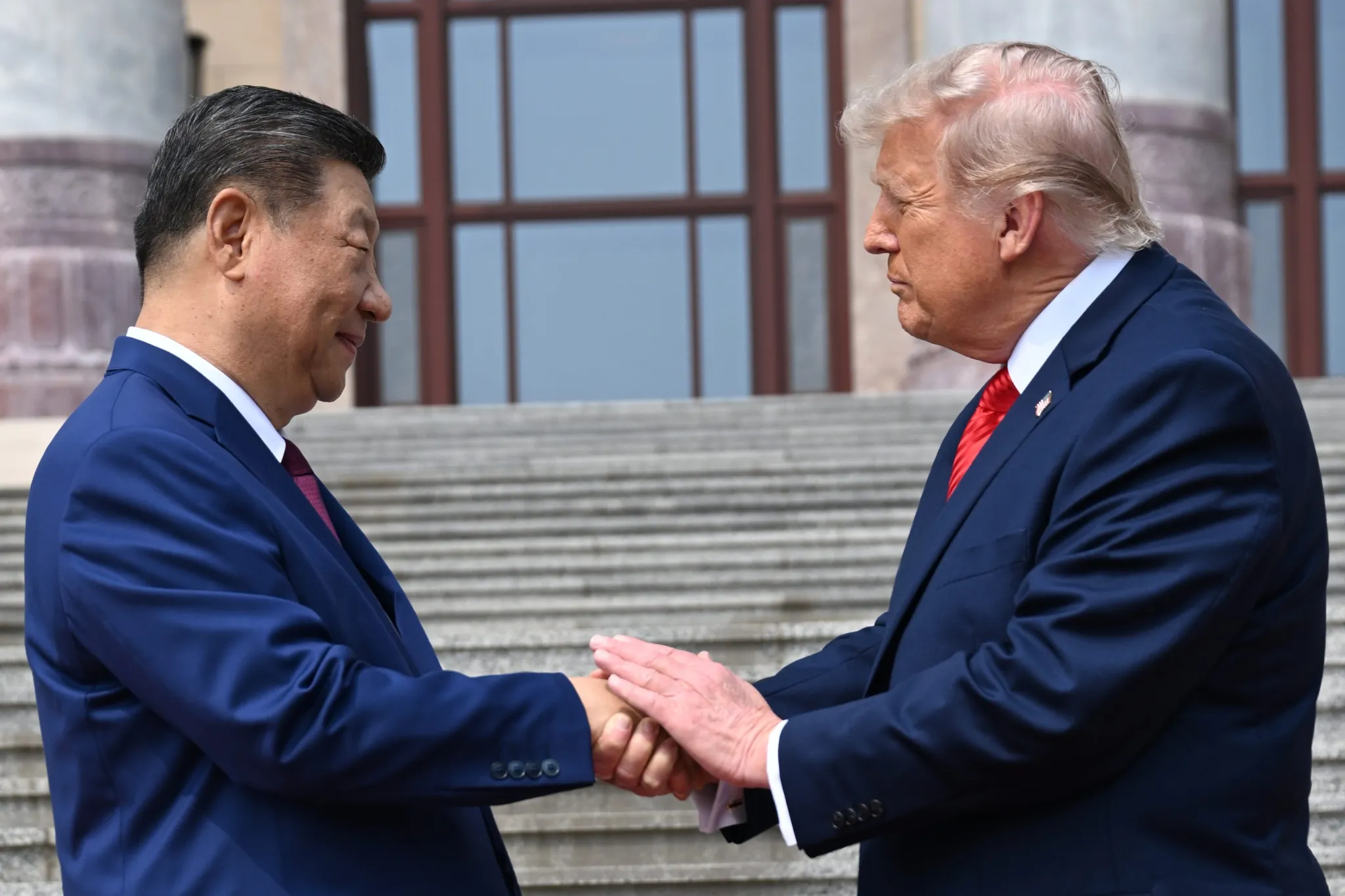
WASHINGTON — President Donald Trump’s highly anticipated White House state dinner for Chinese President Xi Jinping on Thursday will feature a temporary helipad on the South Lawn. Trump has also publicly lamented that the White House ballroom was not yet completed to his standards.
The lavish reception comes during a tactical trade armistice and reflects a major change in Washington’s handling of its geopolitical, economic, and technological rivalry with Beijing. After years of escalating economic warfare, the administration has shifted from aggressive unilateral tariffs toward highly personalized, bilateral diplomacy. Critics warn that approach could compromise long-term U.S. strategic advantages.
Trump said earlier this month, “He’s a great gentleman; we get along great. We have a very good trading relationship and, you know, they’re a competitor and all of that, but we have a very good relationship with President Xi.” The conciliatory tone differs sharply from the confrontational rhetoric that defined Trump’s early political rise.


The administration has pointed to U.S. Census Bureau data showing that the goods trade imbalance with China has declined compared to the same period in 2025. Trade analysts, however, say the reduction is partially an illusion because Beijing has increasingly routed exports through intermediary nations such as Vietnam and Mexico to bypass American customs levies while preserving its manufacturing momentum.
China posted a record $1.2 trillion global trade surplus last year. Its manufacturing sector expanded into new, high-value industries rather than contracting under U.S. pressure. Heavily subsidized Chinese electric vehicles (EVs) and green technologies are now undercutting legacy automotive sectors in Germany, Japan, and South Korea, reshaping global commerce.
Trump’s sweeping tariff campaigns last year did not force systemic changes in Beijing’s state-led economic model. China instead leveraged its near-monopoly on rare earth elements—critical minerals essential for manufacturing defense systems, consumer electronics, and electric vehicle batteries—to help compel Washington to accept a trade truce.
“Trump has dramatically shifted his approach to China because his initial attempt to use super-high tariffs and export restrictions was unsuccessful,” said Michael Kovrig, a senior adviser at the International Crisis Group. “Xi and Trump got into a contest of leverage, and Xi came out on top.”
Kovrig, a former Canadian diplomat, was detained in China for nearly three years starting in late 2018. His detention was widely criticized as a case of “hostage diplomacy” following Canada’s arrest of a top Huawei executive, giving Kovrig first-hand experience with Beijing’s hardline maneuvers.
The trade truce has also created breathing room for both countries to strengthen their positions in a race for technological dominance, particularly in artificial intelligence (AI) and semiconductor supply chains. The White House is pushing to accelerate domestic AI development and views the technology as a critical national security frontier.
Trump recently declared on social media that any effort to slow down AI development would directly benefit China. He characterized AI as “the Greatest Economic Development Engine in History — Bigger than Oil, Gold, Diamonds, or even the Internet.” The domestic push faces public resistance over the massive energy and land footprints required for data centers, as well as stark safety warnings from leading tech firms.
China has continued advancing its AI and military capabilities despite strict U.S. export controls intended to cut off its access to advanced microchips. U.S. intelligence officials have raised alarms that Chinese firms are circumventing those barriers by training their software on proprietary American AI models.
The administration has nevertheless softened its public stance. U.S. Attorney General Todd Blanche told reporters at the White House last week that it is “unfair to just label China as a country” as a “bad actor” on artificial intelligence. Asked whether Trump intended to press Xi about intellectual property theft and AI model scraping during the visit, Blanche emphasized the personal connection between the two leaders instead. “Those two presidents have a great relationship,” Blanche said. “They get along, they make deals together.”
According to Kovrig, the administration’s current approach has inadvertently alienated traditional Western alliances that could otherwise exert collective pressure on Beijing. Trump has repeatedly clashed with G7 and NATO allies, mocked French President Emmanuel Macron, and questioned the military alliance’s utility after several member states declined to back a potential U.S. military conflict with Iran.
Trump more recently initiated a tense trade dispute with Canada and jokingly suggested that the northern neighbor could become the “51st American state.” “He’s executing Xi’s wedge tactics for him, and along the way, helping Xi to tell a story about China as the more stable and responsible power,” Kovrig said. “It’s led to a wave of Western leaders visiting Beijing and seeking to stabilize and improve their relations with Xi so they can focus more on dealing with problems Trump is causing them.”
The choreography of Thursday’s visit has renewed debate over the effectiveness of Trump’s personal diplomacy. Trump’s supporters cite tangible symbolic achievements, including his reciprocal state visits: a trip to Beijing in May and another two potential meetings at international summits later this year. They say the visits provide a high-level channel of direct communication that eluded his predecessor. President Joe Biden met with Xi only three times on the sidelines of international summits during his term.
Foreign policy experts question whether the state dinner will produce concrete policy “deliverables” on fentanyl trafficking, maritime security in the South China Sea, or intellectual property protection. Evan Medeiros, a Georgetown University professor who served as the National Security Council’s director for China during the Obama administration, warned that placing personal rapport ahead of structural policy targets could leave the United States vulnerable.
“We have this idiosyncratic president who believes in personal relationships and just wants to get along with Xi Jinping for the optics of getting along with him,” Medeiros said. “The problem is that this idiosyncratic approach is coming at precisely the time when we really need to be amping up all dimensions of our competition.”









