Pennsylvania Data Center Backlash Rewrites AI Politics
Residents in northeastern Pennsylvania united across party lines to block an Amazon-linked campus, forcing the governor to dismantle his own fast-track AI permitting system.
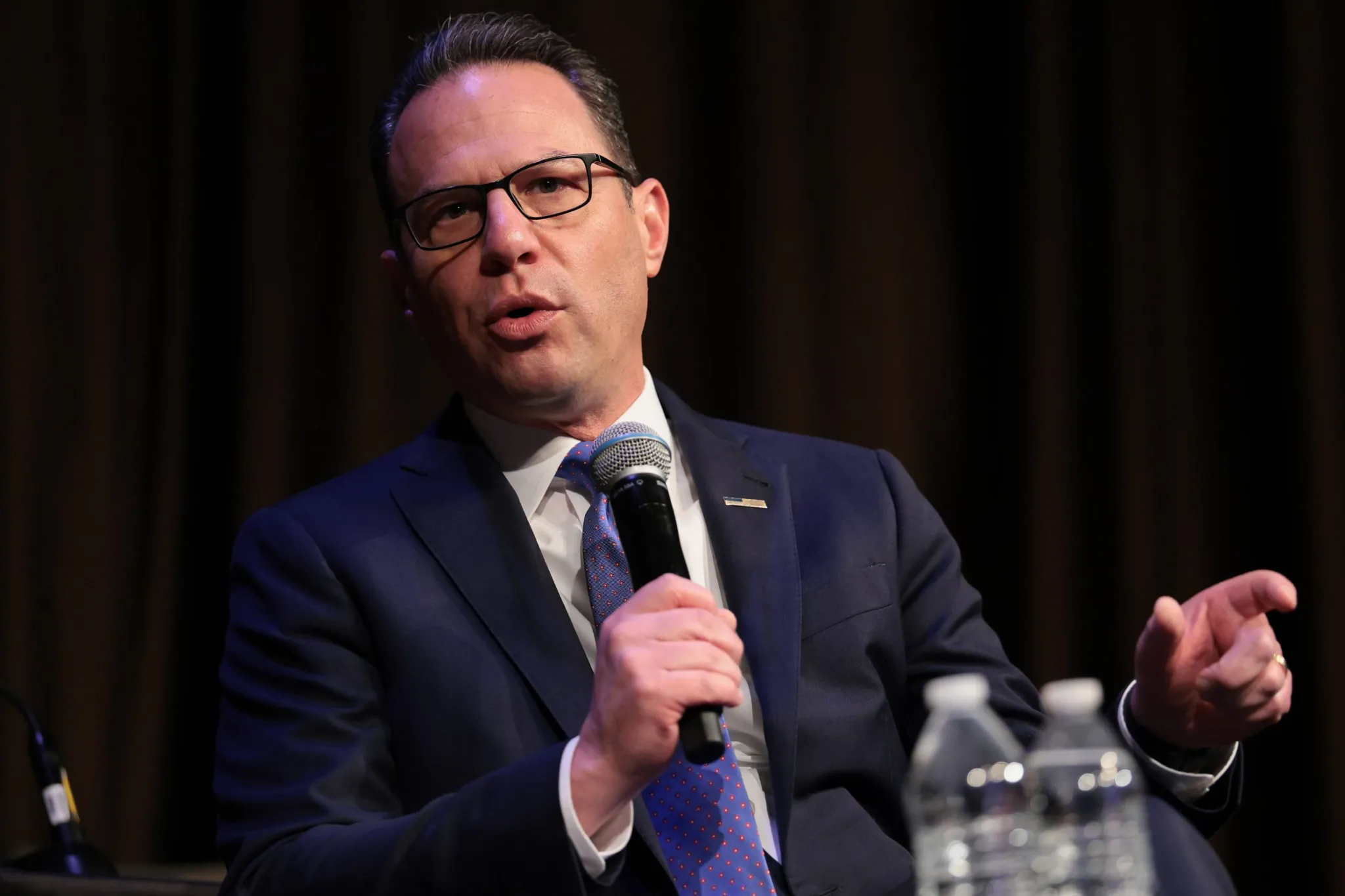
Gov. Josh Shapiro dismantled his own fast-track permitting system for artificial intelligence infrastructure in August, surrendering approval authority to local agencies after residents in northeastern Pennsylvania blocked a massive Amazon-linked development. The reversal erased an executive order he signed just nine months earlier and marked one of the sharpest policy pivots on AI infrastructure by any U.S. governor.
The catalyst was Project Hazelnut, a proposed 1,300-acre data center campus pitched by NorthPoint Development in Hazle Township. To secure local acquiescence, the developer mailed letters offering roughly 4,500 residents up to $10,000 each as part of a broader $165 million investment proposal. Simultaneously, a regional utility threatened eminent domain against approximately 30 properties in neighboring Sugarloaf Township to clear a path for high-voltage transmission lines required to power the site. Emails obtained through right-to-know requests identified Amazon as the intended end user. An Amazon spokesperson said the company is evaluating multiple sites across Pennsylvania but has not finalized an agreement with NorthPoint.
Hazle Township sits at the base of the Pocono Mountains in Luzerne County, an area that two decades ago became a national flashpoint over immigration enforcement when the city of Hazleton passed the Illegal Immigration Relief Act. That 2006 ordinance penalized landlords and businesses tied to undocumented workers, drawing fierce partisan division. Today, the same geography has produced the opposite political dynamic: a coalition spanning working-class, middle-class, and upper-income residents, cutting across party registration, unified against corporate land acquisition and energy extraction.


Local organizers formed the Alliance to Stop the Line, filing 20 formal protests against the utility’s transmission corridor over concerns about property devaluation and health risks from electromagnetic fields. High-voltage lines associated with hyperscale data centers typically operate between 230 and 500 kilovolts, far exceeding standard residential distribution infrastructure, which routinely triggers regulatory scrutiny and public alarm in rural communities unaccustomed to industrial-scale power routing.
This localized resistance reflects a broader structural problem facing the technology industry. Hyperscale facilities operated by companies like Amazon Web Services, Microsoft, and Meta require between 50 and 150 megawatts of continuous power per campus — enough to sustain tens of thousands of homes. In regions where electrical grids are already constrained, such as the PJM Interconnection territory covering Pennsylvania, adding these loads forces utilities to build new generation or transmission assets, passing costs and physical disruptions directly onto ratepayers who receive no proportional economic benefit.
Data centers generate minimal long-term employment relative to their physical footprint and energy consumption. A typical hyperscale facility might employ 30 to 50 full-time technicians once operational, while consuming hundreds of millions of gallons of water annually for cooling systems. This imbalance between municipal burden and community payoff has fueled widespread opposition. Gallup polling indicates approximately 70% of Americans oppose data center construction near their homes, including 75% of Democrats and 63% of Republicans.
The financial toll on the AI buildout is mounting. According to a June report from Data Center Watch, at least 75 projects valued collectively above $130 billion were delayed or canceled in the first quarter of this year. Active opposition organizations doubled during that same window, growing from 396 to 833 nationwide.
Tatishe Nteta, director of the UMass Poll at the University of Massachusetts Amherst, attributes the bipartisan hostility to a failure in corporate messaging. Technology firms have emphasized abstract macroeconomic benefits while communities experience concrete costs: rising electricity rates, strained aquifers, noise pollution from industrial cooling fans, and visual blight. Ben Green, a public policy professor at the University of Michigan, noted that while Democrats frame the issue around climate impacts and Republicans focus on property rights and corporate overreach, both constituencies share an aversion to secretive land deals imposed by out-of-state entities.
Pennsylvania occupies a unique position in this conflict. The state hosts only 174 of the roughly 4,767 data centers operating nationally, yet its status as a premier electoral battleground amplifies every infrastructure dispute. Shapiro initially courted the sector aggressively, announcing a record $20 billion Amazon investment commitment in July 2025 before public outcry forced him to retreat. His August executive order effectively killed the state-level approval mechanism that developers relied upon to bypass municipal zoning boards.
Shapiro acknowledged the shift publicly last month, telling CBS News Philadelphia that developers pushing projects into communities lacked actual access to the power necessary to operate them, leaving residents to absorb the disruption without the promised economic activity.
The political fallout is now reshaping the upcoming Pennsylvania gubernatorial race. Republican candidate Stacy Garrity has largely maintained alignment with the Trump administration’s pro-infrastructure posture, though political analysts view that stance as increasingly vulnerable given shifting voter sentiment. Meanwhile, frustration among Democratic voters over Shapiro’s initial embrace of the industry has elevated State Sen. Katie Muth, who introduced legislation seeking a statewide moratorium on data center development, as a potential write-in alternative.
The pressure extends well beyond Pennsylvania. Texas Gov. Greg Abbott, previously a vocal champion of AI expansion who branded his state the “epicenter of AI development,” recently halted pending approvals on 1,800 data center proposals and implemented new siting restrictions ahead of his reelection campaign. That pivot signals how rapidly local backlash has transformed data center proliferation from a bipartisan economic development strategy into a distinct political liability.