
Coca-Cola Plans a $10 Billion U.S. Expansion
New plants, Fairlife expansion and bottler spending anchor Coca-Cola’s five-year domestic investment plan
U.S. consumer demand has demonstrated notable resilience despite shifting financial conditions. The Bank of America Institute’s September 2026 “Consumer Checkpoint” report found that household card spending increased 4.5% year over year in August, led by strong back-to-school retail activity. A “K-shaped” divergence in income and spending persists among Millennial consumers, while spending and wage growth have largely converged across most other demographic groups. Households are also keeping credit card balances low relative to their borrowing limits.
The Coca-Cola Company and its domestic bottling partners plan to invest $10 billion in U.S. capital projects from 2026 through 2030. The program covers new facilities and expansions in Rancho Cucamonga, California; Colorado Springs, Colorado; Indianapolis, Indiana; Birmingham, Alabama; Coopersville, Michigan; St. Cloud, Minnesota; Orlando, Florida; and Webster, New York.
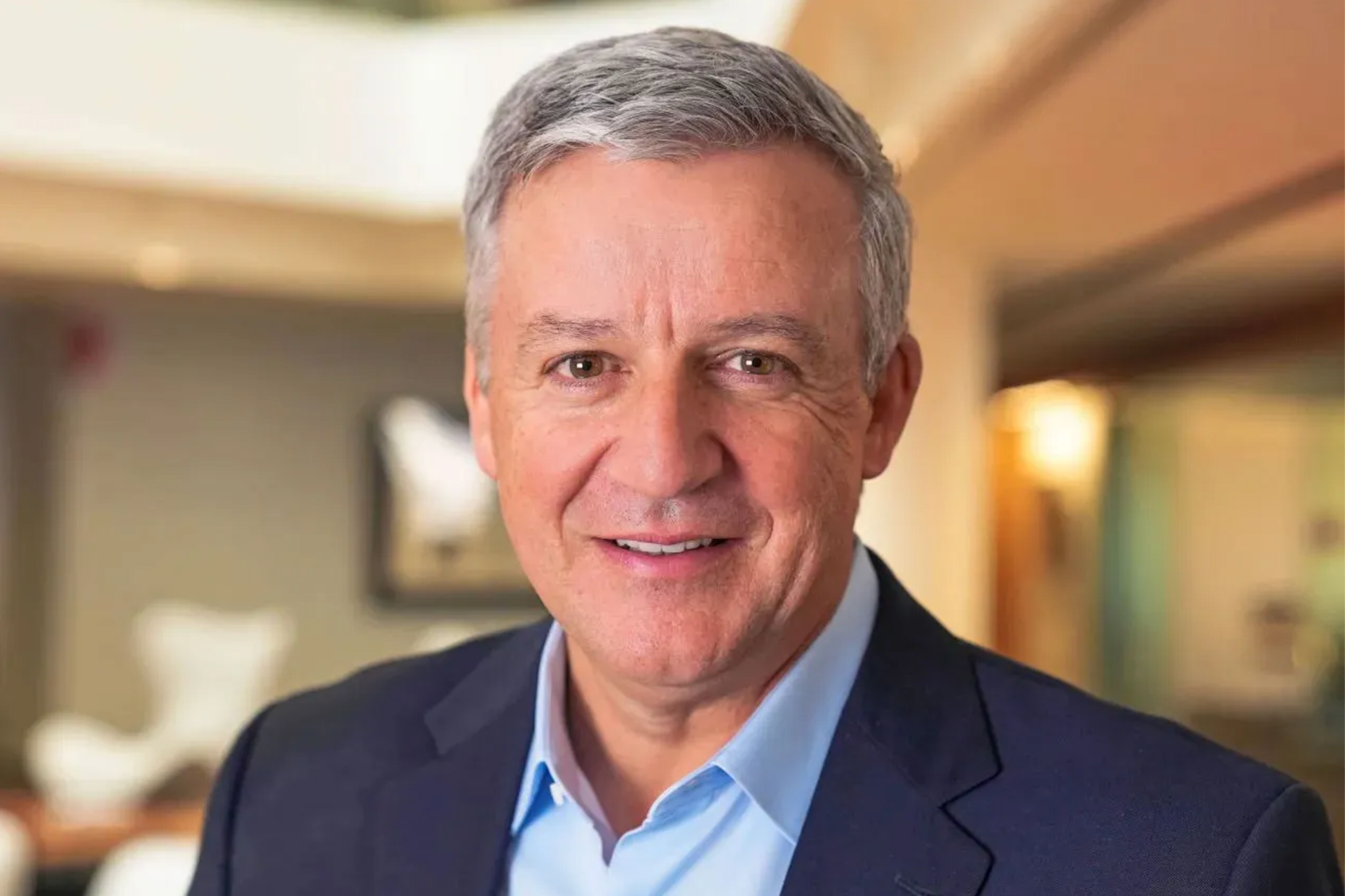
Coca-Cola President and Chief Financial Officer John Murphy said the figure is a system-wide projection, not capital expenditures funded only by the Atlanta-based parent company. The structure reflects the company’s decentralized, “asset-light” operating model, which a new economic impact study credits with generating $85 billion for U.S. gross domestic product in 2025.

The company’s franchise framework was solidified in late 2017 after Coca-Cola completed a multi-year refranchising effort involving its North American bottling territories. Coca-Cola owns and markets the brands and sells concentrate to independent bottlers. Those bottlers absorb the major capital costs associated with manufacturing plants, distribution fleets, warehousing, and local sales operations.
“The lion’s share of the $10 billion represents the plans that our bottling partners have to continue to invest at the local level in manufacturing, in distribution, in sales and distribution,” Murphy said.
The investment program also includes parts of Coca-Cola’s business that remain outside the traditional franchise model. Fairlife, the ultra-filtered milk brand, is one of the company’s capital-intensive subsidiaries. Coca-Cola fully acquired Fairlife in January 2020 after previously operating it as a joint venture with Select Milk Producers.
Fairlife’s specialized dairy processing operations require substantial direct corporate funding. That spending includes a major production plant in Coopersville, Michigan, and a new processing facility in Webster, New York. Capacity expansions at the Webster facility are expected to generate hundreds of new regional jobs.
Murphy said physical plant expansions such as the Webster project typically create jobs, although other portions of the system-wide investment will be directed toward technological and equipment upgrades that may not increase headcount. Kate Dohaney, CEO of U.K. mobile network Giffgaff, part of the Virgin Media O2 Group, recently described a similar operational challenge. She said modern leadership should focus on training existing workforces for higher-level tasks rather than carrying out simple head-count reductions.
The Coca-Cola system supported nearly 1 million American jobs in 2025 and spent approximately $37 billion with domestic suppliers, according to an independent economic impact study commissioned by the beverage company. Its contribution to U.S. GDP totaled $85 billion, representing roughly $10 million in economic output every hour.
That 2025 figure compares with $58.8 billion in the company’s more limited 2023 study. Murphy attributed part of the increase to broader participation by independent bottling partners in the data collection process, along with robust organic growth from newer, non-carbonated acquisitions.
Fairlife and Bodyarmor have expanded Coca-Cola’s presence beyond traditional soft drinks. Coca-Cola fully acquired Bodyarmor, the sports beverage brand, in November 2021 for $5.6 billion, its largest-ever brand acquisition.
The domestic investment comes as U.S. financial markets face macroeconomic headwinds. The 10-year Treasury yield recently rose past 5%, reaching 5.027% after a multi-billion-dollar Treasury intervention intended to bolster bond market liquidity. The pressure on yields has prompted warnings from some debt analysts about a potential long-term national debt spiral.
Murphy said the $10 billion capital program is not a defensive move or a hedge against potential global tariffs. Coca-Cola considers the U.S. market to have “boundless growth potential,” and its highly localized supply chain keeps 98 cents of every dollar spent on its beverages directly within the U.S. economy.
Murphy has spent nearly 40 years within Coca-Cola, joining the organization in 1988. He reflected on the company’s transformation from a regional Georgia enterprise into a domestic powerhouse with operations in every U.S. county. He described managing the business as a balance between meeting short-term operational goals and maintaining a long-term “steward’s eye” to protect and grow the brand for future generations.
Other major industrial companies are also changing their financial leadership. Flowserve Corporation promoted Brian Ezzell to Chief Financial Officer on October 1, succeeding Amy Schwetz. Schwetz joined manufacturing services provider Flex on October 5 and is slated to lead its regulated manufacturing and integrated technology divisions before becoming full corporate CFO after Flex’s planned spin-off of its Cloud and Power Infrastructure segment into Axiom Solutions International.