

10-Year Treasury Yield Breaks 5% as Debt and Inflation Fears Intensify
Rising Treasury yields put pressure on households, markets, and Washington
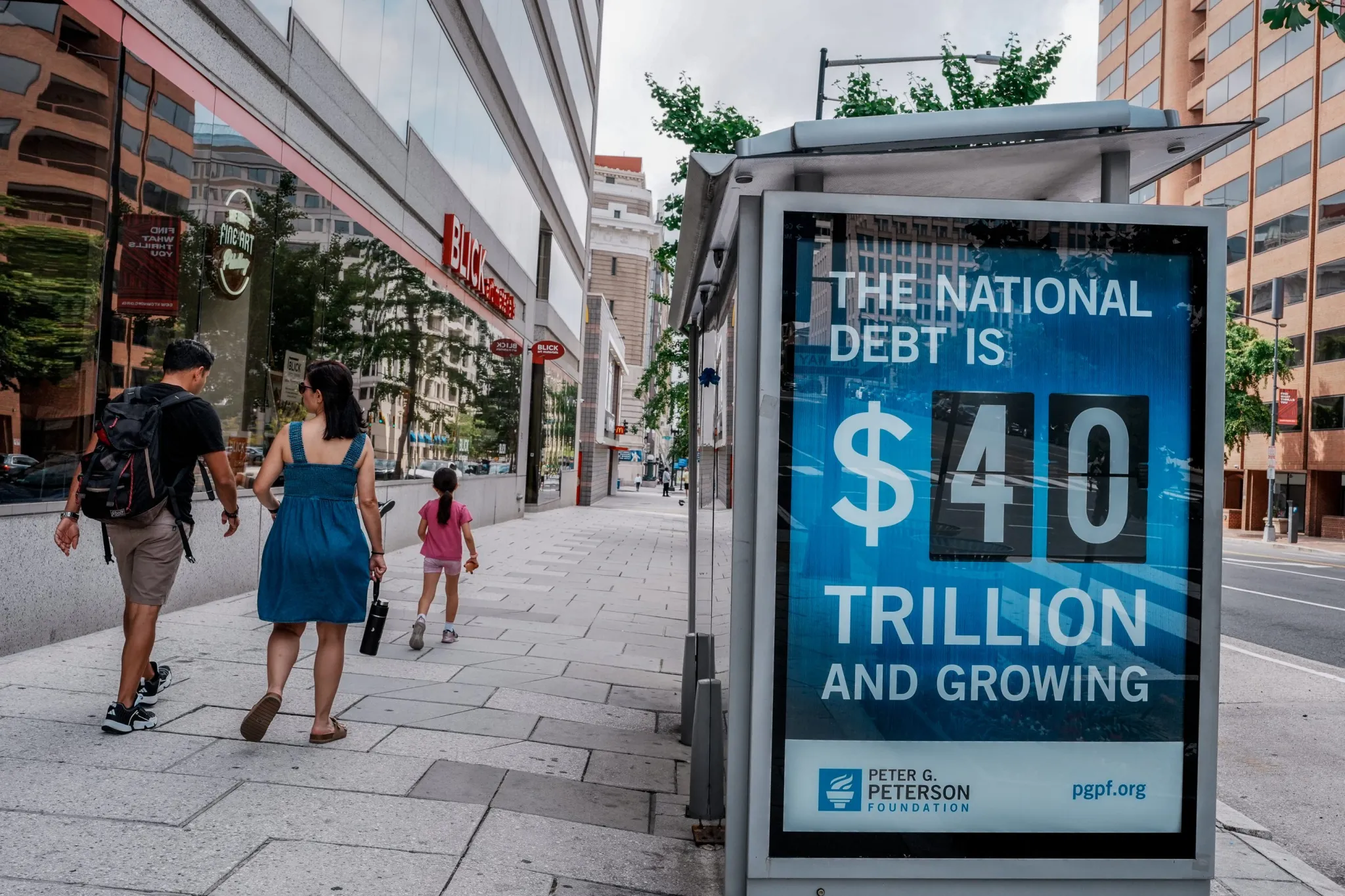
WASHINGTON — The yield on the 10-year U.S. Treasury note stood at 5.027% at the time of writing, crossing a psychologically significant threshold as a deepening selloff in global debt markets raises borrowing costs across the global economy.
The 10-year note serves as a critical financial anchor for corporate debt, sovereign borrowing, and consumer loans worldwide. Its ascent, which began in February, resumed after a brief pause ahead of this week’s Federal Open Market Committee (FOMC) meeting.
Mortgage rates are closely tied to the 10-year Treasury yield, leaving prospective homebuyers facing average rates of approximately 7%. Auto loans, personal lines of credit, and other consumer credit products have also become more expensive. High capital costs are meanwhile threatening to restrain corporate investment, potentially slowing domestic productivity and broader economic growth.


The market’s renewed move higher has come as participants assess escalating geopolitical tensions in the Middle East and renewed fears of persistent inflation. “The ongoing Iran war has fueled a surge in oil prices, reviving inflation fears and adding a fresh layer of uncertainty as to the path for long-term central bank rates,” said Roman Ziruk, lead FX strategist at the global financial services firm Ebury.
Ziruk said the pressure was not unique to the United States, even though the country’s outstanding national debt has crossed the $40 trillion mark. “Yields across the major economic areas have all risen in tandem with U.S. Treasuries in recent weeks, pointing to a shared, geopolitically driven pressure on bond markets that is not confined to the U.S. alone,” he said.
The Federal Reserve’s policy-making body, the FOMC, is preparing to convene as the yield surge complicates its next steps. The central bank previously carried out an aggressive monetary tightening campaign against pandemic-era inflation, raising its benchmark interest rate to a multi-decade high.
Headline inflation has moderated from its 2022 peaks, but strong domestic economic data and resilient consumer spending have continued to support upward pressure on long-term borrowing costs. Geopolitical supply shocks have added to that pressure, leaving policymakers with a narrow path to navigate.
The domestic fiscal consequences of an extended high-yield environment are severe. As government debt yields rise, the cost of servicing U.S. obligations increases, reviving budget analysts’ concerns about a potential “debt spiral”—a compounding cycle in which the government issues more debt simply to fund interest payments on existing liabilities.
Maya MacGuineas, president of the nonpartisan Committee for a Responsible Federal Budget, warned that the trajectory could fundamentally change federal spending priorities over the next decade. “If rates remain 80 basis points-plus above projections over the next decade, we’re on course to spend an annual $2.7 trillion on interest payments at the end of the decade,” MacGuineas said in a statement. “We’ll be spending more on interest than Medicare or Social Security retirement benefits.”
MacGuineas called the 5% threshold a critical “wake-up call” and said a domestic fiscal crisis, once considered highly improbable, had become a distinct possibility. Yet some market participants do not view the milestone with equal alarm.
Bullish economists and investors argue that higher yields do not necessarily signal structural concerns about U.S. creditworthiness or sovereign default risk. They instead point to robust economic growth and strong consumer demand. Some market optimists also contend that productivity gains from the rapid expansion of artificial intelligence could allow the U.S. economy to grow quickly enough to manage its fiscal obligations without triggering a systemic crisis.
Paul Donovan, chief economist at UBS Global Wealth Management, cautioned against placing too much weight on the psychological significance of 5%. He said the threshold carried more political than purely economic importance. “Economically, there is no significant difference between a 4.9% yield and a 5.0% yield,” Donovan told clients. “Politically, 5.0% has more impact, as does the direction of travel.”
Donovan also said official efforts to calm the bond market had struggled to gain traction. “U.S. Treasury Secretary ‘House’ Bessent’s attempts to steer the market have not been crowned in glory, and U.S. fiscal policy has very limited credibility at the moment,” he remarked.