
Apple Music Lossless Can Consume Nearly 87GB of Data a Month
Lossless streaming uses far more mobile data than standard AAC
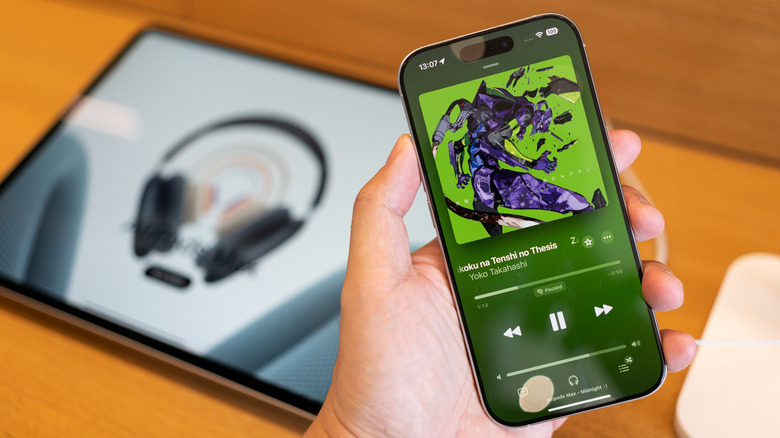
Apple integrated Lossless and Hi-Res Lossless audio tiers into its subscription service catalog in June 2021 without charging an additional fee. The three options carry very different network demands: High Quality uses 256kbps AAC, Lossless uses ALAC up to 24-bit/48kHz, and Hi-Res Lossless uses ALAC up to 24-bit/192kHz.
A standard three-minute High Quality track consumes approximately 6MB of data, or roughly 120MB per hour of continuous streaming. A three-minute Lossless track requires approximately 36MB, reaching around 720MB per hour, while a Hi-Res Lossless track can use up to 145MB and consume as much as 2.9GB per hour.

Streaming Lossless audio for one hour per day over a standard 30-day period amounts to roughly 21.6GB of cellular data usage. The same daily listening schedule at the upper Hi-Res Lossless estimate consumes nearly 87GB in a month, potentially exceeding the high-speed data allowances of capped mobile plans and pushing unlimited plan subscribers past carrier network throttling thresholds.
The network figures are also affected by the way Apple Lossless Audio Codec handles audio. Unlike fixed-bitrate compressed formats such as lossy 256kbps AAC, which was originally developed as a higher-efficiency successor to MP3, ALAC uses dynamic lossless compression. Apple developed ALAC in 2004 and converted it to an open-source format in 2011.
ALAC changes its bitrate according to the harmonic complexity of the recorded audio signal. Standard CD-quality audio, defined as 16-bit at 44.1kHz, typically fluctuates between 800kbps and 1400kbps when encoded in ALAC. Because the format preserves every bit of audio data without filtering out higher frequencies, actual network throughput varies with music complexity, network signal strength, and hardware capabilities.
Wireless playback introduces another limitation. Standard Bluetooth connection protocols rely on lossy compression codecs to transmit audio between devices. When an Apple Lossless Audio Codec file is streamed, the operating system must re-encode or compress it for a Bluetooth Advanced Audio Distribution Profile, or A2DP, connection.
That process means standard Bluetooth headphones, including Apple’s wireless AirPods line and first-generation AirPods Max, downsample lossless audio into a compressed format during playback. The second-generation AirPods Max supports lossless playback only through a wired USB-C cable.
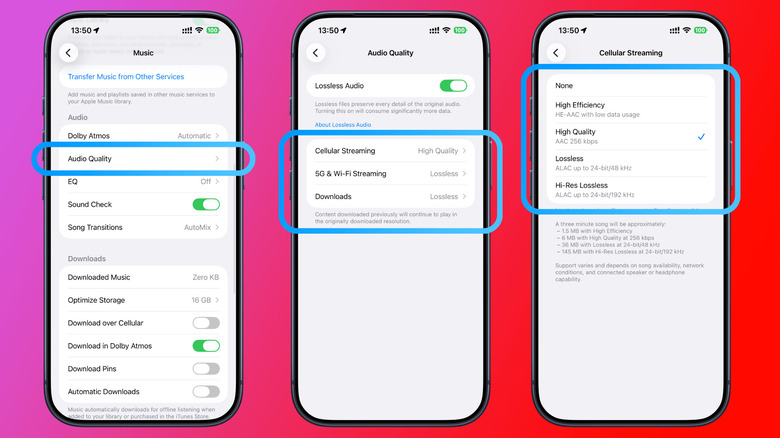
Hi-Res Lossless streams are defined as audio resolutions above 24-bit at 48kHz and extending up to 24-bit at 192kHz. Those maximum sample rates exceed the processing capabilities of standard smartphone hardware and standard headphone adapters, requiring an external Digital-to-Analog Converter, or DAC, connected to the device.
Apple notes in its audio documentation that, for most listeners under everyday conditions, the audible difference between standard 256kbps Advanced Audio Coding, or AAC, and lossless compression is “virtually indistinguishable.”
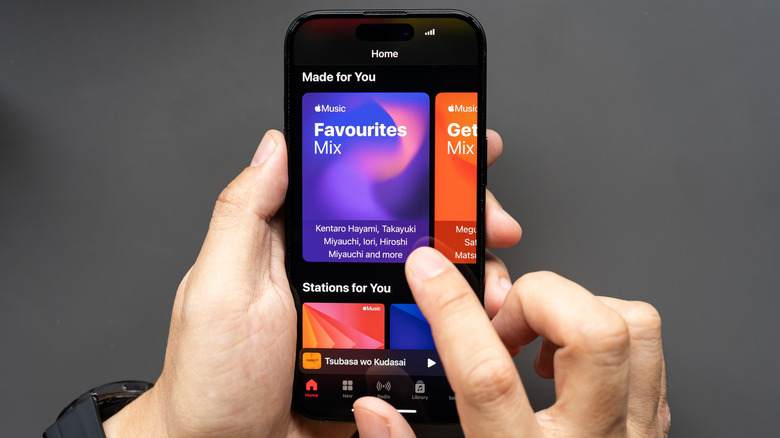
iOS includes controls for managing mobile data under Settings > Apps > Music > Audio Quality. Users can set separate audio resolution preferences for cellular streaming, Wi-Fi streaming, and offline downloads. Cellular streaming can be restricted to High Quality while Lossless remains enabled for Wi-Fi environments, preserving high-speed mobile data allocations when using cellular networks.
Albums and playlists can also be downloaded over Wi-Fi to the device’s internal storage. ALAC files require significantly more physical storage space, but offline playback eliminates cellular data usage entirely. Local physical files support full lossless playback when a mobile device is connected directly to home audio receivers or vehicle head units through wired USB CarPlay interfaces, where digital signals travel over physical cables rather than lossy wireless protocols.