
HTC’s $499 Vive Eagle Brings AI Cameras to Smart Glasses
The Vive Eagle pairs AI controls, a 12-megapixel camera and open-ear audio in HTC’s latest wearable
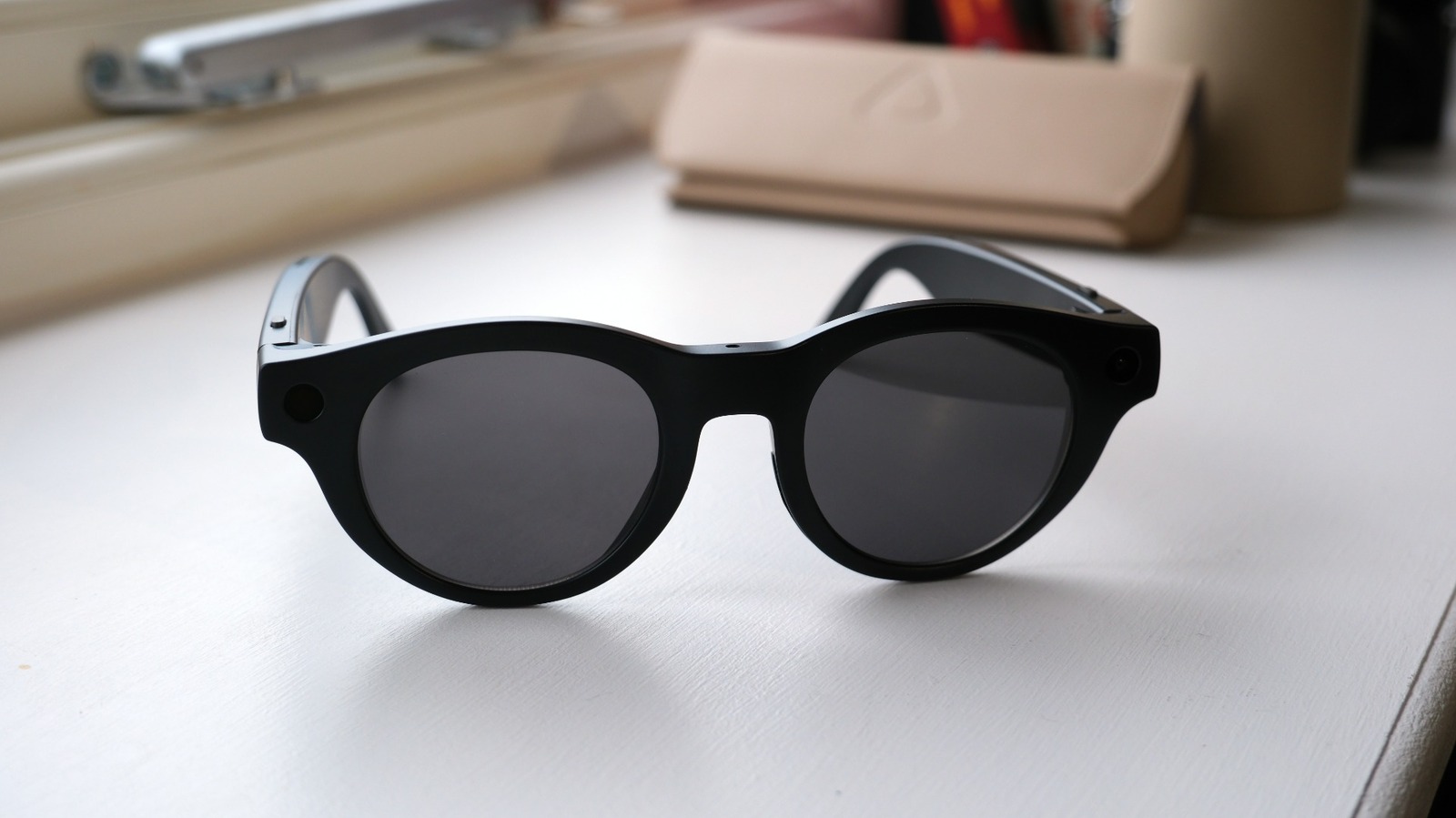
HTC Corporation has launched the Vive Eagle in the United States, expanding its wearable technology business with a $499 pair of AI-enabled smart glasses. The device captures video, plays audio and interfaces with voice assistants. Its U.S. rollout follows the initial release in HTC’s home market of Taiwan late last year.
The Vive Eagle uses Qualcomm’s Snapdragon AR1 Gen 1 System-on-Chip (SoC), a platform Qualcomm introduced specifically for lightweight smart glasses and smart eyewear without full spatial displays. The processor is paired with 4GB of RAM and 32GB of internal flash storage. Wi-Fi 6E (802.11ax) and Bluetooth 5.3 support device pairing, media offloading and cloud connectivity.
HTC is entering direct competition with Meta Platforms and EssilorLuxottica in the emerging camera-and-audio optical frames category. The category follows the template popularized by the original Ray-Ban Stories in 2021 and the subsequent Ray-Ban Meta smart glasses.


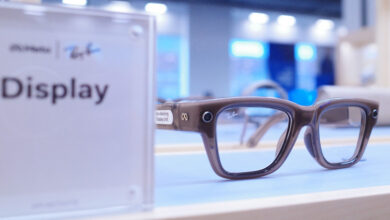
The glasses use a Wayfarer-style design available in Panto, or round, and Square frame styles. Both solid black and tinted translucent plastic options are offered. The base $499 Panto model includes non-prescription sunglass lenses, weighs approximately 49 grams (1.7 ounces), and ships with a Vive-branded faux-leather protective carrying case.
A 12-megapixel ultra-wide camera sensor sits in the left hinge. It captures still images at 3,024 x 4,032 pixels and vertical video at 1,512 x 2,016 pixels, with each video recording limited to a maximum of 10 minutes. The sensor also supports vertical slow-motion recording at 120 frames per second, using a reduced resolution of 960 x 1,280 pixels. The 32GB storage capacity can hold up to 3,000 full-resolution photos or roughly 50 video clips.
The right hinge contains a white LED indicator encircled by an ambient light sensor. The LED automatically illuminates when the camera captures photos or records video, alerting people nearby that the glasses are actively recording.
HTC chose physical controls alongside gesture controls instead of relying solely on voice commands. A dual-function button on the left temple arm serves as the power switch and activates AI features. The right temple arm has a dedicated shutter button, while a capacitive touch strip on the right side manages phone calls, audio playback and scrolling through AI query responses through taps and swipes.
Directional open-ear stereo speakers built into the temple arms provide audio and are enhanced for bass response. A four-microphone array includes one directional microphone in the nose bridge to isolate the wearer’s voice and three omnidirectional microphones positioned around the frame to capture ambient sound and facilitate noise suppression.
To support the wearable’s power demands, HTC built a 235mAh internal battery into the frames. According to HTC specification data, it provides up to 4.5 hours of continuous audio playback, 3 hours of voice call time and up to 36 hours in standby mode.
A proprietary magnetic cable recharges the glasses through two exposed contact pins on the left temple arm. HTC includes a 1.2-meter USB-C cable for charging while wearing the glasses through a connection to a portable power bank. An optional 120mAh external battery pack called the “Power Boost” clips onto the side frame and supplies approximately half a full charge on the go without requiring a tethered cable.
The Vive Eagle release continues HTC’s diversification into personal AI devices and wearable hardware. Founded in 1997 in Taoyuan, Taiwan, HTC first gained global prominence as a mobile phone manufacturer. In 2008, it built the first commercial Android smartphone, the T-Mobile G1 (HTC Dream), followed by Google’s initial Nexus One in 2010.
After increased competition in the global smartphone market, HTC pivoted heavily toward virtual reality in 2015 through a partnership with Valve Corporation. The company launched the HTC Vive VR headset line in 2016 and has since maintained a focus on enterprise and consumer spatial computing hardware through Vive-branded headsets, including the Vive Pro, Focus and XR Elite series.
HTC’s entry comes as the smart glasses sector undergoes rapid expansion, with chipmakers such as Qualcomm developing low-power silicon that enables generative AI processing and multimedia capture inside everyday, displayless optical frames.