

Google Gemini seizes travel planning with native app integration while rivals rely on chatbots
How Google Gemini outpaces ChatGPT and Claude in trip planning with native app integration

Major technology companies are intensifying their efforts to capture the global travel and tourism sector through generative artificial intelligence. Google Gemini holds a distinct structural advantage through native extension architecture that directly interfaces with Google’s proprietary consumer services, including Google Flights, Google Maps, YouTube, and Gmail. This deep integration allows the system to synthesize live data streams, mapping coordinates, and personal user history without requiring third-party plugins.

The backbone of Gemini’s travel functionality relies heavily on Google Flights—a service rooted in Google’s $700 million acquisition of flight data company ITA Software in 2011. Rather than relying on traditional web searches that force travelers to navigate dozens of browser tabs, review forums, and video logs, Google is leveraging its broader internet infrastructure to automate complex trip-planning workflows.


By analyzing specific prompt parameters—such as departure airports, strict budget constraints, or requests for luxury accommodations—the model generates structured itineraries and highlights flight deals. Technology analysts note that despite these integrated capabilities, travelers must still manually verify critical details such as final hotel bookings and flight reservations, as generative AI models remain susceptible to occasional factual errors or data discrepancies in fast-changing travel itineraries. For travelers requiring offline documentation, the software can compile entire itineraries into formatted documents suitable for printing or digital archiving.
Beyond flight selection and hotel recommendations, the platform extends into operational pre-trip organization. Gemini can generate customizable packing checklists based on destination requirements, locate regional train schedules, and aggregate rental car options. Users querying Gemini about destinations such as Rome can access real-time price tracking, historical fare trends, and optimal purchasing windows directly within the chat interface. Furthermore, with user permission, Gemini can cross-reference historic travel confirmations stored in Gmail to eliminate previously visited attractions and tailor suggestions specifically for returning visitors.
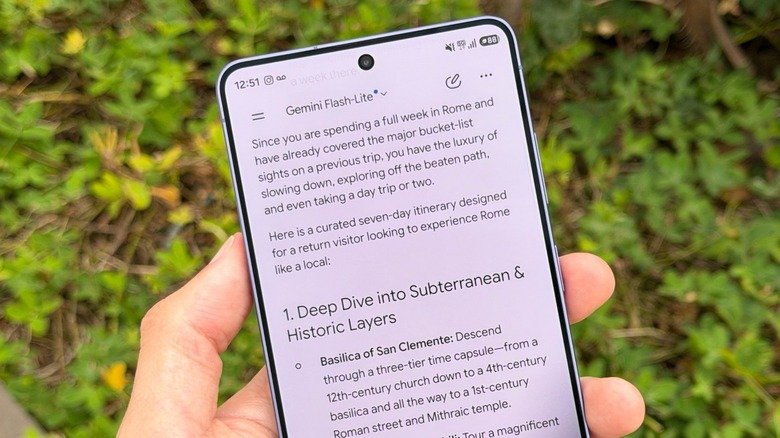
While competing generative AI models such as OpenAI’s ChatGPT, Anthropic’s Claude, and digital assistants across mobile operating systems offer conversational travel advice, Google Gemini holds a distinct structural advantage. Once a trip is underway, Gemini functions as a real-time navigation and educational assistant via mobile devices. Utilizing multimodal artificial intelligence capabilities—which combine computer vision with text processing—travelers can capture images of unlabeled museum paintings, historic monuments, or local architecture using their smartphone cameras to receive immediate historical context and detailed analysis.







One Comment