Cassidy Hutchinson’s Grand Jury Rejection Turns on Twelve Votes and Probable Cause
What twelve votes, probable cause and a split paper record mean for a case that is still open.
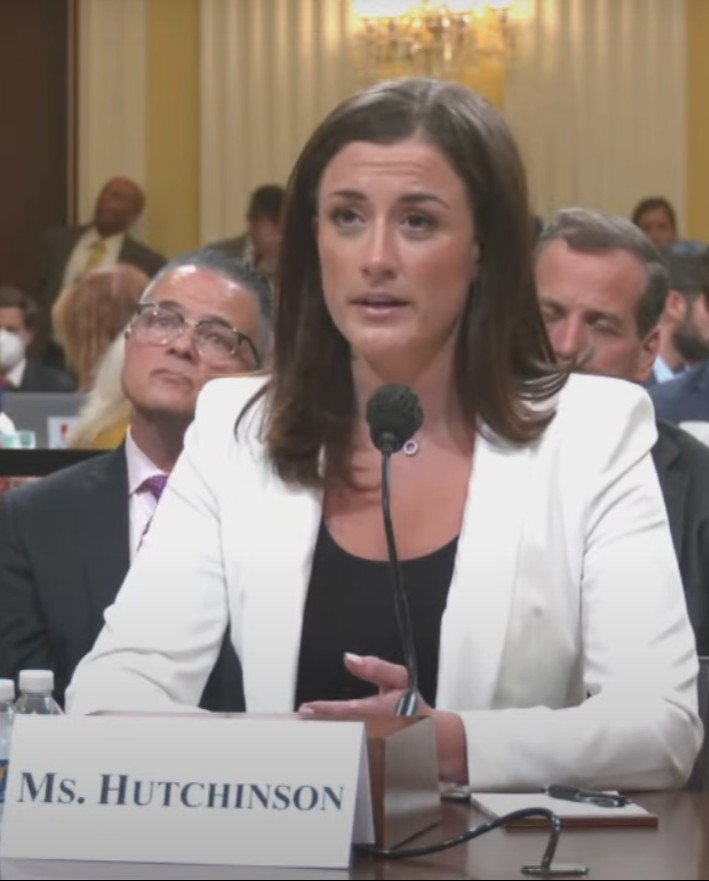
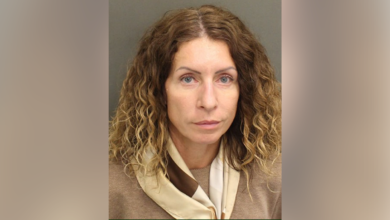
A federal grand jury needs twelve votes to indict, and it does not need proof beyond a reasonable doubt. Probable cause is enough, and the panel that hears the case has between sixteen and twenty-three members, with no defense lawyer in the room and no judge presiding over the evidence. On Tuesday in Washington, prosecutors could not get those twelve votes for Cassidy Hutchinson, the former White House aide whose June 2022 testimony about President Donald Trump and January 6, 2021 became one of the most contested accounts of that day.
Neville S. Hedley, acting senior litigation counsel in the Justice Department’s Civil Rights Division, told U.S. Magistrate Judge Zia M. Faruqui on Tuesday afternoon that the grand jury had not concurred on the proposed indictment. Hedley did not name the defendant in court, and Hutchinson’s identity as the subject reached the public through two people familiar with the matter who spoke to the Washington Post on condition of anonymity about a grand-jury matter, with CNN, MS NOW and CBS confirming the outcome. MS NOW reported that the charge sought was a false-statements charge, while the precise statements prosecutors put to the jurors have not been publicly detailed, and Hutchinson’s attorneys did not respond to requests for comment on Tuesday.
No vote count will be published, because grand-jury proceedings are secret under Rule 6(e), and no transcript will explain which jurors doubted what. A refusal to indict is recorded as a no-bill. It is not an acquittal. Jeopardy does not attach at the grand-jury stage, so prosecutors may present the same matter again to the same panel or to another one, with the same evidence or with more of it.


In 2010, federal grand juries declined to indict in 11 out of about 162,000 federal cases prosecuted. Researchers citing those federal statistics put the rate at roughly one refusal in every 14,700 cases, or 0.0068 percent. The figure is sixteen years old, and its denominator is cases prosecuted rather than cases presented to a grand jury. It measures the shape of the system more than it measures this panel, but it explains why a refusal draws attention even before anyone knows what the jurors heard.
The Civil Rights Division presented the case. The division, led by Assistant Attorney General Harmeet Dhillon, enforces the federal civil-rights statutes, from the Civil Rights Acts and the Voting Rights Act to the Fair Housing Act and the Americans with Disabilities Act. The department’s own Justice Manual assigns cases under 18 U.S.C. § 1001, the false-statements statute, to the Criminal Division’s Fraud Section. It gives the Civil Rights Division a § 1001 role only for false official statements made in connection with alleged violations of federal civil-rights statutes. No surveyed public reporting describes such a civil-rights connection for the Hutchinson case.
The case arrived at the grand jury through a March 2026 criminal referral from Representative Barry Loudermilk, co-signed by House Judiciary Chairman Jim Jordan. It accused Hutchinson of lying when she testified that Trump knew of the potential for violence on January 6 and pressed ahead with efforts to rouse his supporters. Congressional referrals are often treated by the Justice Department as suggestions rather than orders. This one challenged the firsthand part of her testimony, the claim about what Trump knew and wanted, more directly than it challenged the secondhand story that dominates public argument about her. Hutchinson had also changed lawyers before her public testimony. She alleged that her first lawyer, Stefan Passantino, had made clear that the less she recalled to House investigators the better. After the switch she shared more information in closed-door interviews and at the public hearing. Passantino said he had acted ethically and believed she had been truthful initially. Ethics inquiries into Passantino in Washington and Georgia were both dropped, and a Biden-era FBI and Justice Department inquiry into her accusations about the lawyer brought no charges.
The committee’s final report could not corroborate the vehicle account. Hutchinson said she heard from then-deputy chief of staff Tony Ornato that Trump lunged for the steering wheel of the presidential vehicle and then at Secret Service agent Bobby Engel. Engel did not characterize the exchange in the vehicle the way Hutchinson described the account she heard from Ornato. He said he did not recall Trump gesturing toward him. The driver of the vehicle said he did not recall seeing a reach or a lunge. He described Trump as animated and irritated, and quoted him saying he would decide where he went. Ornato told the panel he did not recall the vehicle communications at all. The committee said it did not find Ornato credible, crediting Hutchinson and a second White House employee who had also heard Ornato recount Trump’s irate behavior. A false-statements case built on that record would have to prove that Hutchinson knowingly lied when she relayed what she said Ornato told her. That is a different burden from proving that the men in the vehicle remember it differently.
Hutchinson’s other account was firsthand. She testified that she overheard Trump say he did not care that supporters had weapons, that they were not there to hurt him, and that the magnetometers should be taken away so his people could come in. Former special counsel Jack Smith told a House panel in a closed-door interview that Hutchinson was not a powerful witness in his inquiry, in part because many of her stories were secondhand and therefore hearsay, and that the version given by an officer in the car was not the same as what she said she heard secondhand. Smith declined to assess how reliable her testimony was, saying his office was far from trial and had made no final determinations.
Sean Charles Dunn threw a sandwich at a Customs and Border Protection agent on August 10, 2025, during the federal law-enforcement surge in the capital. Prosecutors sought a felony assault indictment that a D.C. grand jury declined. The U.S. Attorney’s office then charged Dunn with a misdemeanor instead, which does not require a grand jury, and a trial jury acquitted him on November 6, 2025. The American Bar Association’s account of that acquittal added that grand juries had declined to indict several people accused of assaulting federal officers that year. Tuesday’s panel was not the first in the district to refuse a felony charge prosecutors wanted, and the Dunn route shows one thing a no-bill can lead to, not what it must lead to.
Senator Bill Cassidy, a Louisiana Republican, had already put his concern about the Hutchinson inquiry on the record before Tuesday, in a Senate floor speech in August during the debate over Todd Blanche’s nomination as attorney general. “I am particularly concerned about episodes of apparent lawfare, DOJ bringing suits against political enemies,” Cassidy said, and he added that presidents of both parties had been guilty of it and that it must stop. That speech predates the no-bill and is not a reaction to it, but it shows that the unease inside the president’s own party about this investigation was public months before a grand jury was asked to act on it.
As of the October 8 reporting, Hutchinson had not received a subpoena to appear before the grand jury. The department has not said whether it will present the matter to another grand jury, close it, or leave it where Tuesday left it.