California King Tides: The Record Arrived While the Coast Was Still Rebuilding
A record tide, a cut rail line, and two towns still fixing the last storms: what the water found when it arrived.
The cutter-suction dredger H.R. Morris had been working the Long Beach Peninsula for about a week when the tide that broke the harbor’s record arrived. Staging for the Alamitos Bay Entrance Channel job began at the 72nd Place beach parking lot on October 14. Dredging started around October 20. The city described the beach replenishment as a three-month operation. On Monday, October 26, the water came in over a beach that was still being rebuilt, in front of homes that had already been red-tagged.
At San Pedro, in Los Angeles Harbor, the high tide on October 26 rose to just above 8 feet, an all-time record for a gauge whose records go back to November 1923, according to the National Weather Service. The previous record, 7.93 feet, was set on January 10, 2005. In La Jolla, the morning high tide that day reached at least 7.79 feet on preliminary data from the National Oceanic and Atmospheric Administration. These California king tides are under coastal flood warnings for Orange and San Diego counties and advisories further north, all running through 1 p.m. Thursday, October 29, with the Weather Service warning of significant coastal flooding around the morning high tides.
Newport Beach had already learned what this month’s water does when it runs above the table. On October 9, a predicted high tide of about 5.8 feet at the Newport Bay entrance came in 20 inches higher, the city’s utilities director later said, pushing seawater across 15 to 20 blocks of the Balboa Peninsula. The Newport and Balboa piers closed, then reopened on October 12, with protective sand berms left in place. On October 19 the City Council declared a second local emergency, activated the Emergency Operations Center, and approved a West Newport sand project of about 100,000 cubic yards between 36th and 62nd streets, with sand trucked from the mouth of the Santa Ana River. The city keeps 86 tidal valves to stop the ocean backing up through storm drains. Eighteen pumps clear standing water. Its adjusted forecasts for this week put the peaks at 8.3 feet on Monday, 8.5 feet on Tuesday and 8.4 feet on Wednesday, against an astronomical prediction of about 6.7 feet for Tuesday alone.


Three storm systems hit Long Beach’s Peninsula in six weeks. Hurricane Marie and Polo came first, then post-tropical storm Rachel, and the city fast-tracked the dredging project after Rachel caused further flooding and erosion. The job will move an estimated 415,000 cubic yards of sand, pumped over the jetty and spread along the shoreline by bulldozers, and restore the channel to its authorized depth of 20 feet. The work runs from 61st to 72nd Place, but crews could not start right away between 64th and 66th Place, where some of the worst damage occurred and the ground was still considered too dangerous. Inspectors red-tagged eight buildings comprising 13 residences, a small number of homes remained under mandatory evacuation orders, and the city put emergency boardwalk and bulkhead repairs at $1.5 million to $3.6 million from its Tidelands Emergency Reserve, while cautioning that the dredged sand will provide a buffer against waves but will not stop waves from carrying sand away.
“A little skeptical. The ocean is pretty powerful, and the sand has been getting washed away, but it looks like they’re putting in a really good effort,” Chad Morgan, a Long Beach resident, told NBC as crews moved in. Laguna Beach surfer Blair Conklin, who has been filming the damage from flooded Newport streets to the fractured cliff beneath Pacific Coast Highway at El Morro in Crystal Cove State Park, previously called the El Morro bluff “one of the most vulnerable pieces of California coast right now.”
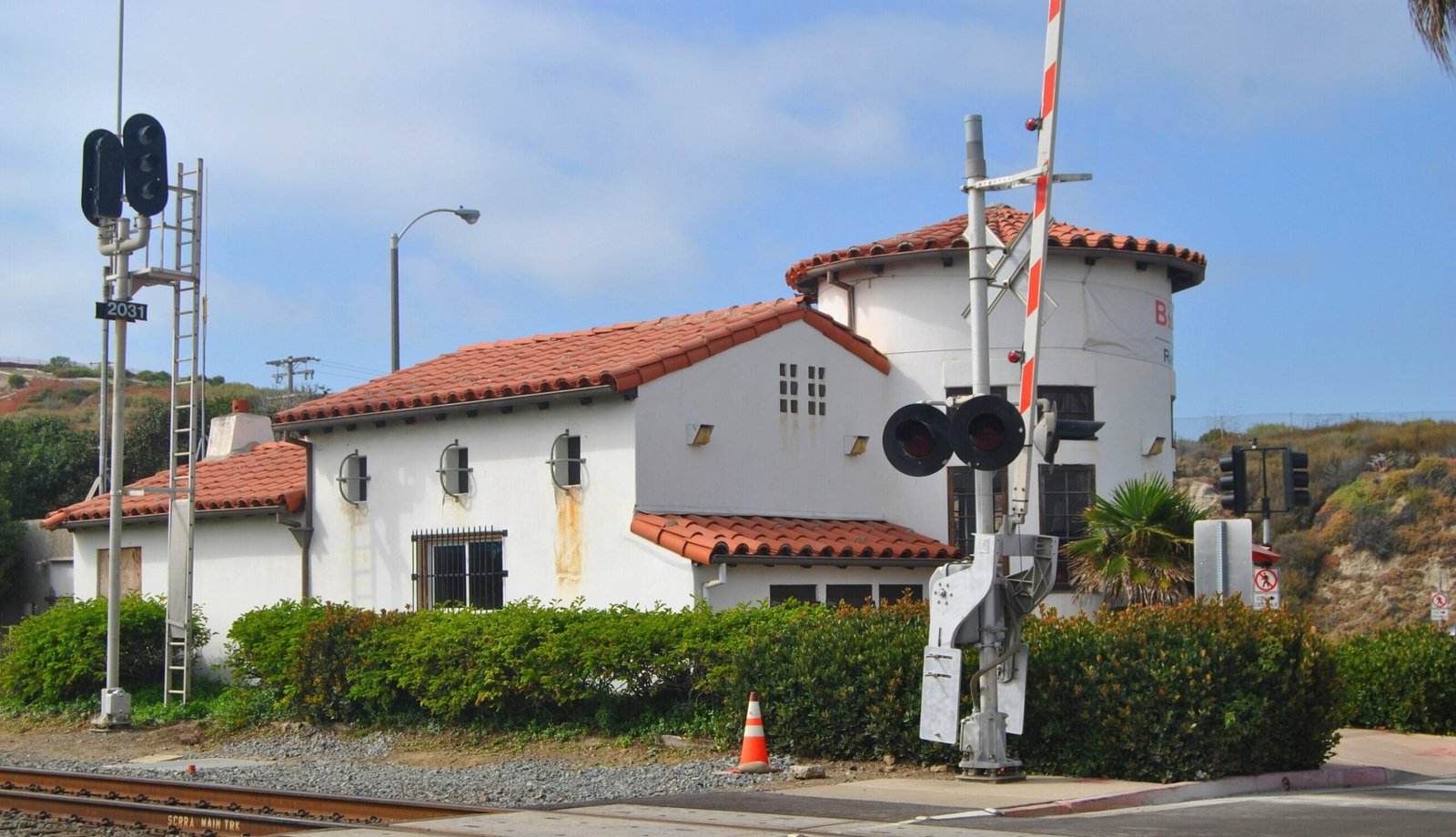
On October 22, Metrolink announced it would suspend Orange County Line service between Laguna Niguel/Mission Viejo and Oceanside from Monday, October 26 through Friday, October 30, with trains running only as far as Laguna Niguel/Mission Viejo and no alternate bus transportation provided. Weekend service was not expected to be affected. Amtrak’s Pacific Surfliner trains between San Clemente Pier and Oceanside were running with delays of about 30 minutes through Tuesday, October 27, on signal issues and weather conditions.
In September, high tides and waves overtopped the tracks near San Clemente, causing erosion and slope damage that forced a temporary suspension of Metrolink, Amtrak and freight service while crews made emergency repairs. More than $300 million in local, state and federal funding has gone into rail protection measures along this coast over the last five years, and a long-term railroad adaptation study required by the California Coastal Commission, due by 2034, has not launched, with no decision made on relocating the line.
The extra height this week comes from warm water, low pressure and wind laid on top of the astronomical tide. A full moon coincided with the weekend’s tides, and the moon reaches its closest point to Earth on Wednesday, October 28. Warm water takes up more room, an El Niño-linked Kelvin wave has pushed sea levels higher, and the Weather Service put the water 1 to 1.7 feet above astronomical predictions in Orange and San Diego counties and 1 to 1.5 feet above them around Los Angeles, with late-morning high tides of 7.5 to 8 feet. Newport Beach said its water had been running 18 to 22 inches higher than predicted, which is why a tide predicted at about 6.7 feet could arrive closer to 8.5.
Rain is also on the way, on one set of models at up to 250% of normal for the Halloween weekend, according to the Weather Service office in San Diego. The California Coastal Commission lists further king tides for November 24 to 26, December 23 to 25 and January 21 to 22, and NOAA’s high-tide flooding probabilities put Los Angeles at 100% on Christmas Eve and 75% on Thanksgiving, with San Diego at 95% on December 23 and 24. Those are forecasts, not records. They land on beaches where the sand work is measured in months. Long Beach’s replenishment is a three-month operation. Newport’s sand is still being placed.
The sand going onto the Peninsula beach comes from the Alamitos Bay entrance channel. The city said that channel had not been dredged in more than 20 years.