

Windows logs every system failure, application crash, and background error in a built-in diagnostic tool that most PC owners never open. By exporting those raw logs and feeding them into large language models like ChatGPT or Claude, users can bypass hours of searching technical forums and receive plain-English explanations for cryptic system faults.
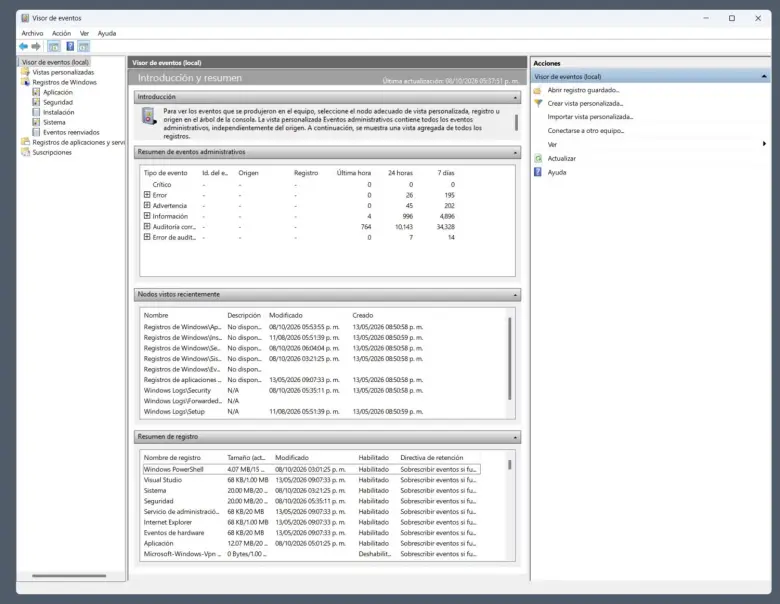
The utility responsible for this data is Event Viewer, an administrative interface bundled with the operating system since the Windows NT era in the early 1990s. Tucked inside the System32 directory alongside the Microsoft Management Console, it categorizes activity into distinct logs: Application, Security, Setup, and System. Every entry carries a timestamp, a source label, and a numeric Event ID used by IT professionals to pinpoint failures. Despite receiving minor updates over three decades, the interface remains notoriously dense, presenting raw strings that offer little immediate value to anyone outside enterprise IT.
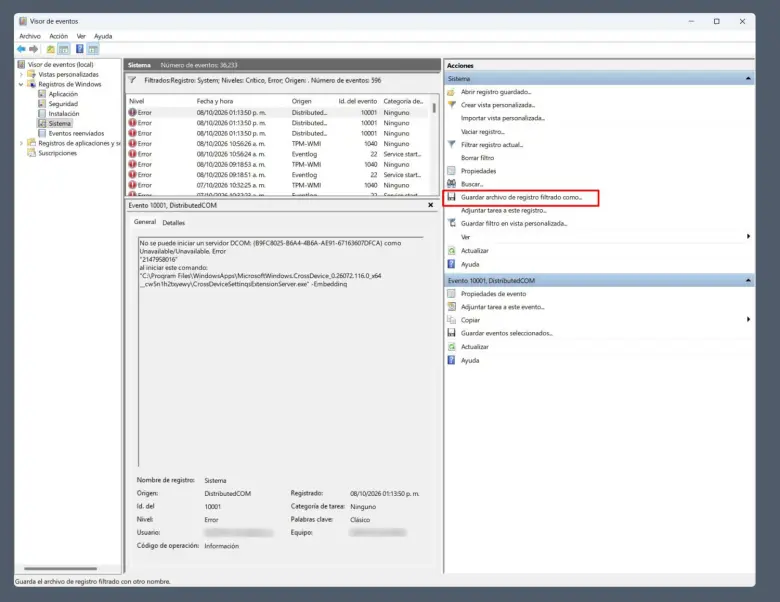
A typical critical error might reference a failing Distributed Component Object Model (DCOM) server launch, returning hexadecimal codes such as 2147958016 alongside long file paths pointing to Universal Windows Platform packages. These messages describe memory access violations, service timeouts, or registry conflicts, but they do not tell a user how to fix the underlying issue. Historically, resolving them required cross-referencing Event IDs against Microsoft’s knowledge base or community support threads.


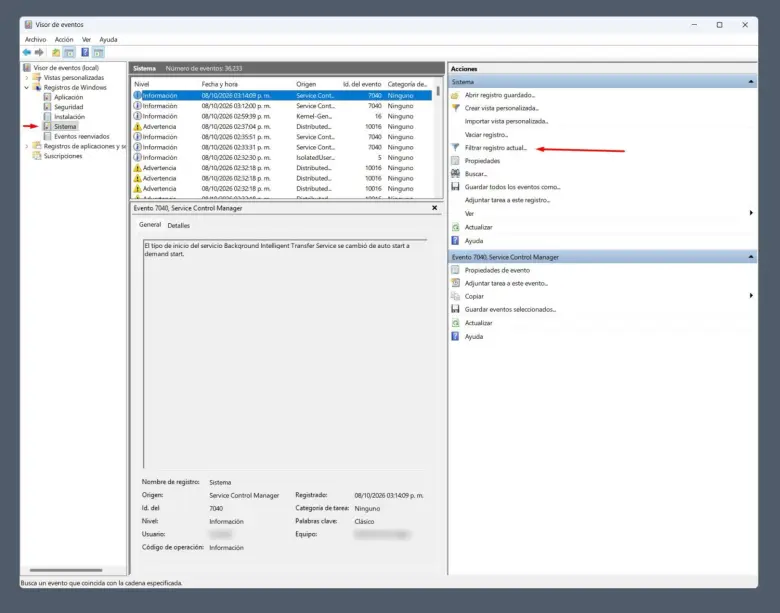
Artificial intelligence changes that workflow entirely. Instead of reading individual entries, users can isolate the relevant data by filtering Event Viewer for “Critical” and “Error” levels over a specific timeframe, such as the past 30 days following repeated blue screens of death or unexpected reboots. The filtered view can then be exported as a CSV file using the “Save Filtered Log File As” function.
This CSV contains structured columns detailing the severity level, date, source, and Event ID. Uploading the document directly to ChatGPT or Claude with a prompt describing the symptoms—such as random shutdowns or freezing applications—allows the model to parse thousands of rows simultaneously. Unlike standard web searches, the AI evaluates the frequency, timing, and correlation between different errors across multiple logs.

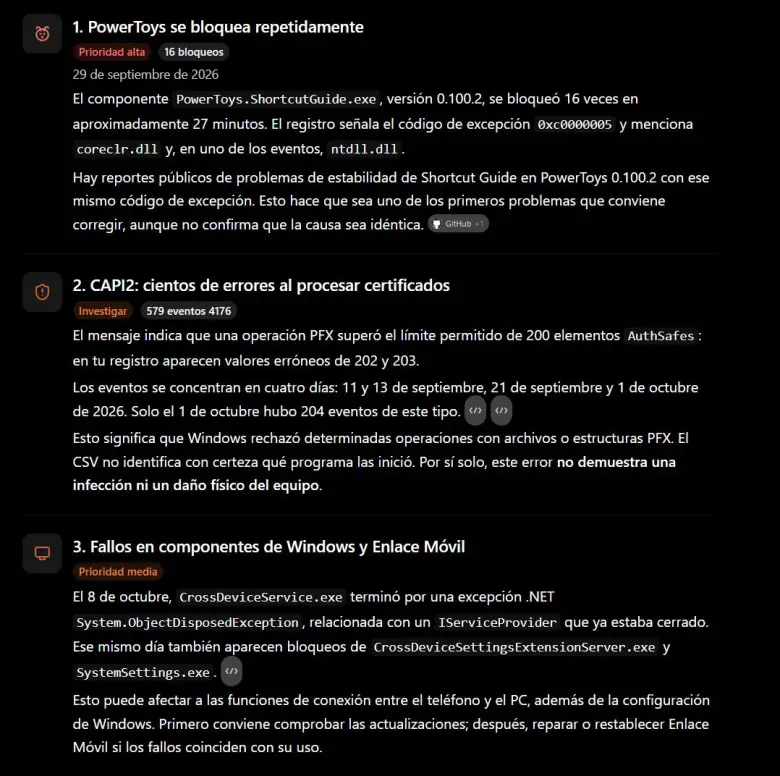
In practical testing, uploading a log from a machine experiencing intermittent instability revealed no kernel-level faults or hardware degradation. The AI instead identified hundreds of recurring software exceptions firing at five-minute intervals tied to expired security certificates, alongside isolated crashes in Microsoft PowerToys triggered specifically by its Shortcut Guide module. It separated benign background noise from actionable faults, a task that typically requires an experienced system administrator.
Event Viewer operates on a circular logging mechanism. Once a log reaches its maximum configured size, the system automatically overwrites the oldest entries. Exporting the CSV immediately after a crash or period of instability prevents crucial diagnostic data from being erased before analysis.
Because generative AI models can hallucinate file paths, misinterpret obscure Event IDs, or suggest registry edits that worsen system stability, their output should serve as a diagnostic starting point rather than an absolute directive. Verifying the AI’s proposed solutions against official Microsoft documentation or trusted technical repositories remains necessary before altering system configurations. Users running Windows 11 24H2 or recent cumulative updates may also find that certain legacy Event IDs have been deprecated or replaced, requiring the AI to account for current patch levels when analyzing the uploaded CSV.



