Gemini Voice Control Hits CarPlay as Google Targets Drivers
The iOS navigation update follows a separate Android Auto release introducing personalized AI features pulled from other apps.
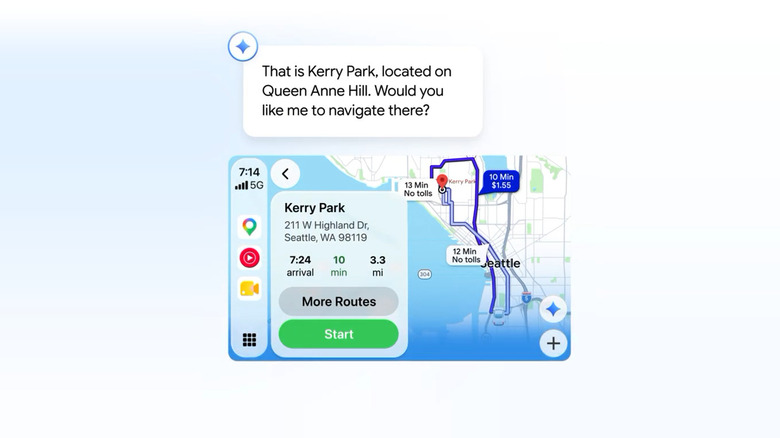
Apple’s CarPlay interface now hosts a direct line to one of its biggest competitors. A new Gemini icon has appeared in the bottom right corner of the iOS version of Google Maps for drivers, according to an announcement from Google, giving motorists access to the company’s conversational AI without touching their phones.
The rollout began Wednesday for users in the US and globally, though the update may take several days to reach all devices. Tapping the button activates a chatbot capable of handling multi-part queries while driving. Users can ask the system to locate specific types of stops along their route, report traffic disruptions, or pull details about nearby locations. “It’s a conversational way to find stops on-the-go, report traffic disruptions, get information about places, and more,” the company stated, citing complex prompts like asking which park offers the best views overlooking a city.
For Apple, this marks another concession in its long-standing effort to keep iPhone users inside its ecosystem. Despite heavy investments in Apple Maps since its rocky 2012 launch, third-party navigation apps retain massive market share among iOS users. By allowing a rival’s generative AI to operate directly on the dashboard screen, Apple prioritizes keeping drivers connected to their iPhones over defending its native software. The integration relies entirely on the existing CarPlay framework rather than requiring any new hardware or protocol changes.


This expansion follows a separate deployment announced Tuesday targeting Android Auto users. That update introduced what the company calls Gemini Personal Intelligence, a feature that pulls data from a user’s other Google applications to tailor responses. According to the company, accessing personal app data improves the chatbot’s reasoning capabilities and allows it to deliver more specific details tied to individual prompts.
The back-to-back deployments signal a broader strategy to make voice interaction the primary method for navigating infotainment systems. As regulators worldwide tighten restrictions on manual phone use behind the wheel, the ability to execute complex searches through natural conversation carries significant weight. Automakers have spent years attempting to build proprietary voice assistants into dashboards, but most drivers still default to the systems they already know from their smartphones.