SpaceX Targets Dual Starship Catch to Slash Launch Costs
Recovering the hypersonic upper stage intact is the key to making heavy-lift orbital launches economically viable for deep space missions.
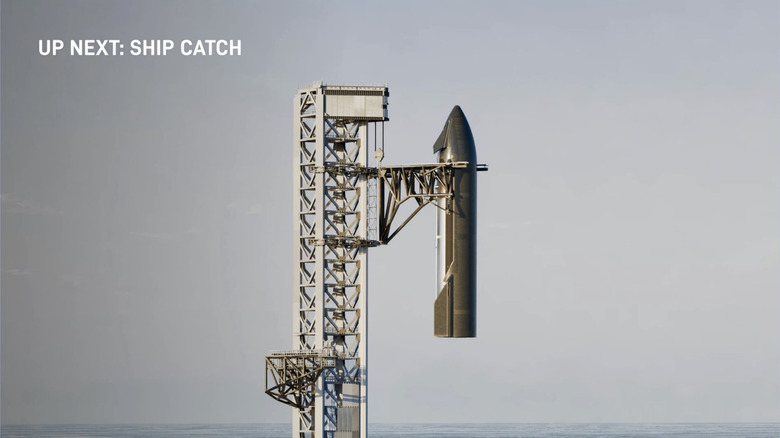
Catching a 400-foot orbital rocket stage falling from space at hypersonic speed is no longer the hard part for SpaceX. The company now plans to attempt it twice on the same mission.
Elon Musk said during an earnings call livestreamed on X that SpaceX will try to capture both the Super Heavy booster and the upper stage, known as the Ship, during Starship’s 15th flight test. The launch could happen as soon as next month. A simulation video shown during the broadcast detailed how the launch tower’s mechanical arms — routinely called “chopsticks” — would secure the returning upper stage.
The move targets the economics of heavy-lift spaceflight rather than just engineering prestige. Fully recovering both stages eliminates the need to manufacture new hardware for every launch, a requirement if SpaceX intends to drive per-kilogram orbital delivery costs down far enough to support sustained lunar and Mars operations. No other launch provider has recovered an orbital-class upper stage.


Booster recovery relies on a short turnaround. The Super Heavy returns to the launch site within minutes of liftoff. The Ship operates under entirely different physics. It reaches orbital velocity, circles the planet, and reenters the atmosphere at roughly 17,500 mph, enduring extreme thermal loads before slowing enough for a tower catch. During Flight 14, according to Space, the upper stage was scheduled for a 10-hour orbital mission. An engine malfunction forced SpaceX to cut the trip short, but the vehicle still took hours to return, compared to the booster’s rapid descent.
Flight 14 ended with both stages splashing into the ocean. That deliberate shift away from recovery attempts followed earlier tests where SpaceX successfully snagged the Super Heavy booster using the tower arms. Returning to splashdowns allowed engineers to push the vehicle’s flight envelope without risking damage to ground infrastructure while testing new heat shield tiles and engine configurations.
The dual-catch profile for Flight 15 signals SpaceX believes it has resolved the telemetry and guidance challenges required to steer a plasma-shrouded upper stage back to a precise point over Boca Chica, Texas. Recovering the Ship intact also provides engineers with physical hardware to inspect for micro-fractures and heat shield degradation — data impossible to gather from an ocean impact.
Musk stated the company’s ultimate goal remains developing Starship into a fully and rapidly reusable orbital launch vehicle for deep space missions carrying crew and cargo. Investor Sawyer Merritt posted the excerpt of the simulation video online following the earnings call.