SpaceX’s $4.4B Profit Quarter Fuels Tesla Merger Speculation
Q3 revenue surged 161% as AI overtook Starlink to become SpaceX's largest business by revenue.
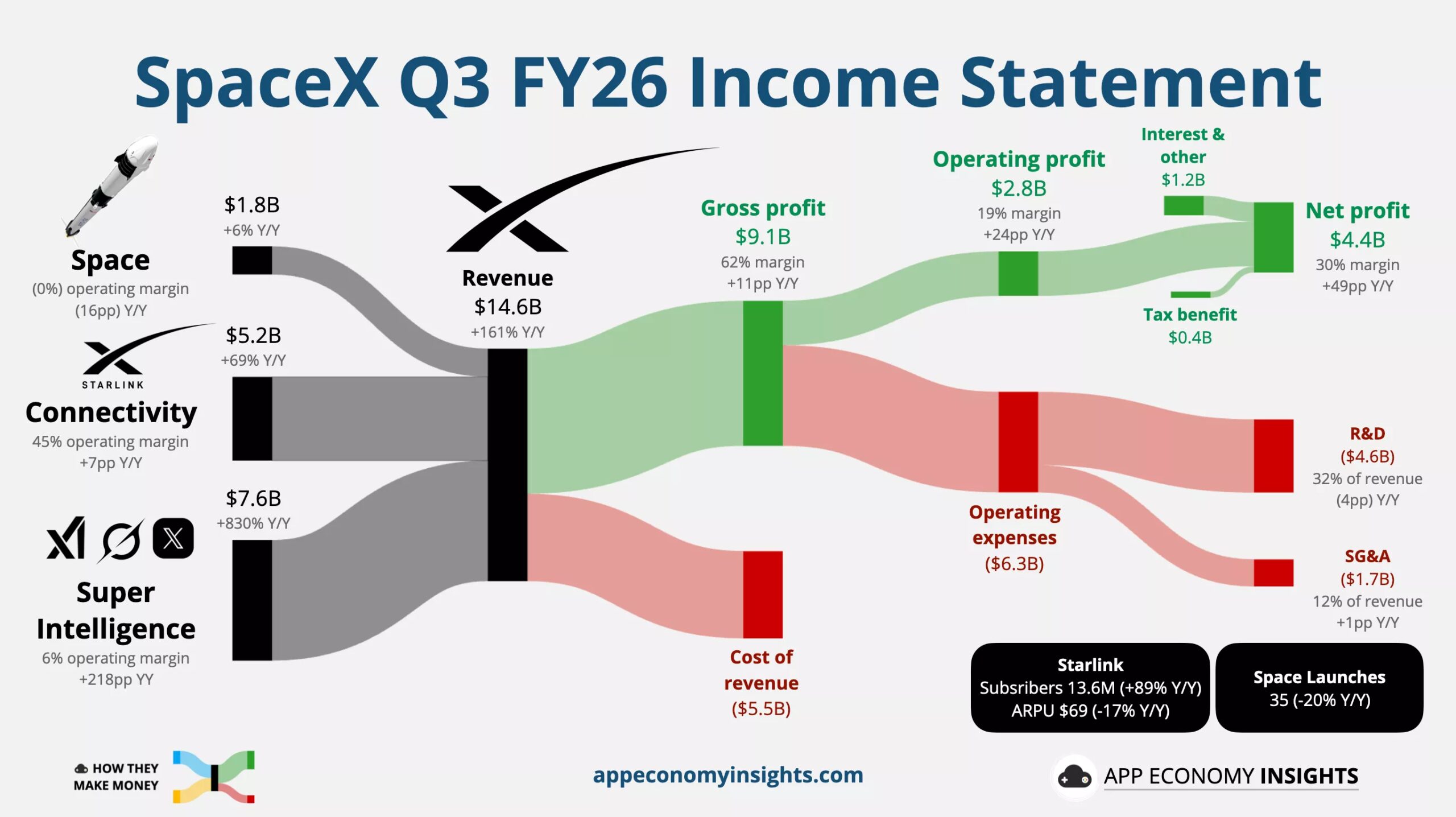
SpaceX generated $4.4 billion in profit during the third quarter, a financial surge that is accelerating discussions about absorbing Elon Musk’s other major venture, Tesla, according to remarks made on the company’s October 20 earnings call.
Revenue hit roughly $14.6 billion, up 161% from a year earlier. Artificial intelligence operations overtook satellite internet as SpaceX’s largest business by revenue, though Starlink remains its primary profit engine. The scale of those returns has shifted the conversation around corporate consolidation from theoretical to practical.
Independent directors at both companies have formed special committees to evaluate a potential combination, Bloomberg reports. If completed, the transaction would rank as the largest corporate merger in history. Musk told analysts he sees “a lot of merit to combining the companies” but recused himself from the committees’ deliberations due to his leadership roles at both firms.

The sheer size of the deal means shareholders hold the ultimate authority. “Some people out there assume that a SpaceX and Tesla merger is a certainty,” Musk said. “I think that would be overstating it.”
A merged entity would control electric vehicles, energy storage, robotics, orbital launch systems, broadband infrastructure and AI development. Musk specifically cited cooperation on superintelligence software as a rationale for uniting the businesses.
This follows a structural reorganization earlier this year. In February, SpaceX absorbed xAI, consolidating Musk’s artificial intelligence ambitions into the aerospace firm. That move was designed to support plans for orbital AI data centers, merging launch capacity with communications infrastructure and computing power under one roof.
Tesla and SpaceX are already collaborating on the Terafab advanced chipmaking project. Musk has pitched the venture as a way to manufacture processors required for autonomous vehicles, humanoid robots and space-based computing.
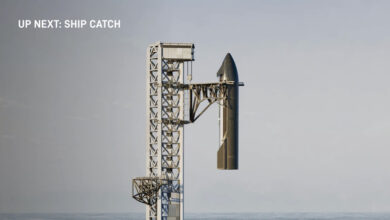
Beyond the balance sheet, SpaceX outlined technical targets for November. The company plans to catch both the Starship vehicle and its booster using mechanical arms upon their return to the launch pad. Recovering both components would represent a significant advance toward full rocket reusability.
“The only way that we can extend consciousness beyond Earth on a sustained basis is with a fully reusable orbital launch vehicle,” Musk said, calling a successful attempt “a massive technology milestone.”
Investors reacted immediately to the quarterly figures. SpaceX shares climbed nearly 5% in late trading, while Tesla rose just over 2%.