Why 6 Million Small Businesses May Avoid Private Equity Buyouts
Employee ownership trusts are emerging as a structural alternative to leveraged buyouts as millions of founders approach retirement.

Roughly 6 million small and midsize U.S. businesses face ownership transitions by 2035, representing up to $5 trillion in enterprise value, according to the McKinsey Institute for Economic Mobility. The vast majority will not survive the handoff. Of the approximately 510,000 such firms that exited the market in 2022, McKinsey found that 92% simply closed their doors. Only 5% were sold.
That statistical reality has accelerated a quiet shift away from traditional succession planning. Instead of passing companies to heirs or selling to private equity firms, a growing number of founders are transferring ownership directly to their workforces through employee stock ownership plans, known as ESOPs.
Private equity firms have aggressively targeted this exact demographic. U.S. buyout firms invested in more than 21,000 businesses in 2025, about 85% of which had fewer than 500 employees, according to the American Investment Council. While these transactions provide liquidity for retiring owners, critics point to subsequent price increases and layoffs as common consequences of leveraged buyouts. Some deals do distribute wealth downward—when KKR sold data-center cooling manufacturer CoolIT Systems to Ecolab, frontline workers received checks averaging $240,000—but such outcomes remain exceptions rather than standard practice.


ESOPs operate differently. A trust holds company shares on behalf of participating employees, functioning as a retirement plan funded entirely by the business rather than worker contributions. When employees leave or retire, the company repurchases their shares at current valuation.
Newport Restaurant Group illustrates how the model functions in a notoriously high-turnover sector. The Rhode Island-based hospitality company, which operates 18 venues including Castle Hill Inn and Hemenway’s, transitioned to 100% employee ownership after launching its ESOP in 1995, according to Nation’s Restaurant News. Founded in 1925 as a fuel oil distributor, the century-old firm now counts roughly 1,100 employee-owners year-round, expanding to 1,800 during peak summer months.
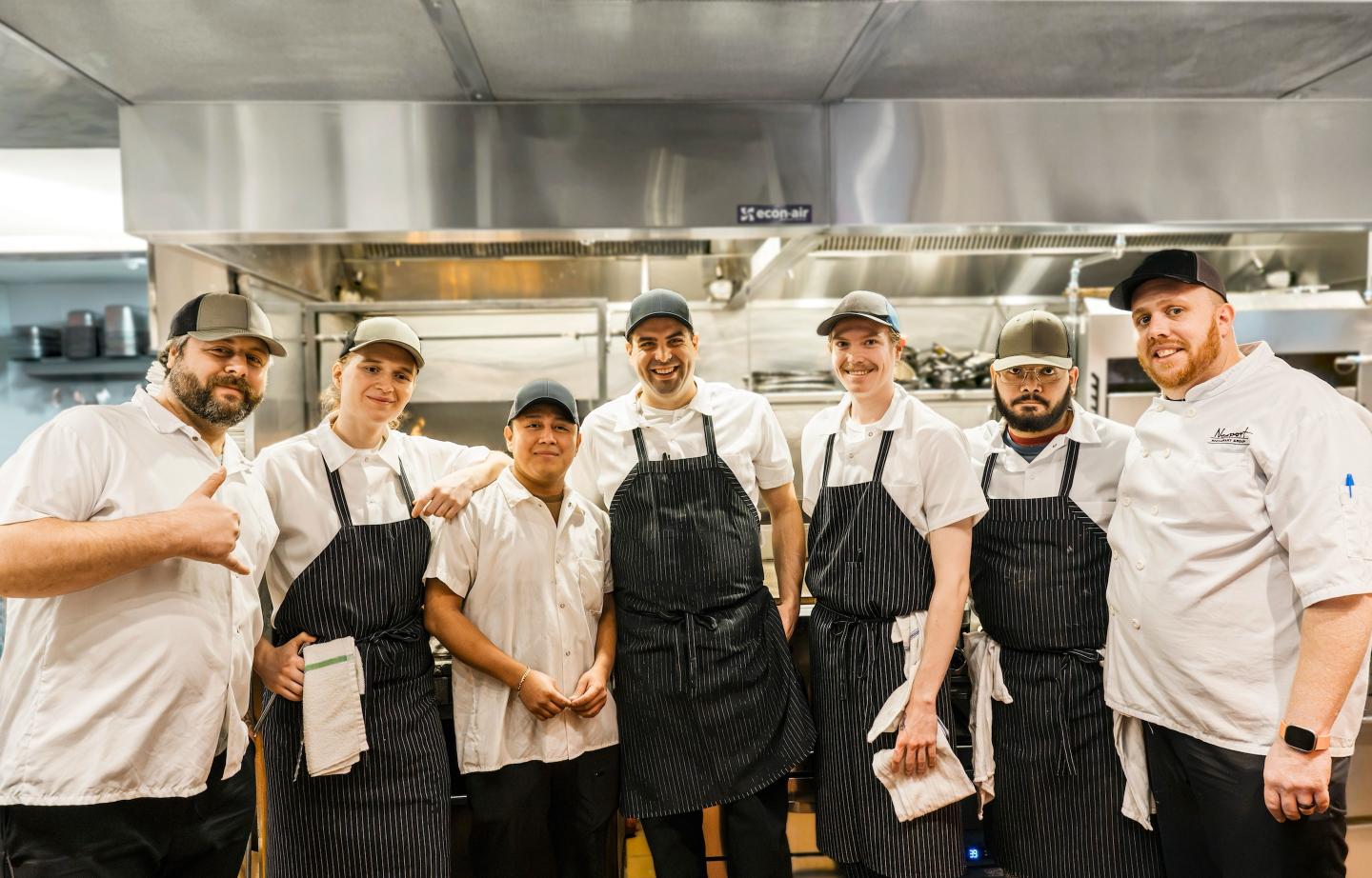
Workers become fully vested after six years and must log at least 800 hours annually—roughly 15 hours per week—to participate. Since 1995, the company has paid out $33 million to departing and retiring employee-owners, who can roll the funds into retirement accounts or take cash distributions, the company said.
CEO Mick Lamond, who joined as chief financial officer in 2005 and assumed the top role in 2025, described the structure as an alternative to selling to strategic buyers or private equity. “This is a great opportunity for a founder to be able to sell their company to its employees,” Lamond told Fortune. “The founder recognizes the employees are a big part of the success of the company.”
The broader economic context makes the math increasingly urgent. Americans are expected to transfer approximately $124 trillion in wealth by 2048, with baby boomers and older generations accounting for $79 trillion of that total, according to Cerulli Associates. Inheritance patterns are already shifting. Bank of America’s 2026 Private Bank Study of Wealthy Americans found that 23% of wealthy business owners inherited their companies, compared with 11% who purchased them—a reversal from 2022, when 28% had bought their businesses and just 5% had inherited them.
Small and midsize businesses employ nearly half of the U.S. workforce. How those enterprises change hands over the next decade will determine whether that $5 trillion in enterprise value remains anchored in local economies or consolidates into institutional portfolios.
At Newport, the retention effects are measurable. Bartender Andy Staane, who started at The Mooring in 2002 as a teenager, remains with the company 24 years later. His 16-year-old son recently joined the staff as a busboy.