AMD Resurrects RX 6000 GPUs With ML Upscaling That Nvidia Locks Behind New Hardware
Machine-learning upscaling arrives on four-year-old RDNA 2 hardware with no tensor cores
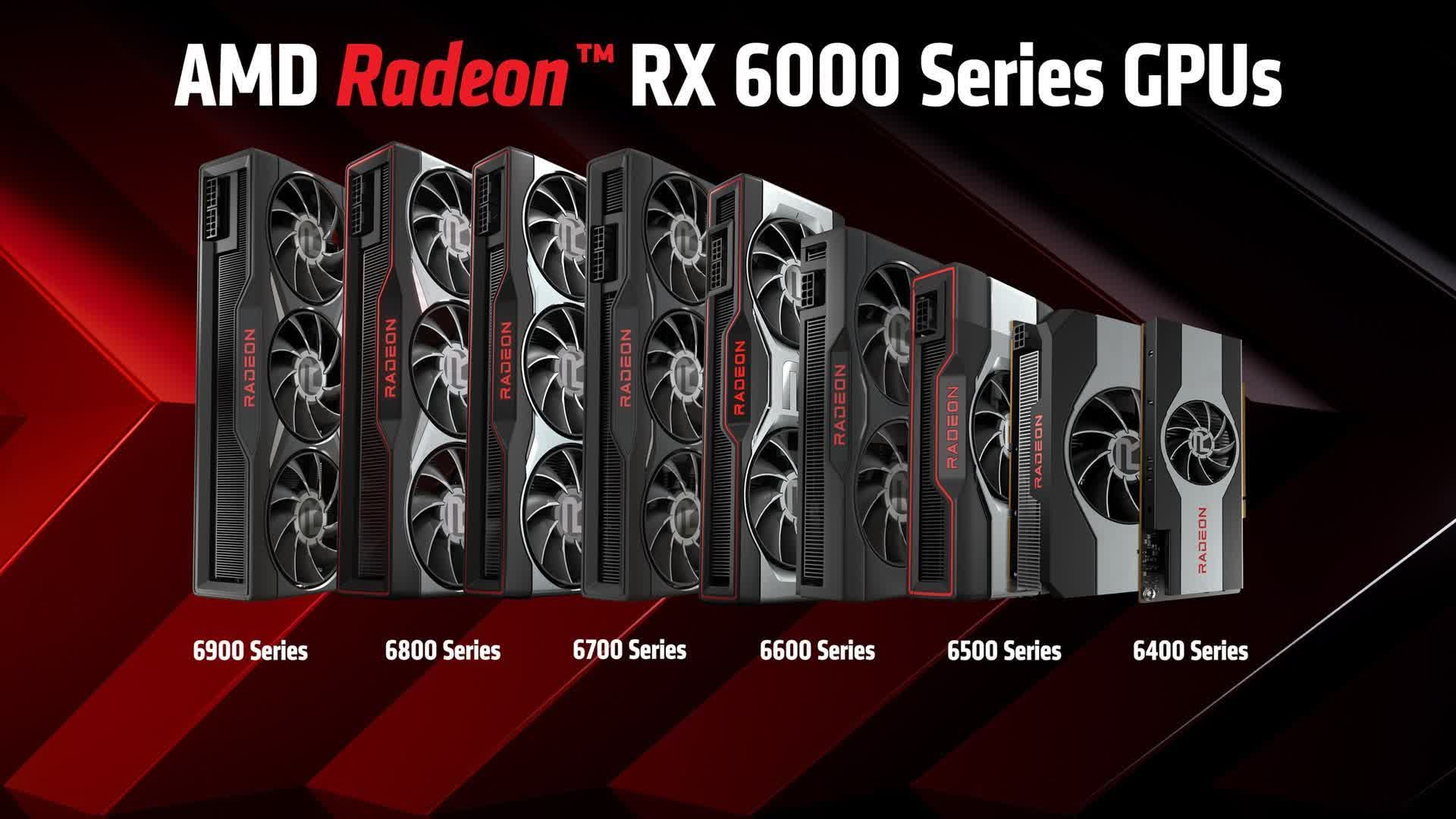
AMD just did something Nvidia refuses to: brought its latest machine-learning upscaler to graphics cards that lack dedicated AI accelerators. The 26.10.1 driver enables FSR 4.1 across the entire Radeon RX 6000 desktop lineup — RDNA 2 silicon that launched in late 2020 without a single matrix core.
Nvidia’s DLSS 4 remains exclusive to RTX 50-series and, in limited form, RTX 40-series. Both architectures pack tensor cores. AMD’s move effectively tells RX 6800 XT and 6700 XT owners their $650-and-up investments from four years ago still have runway.
The company reworked FSR 4.1’s compute pipeline specifically for these older chips. Internal screenshots show the upscaler resolving finer detail and eliminating the temporal shimmer that plagued FSR 3.1, even when rendering at lower internal resolutions than before.


Support also lands for Ryzen AI Max APUs, Ryzen AI 9 laptops, and handhelds running Z2 Extreme, AI Z2 Extreme, and Z2 A silicon — though handheld owners wait on device-makers like ASUS and Lenovo to push validated drivers.
Conspicuously absent: Valve’s Steam Deck. The handheld shares RDNA 2 DNA with the newly supported desktop cards, but runs Linux via Proton. AMD says Vulkan support for FSR 4.1 reaches developers “in the coming weeks.” Valve has already enabled the upscaler for its RDNA 3-based Steam Machine through Proton Experimental, suggesting the Deck’s turn arrives once the translation layer catches up.
Xbox Series consoles are next. Microsoft’s Series S, perpetually bandwidth-starved at 1080p-1440p targets, stands to gain the most from an upscaler that reconstructs detail from fewer rendered pixels. Sony’s PS5 Pro already ships PSSR; Nintendo’s Switch 2 uses a custom DLSS variant. FSR 4.1 plus the PS5’s new QSSR could finally close the image-quality gap for Xbox.
The rollout arrived months ahead of AMD’s own signaling. South Korean outlets reported in early June that RDNA 2 support would wait until 2026’s Ryzen Z3 chips — rumored to blend RDNA 4’s ML blocks with RDNA 3.5’s shader architecture. Modders using Optiscaler had already reverse-engineered FSR 4 onto unsupported hardware, increasing pressure on AMD to make it official.